Wheeling in Ohio County, West Virginia — The American South (Appalachia)
Marsh Wheeling Stogies
A "Workingman's Stogie"
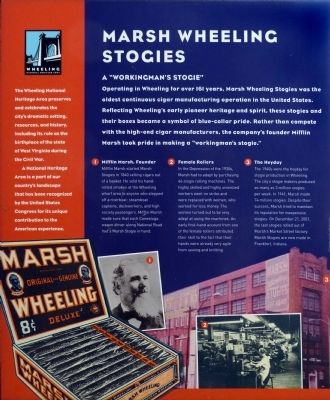
Photographed by Allen C. Browne, December 30, 2013
1. Marsh Wheeling Stogies Marker
Topics. This historical marker is listed in these topic lists: Industry & Commerce • Labor Unions.
Location. 40° 4.312′ N, 80° 43.521′ W. Marker is in Wheeling, West Virginia, in Ohio County. It can be reached from Wheeling Heritage Trail. Marker is along the Wheeling Heritage Trail near the eastern end the Wheeling Suspension Bridge. Touch for map. Marker is in this post office area: Wheeling WV 26003, United States of America. Touch for directions.

Regionally, this marker is in the Northern Panhandle and in the High Valley. It is also in the American South, specifically in the Upper South, in the Ohio River Valley, in Appalachia, and specifically in Northern
this page online
Other nearby markers. At least 8 other markers are within walking distance of this marker: State’s Birthplace (within shouting distance of this marker); Wheeling (within shouting distance of this marker); The Virginia Apartments (about 300 feet away, measured in a direct line); Robert W. Hazlett House (about 300 feet away); List House (about 400 feet away); The John Gay House (about 400 feet away); The Hazlett-Fields House (about 400 feet away); The John List House (about 500 feet away). Touch for a list and map of all markers in Wheeling.
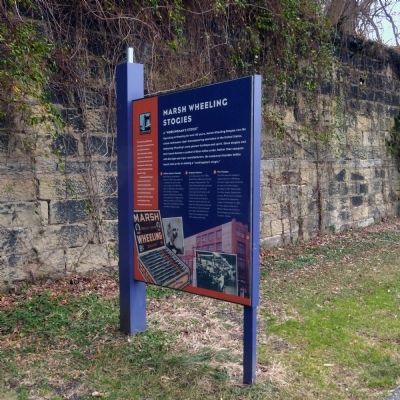
Photographed by Allen C. Browne, December 30, 2013
2. Marsh Wheeling Stogies Marker
Photographed by Allen C. Browne, December 30, 2013
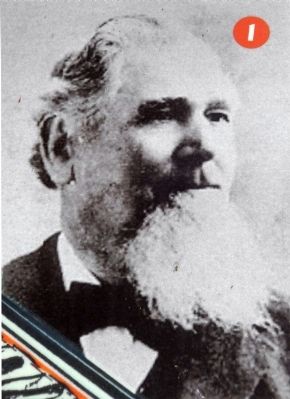
3. Mifflin Marsh, Founder
❶ Mifflin Marsh started Marsh Stogies in 1840 selling cigars out of a basket. He sold his hand rolled smokes at the Wheeling wharf area to anyone who stepped off a riverboat: steamboat captains, dockworkers, and high society passengers. Mifflin Marsh made sure that each Conestoga wagon driver along the National Road had a Marsh Stogie in hand.close-up of photo on marker
Photographed by Allen C. Browne, December 30, 2013
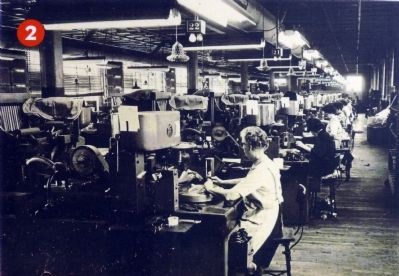
4. Female Rollers
❷ In the Depression of the 1930s Marsh had to adapt by purchasing 46 stogie rolling machines. The highly skilled and highly unionized workers went on strike and were replaced with women, who worked for less money. The women turned out to be very adept at using the machines. An early first-hand account from one of the female rollers attributed their skill to the fact their hands were very agile from sewing and knitting. close-up of photo on marker
Photographed by Allen C. Browne, December 30, 2013
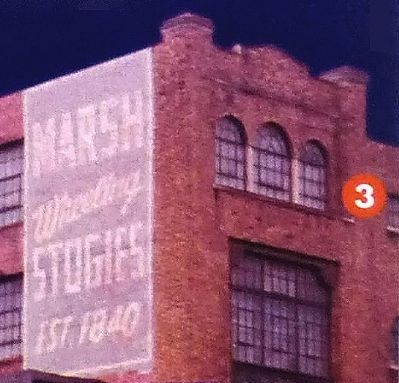
5. The Heyday
❸ The 1940s were the heyday for stogie production in Wheeling. The city's stogie makers produced as many as 3 million stogies per week. In 1941, Marsh made 74 million stogies. Despite their success, Marsh tried to maintain its reputation for inexpensive stogies. On December 21, 2001, the last stogies rolled out of Marsh's Market Street factory. Marsh Stogies are now made in Frankfort, Indiana. close-up of photo on marker
Photographed by Allen C. Browne, December 30, 2013
6. The Wheeling National Heritage Area
The Wheeling National Heritage Area
The Wheeling National Heritage Area preserves and celebrates the city's dramatic setting, resources, and history, including its role as the birthplace of the state of West Virginia during the Civil War.
A National Heritage Area is a part of our county's landscape that has been recognized by the United States Congress for its unique contribution to the American Experience.close-up of logo on marker
A National Heritage Area is a part of our county's landscape that has been recognized by the United States Congress for its unique contribution to the American Experience.
Photographed by Allen C. Browne, August 31, 2005
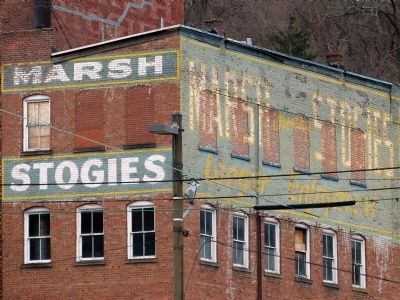
7. Marsh Stogies Factory
Photographed by Allen C. Browne, December 31, 2013
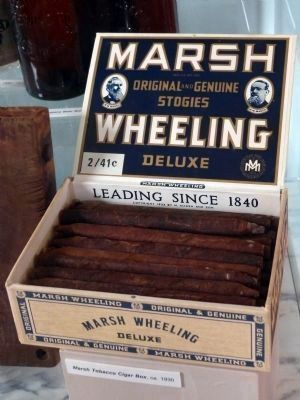
8. Marsh Tobacco Cigar Box, ca. 1930
A box of stogies on display at WVA Independence Hall.
Photographed by Allen C. Browne, December 31, 2013
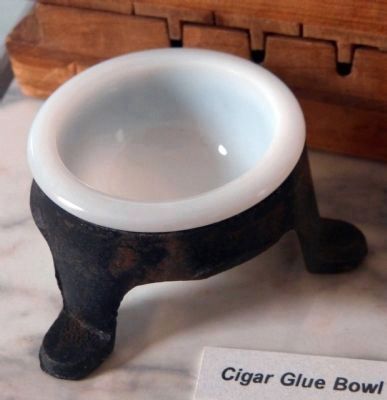
9. Cigar Glue Bowl used at Marsh Tobacco, ca. 1930
Credits. This page was last revised on June 16, 2016. It was originally submitted on January 5, 2014, by Allen C. Browne of Silver Spring, Maryland. This page has been viewed 1,883 times since then and 91 times this year. Photos: 1, 2, 3, 4, 5, 6, 7, 8, 9. submitted on January 5, 2014, by Allen C. Browne of Silver Spring, Maryland. • Bill Pfingsten was the editor who published this page.
