Zona 4 in Ciudad de Guatemala in Guatemala Department, — Central America
Monument of the Star
Monumento de La Estrella
Photographed by J.M. Bruton, December 31, 2013
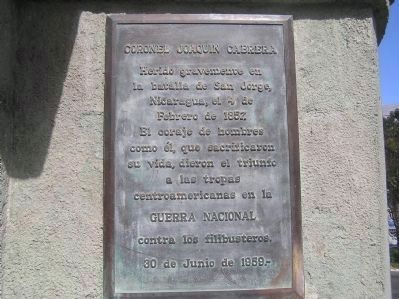
1. Colonel Joaquin Cabrera

This marker consists of nine bronze plaques mounted to a single monument. Plaques are numbered, and those with substantive text are presented in Spanish, and then translated into English.
Herido gravemente en la batalla de San Jorge, Nicaragua, el 4 de Febrero de 1857. El coraje de hombres como él, que sacrificaron su vida, dieron el triunfo a las tropas. centroamericanos en la GUERRA NACIONAL contra los filibusters. 30 de Junio de 1959.
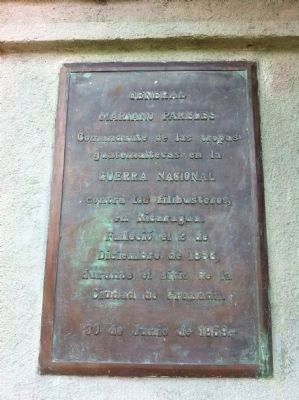
Comandante de las tropas guatemaltecas en la GUERRA NACIONAL contra los filibusteros en Nicaragua. Falleció el 2 de Diciembre de 1856, durante el sitio de la Ciudad de Granada. 30 de Junio de 1959.
this page online
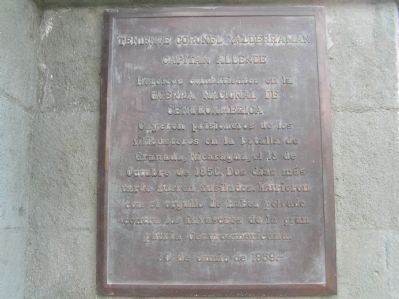
Heróicas combatientes en la GUERRA NACIONAL DE CENTROAMERICA. Cayeron prisioneros de los filibusteros en la batalla de Granada, Nicaragua el 13 de Octubre de 1856. Dos dias mas tarde fueron fusilados. Murieron con el orgullo de haber peleado los invasores de la gran patria Centroamericana. 30 de Junio de 1959.
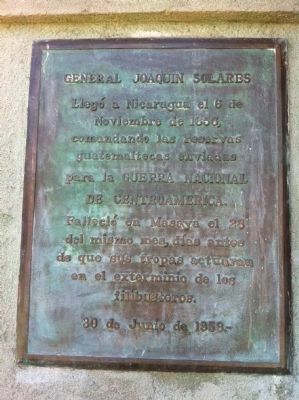
Llegó a Nicaragua el 6 de Noviembre de 1856, comandando las reservas guatemaltecas enviadas para la GUERRA NACIONAL DE CENTROAMERICA. Falleció en Masaya el 28 del mismo mes, días antes de que sus tropas actuaran en el exterminio de los filibusteros. 30 de junio de 1959.
Photographed by J.M. Bruton, December 31, 2013
2. General Mariano Paredes
Erected 1908 by Commissioned by President Estrada Cabrera.
Topics. This historical marker is listed in these topic lists: Military • Notable Events. A significant historical month for this entry is February 1813.
Location. 14° 36.919′ N, 90° 30.835′ W. Marker is in Ciudad de Guatemala, Guatemala (Guatemala Department). It is in Zona 4. It is at the intersection of Avenida La Reforma Zona 10 and 10 Avenida y Ruta 6 Zona 4, in the median on Avenida La Reforma Zona 10. Botanical Garden on the right hand side; Liceo Guatemala on the right hand side; Chamber of Commerce, to the left of 10 Avenida. Touch for map. Marker is in this post office area: Ciudad de Guatemala, Guatemala 01010, Guatemala. Touch for directions.

Regionally, it is in North America, specifically in Central America, in Mesoamerica, on the Ring of Fire, on the Pacific Rim, and in the Western Hemisphere. Historically, it finds itself in what was once New Spain and also a Spanish colony.
Other nearby markers. At
Photographed by J.M. Bruton, December 31, 2013
3. Teniente Colonel Valderraman y Capitan Allende
Regarding Monument of the Star.
Commissioned by President Estrada Cabrera, with Decree #678 on January 1, 1908, this monument was created to honor the perpetual memory of those who gave their lives during the Central American National War. Many present day Central American countries had committed to preserving the sovereign status of the region; this monument was dedicated to the heroes of that war. Giocondo Granai was originally contracted to construct the monument. The sculptor was
Photographed by J.M. Bruton, December 31, 2013
4. General Joaquin Solares
The Central American National War led to a unified effort (of present day Guatemala, El Salvador, Honduras, Nicaragua ) confronting the U.S. led invasion of the 1850s. William Walker, native of Tennessee, was the head of a private military expedition with the intention of establishing a territory to be annexed by the United States. This enterprise then known as 'filibustering' was the reason for the invasion, later Walker was captured and executed by the government of Honduras in 1860.
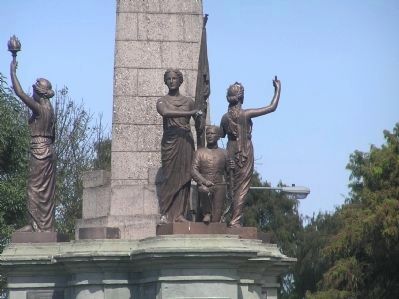
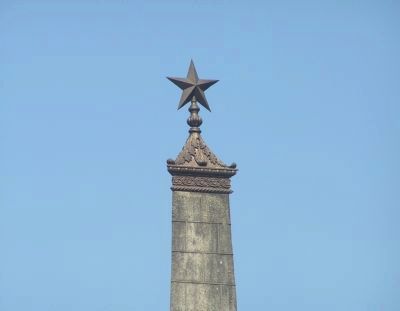
Six purple-basalt steps arise from an octagonal platform. The steps are the foundation for a green granite base, from where a pink-porphyry containing triangular center hosts a star on top. There are nine plaques, four statues, and a star on top; all are made of bronze. The plaque inscriptions were placed after the centenary of the National War, June 30, 1959, Army Day, during the government of José Miguel Ramón Ydígoras.
Also see . . . Monumento del Ejército o de La Estrella.
Photographed by Jo Solorzano, January 20, 2014
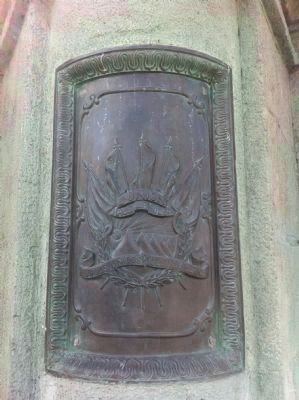
5. Estados Unidos de Centroamerica
United States of Central America.
Although one of the flags on the plaque resembles "Old Glory", that one was the flag of the Republic of El Salvador at the moment of the monument was created.
Although one of the flags on the plaque resembles "Old Glory", that one was the flag of the Republic of El Salvador at the moment of the monument was created.
Additional keywords. Filibuster, William Walker, Juan Santamaria
Photographed by Jo Solorzano, January 14, 2014
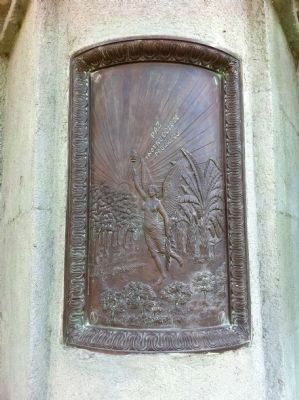
6. Paz Instruccion Progreso
Peace Instruction Progress (The sun rays represent truth.)
Photographed by Jo Solorzano, January 20, 2014
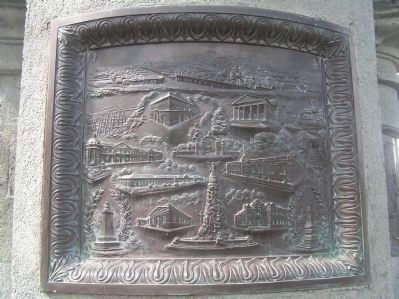
7. Multiple Views of Guatemala
Multiple areas of Guatemala: View of city, Railroad Cows' Bridge, Palace of the Post Office, Bust of Miguel Hidalgo, Monument to the Railroad, Former Minerva Temple, Port Cranes, Railroad Tunnel to Barrios at Agua Caliente, Boys' Practical School.
Photographed by Jo Solorzano, January 20, 2014
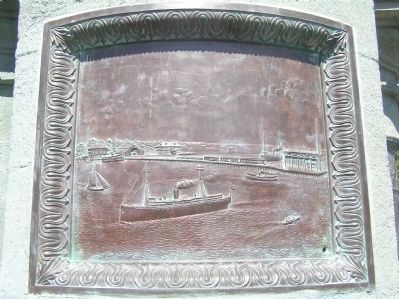
8. A scene from the port of San José
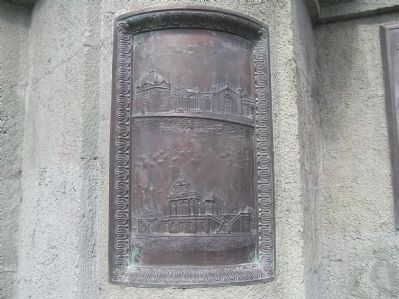
Photographed by Jo Solorzano, January 20, 2014
9. Exposition District and The Palace of Reform
Photographed by Jo Solorzano, January 20, 2014
10. Muses
Photographed by J.M. Bruton, December 31, 2013
11. La Estrella
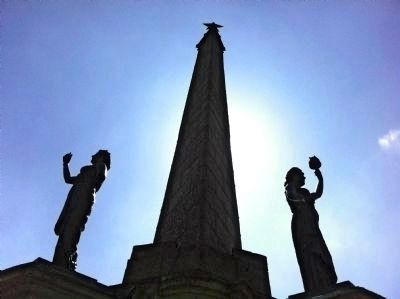
Photographed by Jo Solorzano, January 13, 2014
12. Monumento de La Estrella
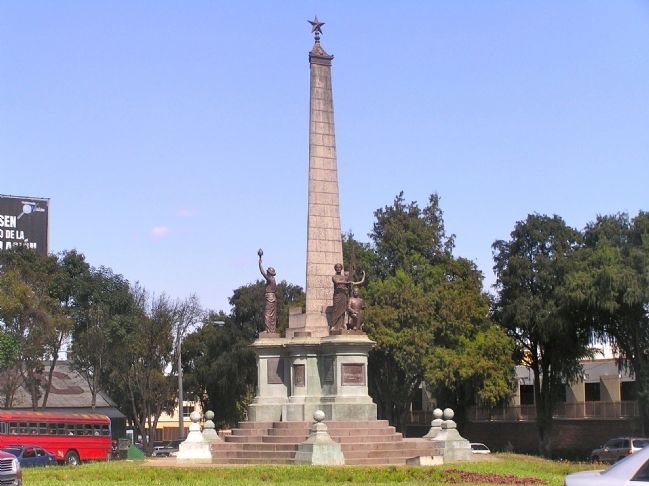
Photographed by J.M. Bruton, December 31, 2013
13. Monumento de La Estrella
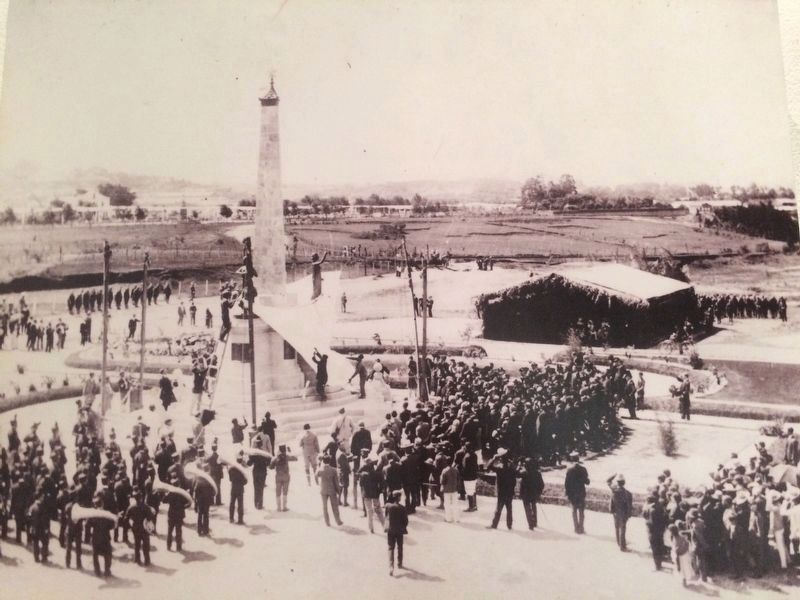
1908
14. A photo from the Monument of the Star's inauguration
This photo was at the Museo Miraflores in Guatemala City.
Credits. This page was last revised on September 3, 2020. It was originally submitted on January 20, 2014, by Jo Solorzano of San Francisco, California. This page has been viewed 1,229 times since then and 78 times this year. Photos: 1, 2, 3, 4, 5, 6, 7, 8, 9, 10, 11, 12, 13. submitted on February 5, 2014, by Jo Solorzano of San Francisco, California. 14. submitted on September 2, 2019, by J. Makali Bruton of Washington, District of Columbia. • Andrew Ruppenstein was the editor who published this page.
