Brightwood in Northwest Washington in Washington, District of Columbia — The American Northeast (Mid-Atlantic)
What a Beautiful Location, Brightwood
Battleground to Community
| — | Brightwood Heritage Trail | — |
Photographed by Allen C. Browne, May 18, 2013
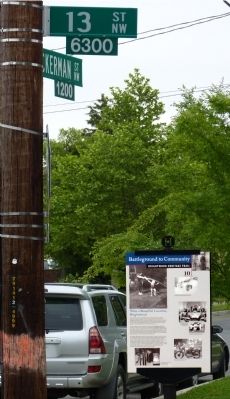
1. What a Beautiful Location, Brightwood Marker
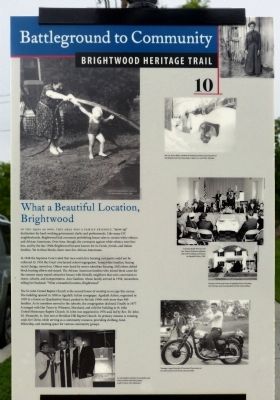
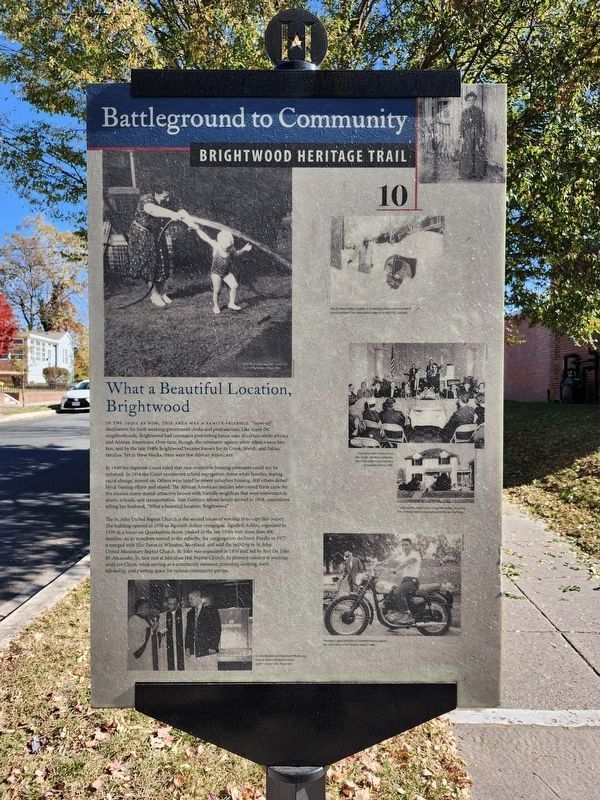
In the 1930s as now, this area was a family friendly, "move-up" destination for hard-working government clerks and professionals. Like many DC neighborhoods, Brightwood had covenants prohibiting sales to certain white ethnics and African Americans. Over time, though, the covenants against white ethnics were broken, and by the late 1940s Brightwood became known for its Greek, Jewish, and Italian families. Yet in these blocks were few African Americans.
In 1948 the Supreme Court ruled that race-restrictive housing covenants could not be enforced. In 1954 the Court overturned school segregation. Some white families, fearing racial change, moved on. Others were lured by newer suburban housing. Still others defied block busting efforts and stayed. The African American families who joined them came for the reasons many stayed: attractive houses with friendly neighbors that were convenient to stores, schools, and transportation. Ann Gardener, whose family arrived in 1958, remembers telling her husband, "What a beautiful location, Brightwood."
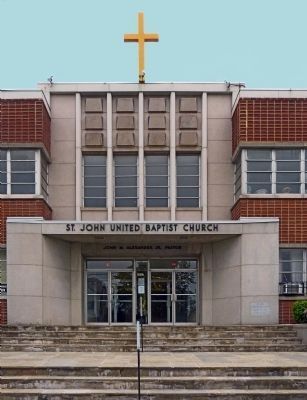
The St. John United Baptist Church is the second house of worship to occupy this
this page online
Reverse
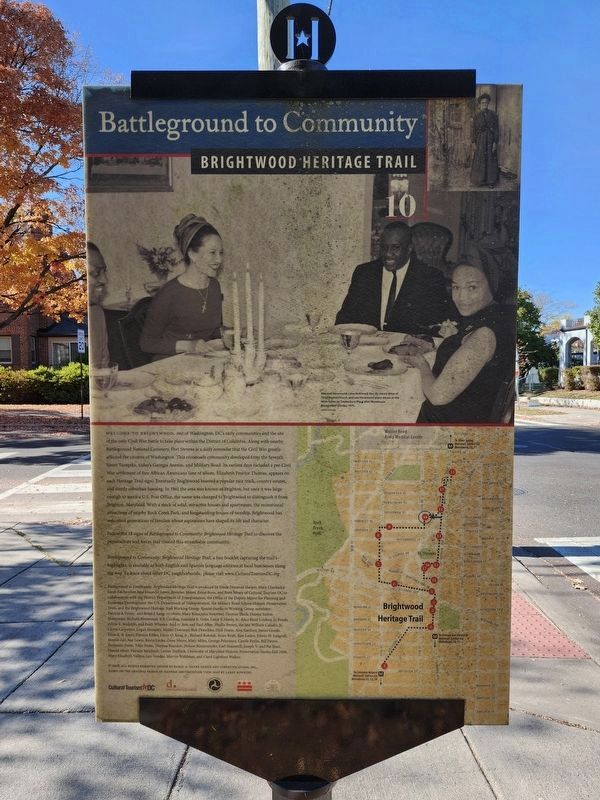
Welcome to Brightwood, one of Washington, DC's early communities and the site of the only Civil War battle to take place within the District of Columbia. Along with nearby Battleground National Cemetery, Fort Stevens is a daily reminder that the Civil War greatly affected the citizens of Washington. This crossroads community developed from the Seventh Street Turnpike, today's Georgia Avenue, and Military Road. Its earliest days included a pre-Civil War settlement
Photographed by J. Makali Bruton, November 2, 2024
2. What a Beautiful Location, Brightwood Marker
Caption
Maxwell Honemond, Lena McKinney, Rev. Dr. Henry Miles of Third Baptist Church, and Lee Honemond enjoy dinner at the Miles home on Tewkesbury Place after Morehouse Recognition Sunday, 1975.
Erected by Cultural Tourism DC. (Marker Number 10.)
Topics and series. This historical marker is listed in these topic lists: African Americans • Civil Rights • Education • Religion & Religious Structures • Settlements & Settlers. In addition, it is included in the Brightwood Heritage Trail
Photographed by J. Makali Bruton, November 2, 2024
3. What a Beautiful Location, Brightwood Marker Reverse
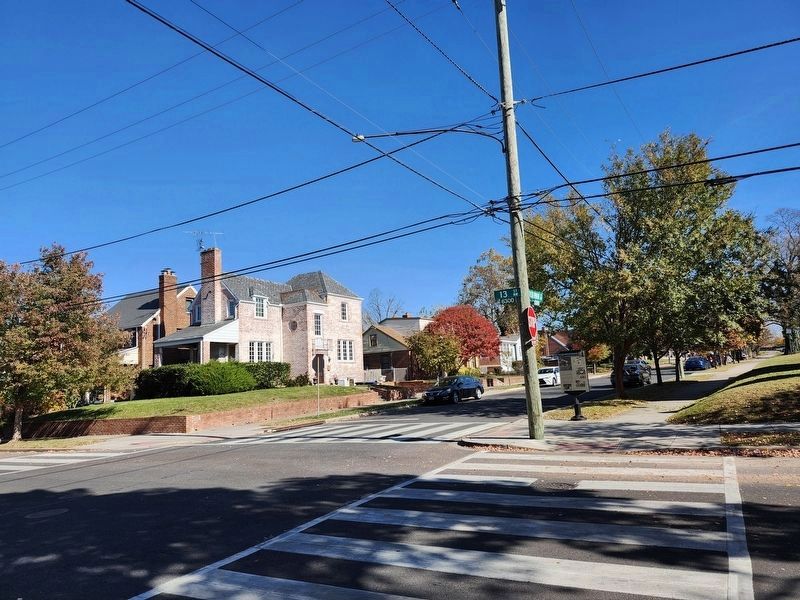
Location. 38° 58.059′ N, 77° 1.774′ W. Marker is in Northwest Washington in Washington, District of Columbia. It is in Brightwood. It is at the intersection of Tuckerman Street Northwest and 13th Street Northwest, on the right when traveling east on Tuckerman Street Northwest. Touch for map. Marker is at or near this postal address: 1225 Tuckerman Street Northwest, Washington DC 20012, United States of America. Touch for directions.

Regionally, this marker is in the Washington Metropolitan Area. It is also in the American Northeast, in the Upper South, in the Mid-Atlantic, in the Tidewater, and in the Chesapeake Bay Region. Globally, it is in North America, the Western Hemisphere, the Western World, and the Anglosphere.
Other nearby markers. At least 8 other markers are within walking distance of this marker: St. John United Baptist Church (within shouting distance of this marker); The Seventh Street Turnpike (about 500 feet away, measured in a direct line); Automobiling on The Avenue (about 800 feet away); Never Again Such Homes At the Price! (approx. 0.2 miles
Photographed by J. Makali Bruton, November 2, 2024
4. What a Beautiful Location, Brightwood Marker
Other markers no longer nearby. Park and Shop! (was approx. 0.2 miles away but has been confirmed missing); Fort Stevens (was approx. ¼ mile away but has been replaced with another marker now near it).
Photographed by Allen C. Browne, May 18, 2013
5. What a Beautiful Location, Brightwood Marker
Photographed by Allen C. Browne, May 18, 2013
6. St. John United Baptist Church
Photographed by Allen C. Browne, May 18, 2013
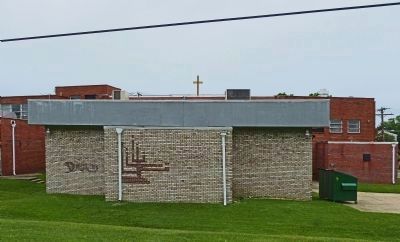
7. St. John / Agudath Achim
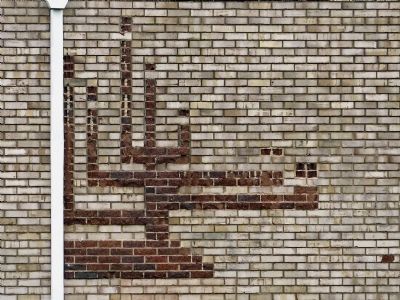
The eastern wall in the rear of St. John Baptist displays a brick Menorah, a remnant of Agudath Achim synagogue.
Photographed by Allen C. Browne, May 18, 2013
8. The Menorah
Credits. This page was last revised on August 27, 2026. It was originally submitted on April 5, 2014, by Allen C. Browne of Silver Spring, Maryland. This page has been viewed 1,785 times since then and 79 times this year. Photos: 1. submitted on April 5, 2014, by Allen C. Browne of Silver Spring, Maryland. 2, 3, 4. submitted on November 2, 2024, by J. Makali Bruton of Washington, District of Columbia. 5, 6, 7, 8. submitted on April 5, 2014, by Allen C. Browne of Silver Spring, Maryland. • Bill Pfingsten was the editor who published this page.
