
Midtown - Downtown in Columbia in Richland County, South Carolina — The American South (South Atlantic)
Assembly Street
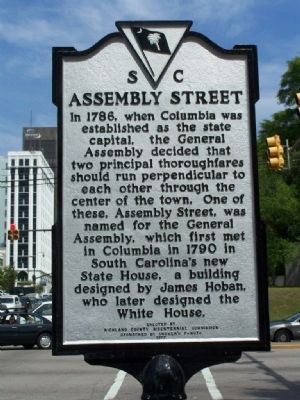
Photographed by Mike Stroud, April 2008
1. Assembly Street Marker
Erected 1977 by Richland County Bicentennial Commission Sponsored by Cromer's P-Nuts. (Marker Number 40-90.)
Topics and series. This historical marker is listed in this topic list: Roads & Vehicles. In addition, it is included in the South Carolina Historical Markers series list. A significant historical year for this entry is 1786.
Location. 34° 0.038′ N, 81° 2.131′ W. Marker is in Columbia, South Carolina, in Richland County. It is in Midtown - Downtown. It is at the intersection of Gervais Street (U.S. 1 - 378) and Assembly Street (U.S. 76), on the right when traveling east on Gervais Street. Touch for map. Marker is in this post office area: Columbia SC 29201, United States of America. Touch for directions.

Regionally,
this page online
Other nearby markers. At least 8 other markers are within walking distance of this marker: J. Marion Sims (within shouting distance of this marker); Robert E. Lee Memorial Highway (about 400 feet away, measured in a direct line); South Carolina Veterans Memorial (about 500 feet away); Cap. Swanson Lunsford (about 500 feet away); Here Stood The State House (about 500 feet away); 1001 Gervais Street (about 500 feet away); Spanish-American War Cannon (about 500 feet away); The Architecture of Strength (about 500 feet away). Touch for a list and map of all markers in Columbia.
Also see . . .
1. James Hoban, From: The Columbia Encyclopedia, Sixth Edition - Date: 2008. James Hoban , c.1762-1831, American architect, b. Ireland.
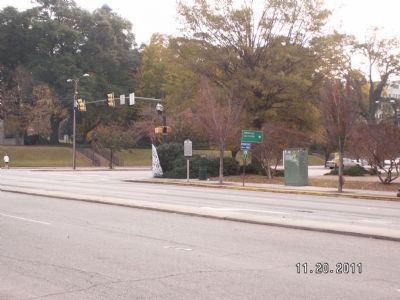
Photographed by Anna Inbody, November 20, 2011
2. Assembly Street Marker
2. Wikipedia entry for James Hoban. The Hoban Portfolio. (Submitted on May 1, 2008, by Mike Stroud of Bluffton, South Carolina.)
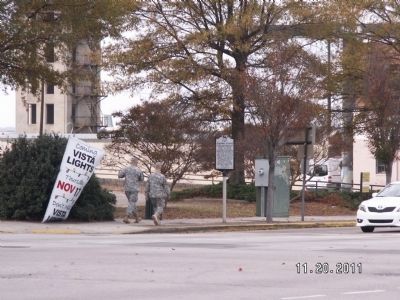
Photographed by Anna Inbody, November 20, 2011
3. Overview from the east looking west
Credits. This page was last revised on February 16, 2023. It was originally submitted on May 1, 2008, by Mike Stroud of Bluffton, South Carolina. This page has been viewed 1,667 times since then and 28 times this year. Photos: 1. submitted on May 1, 2008, by Mike Stroud of Bluffton, South Carolina. 2, 3. submitted on November 22, 2011, by Anna Inbody of Columbia, South Carolina. • Kevin W. was the editor who published this page.
