Finding Freedom
National Underground Railroad Network to Freedom
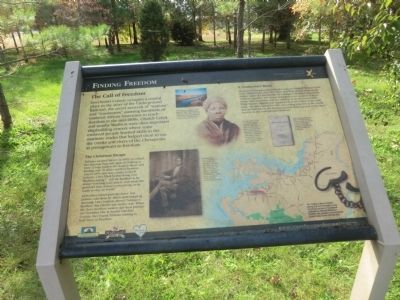
The Call of Freedom
Dorchester County occupies a central place in the story of the Underground Railroad, the secret network of “stations” and “conductors” assisting hundreds of enslaved African Americans to reach freedom in the mid-1800s. Church Creek and nearby Madison were ten important shipbuilding centers where some enslaved people learned skills in the maritime trades that helped them to use the creeks and rivers of the Chesapeake as passageways to freedom.
The Christmas Escape
Authorities intercepted the letter, but Jackson told them he didn’t understand its meaning. Later Jackson alerted Tubman’s brothers that Harriet was on her way. When the three brothers went to see their parents on Christmas
A Conductor’s Roots
(Inscription under the photo in the center top)
(Inscription beside the photo in the lower center)
(Inscription
(Inscription beside the book-Impending Crisis)
The “Finding a Way to Freedom” Driving Tour and Dorchester County Courthouse are part of the National Underground Railroad Network to Freedom, info available at the Dorchester County Visitor Center (410-228-1000)
this page online
The famed Underground Railroad conductor Harriet Tubman lived and worked in this area. Her father Ben Ross served as the head timber cutter of a slaveholder on a Madison/Woolford plantation. Tubman’s mother “Rit” Green belonged to the stepson of Ben’s owner who moved her and her children to Bucktown in 1823. While Harriet Tubman was separated from her father in her early years, she later returned to this area toiling with him in the woods and marshes where she learned survival skills essential to her later success on the Underground Railroad.
This canal near Madison was dug with slave labor between 1810 and 1830. The canal was used to float logs to boatyards on the Little Choptank River.-Courtesy of Kate Clifford Library.
William Henry (Ross) Stewart, Sr., one of Harriet Tubman’s brothers who fled with her on Christmas Day, 1854. The Ross brothers settled in Ontario, Canada. Photo taken c. 1860-Courtesy of Judith Bromwell.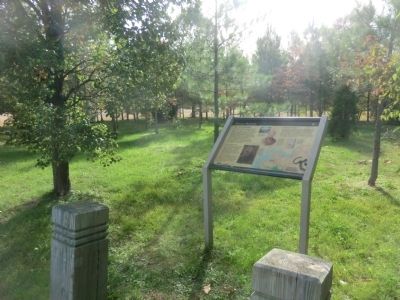
Harriet wrote: “I was a conductor on the Underground Rail Road for eight years and I can say what most conductors can’t say—I never ran my train off the track and I never lost a passenger. (Women’s Suffrage Meeting, Rochester, NY) (Courtesy of the Collections of the Cuyahoga Museum of History and Art)
This book, published in 1857, attacked slavery. Charles Dixon of Church Creek was brought to trial in Cambridge for loaning his copy of the book to friends and neighbors.
Erected by Chesapeake Bay Gateways Network-Maryland Heritage Area.
Topics and series. This historical marker is listed in these topic lists: Abolition & Underground RR • African Americans. In addition, it is included in the Network to Freedom series list. A significant historical year for this entry is 1849.
Location. 38° 30.084′ N, 76° 9.15′ W.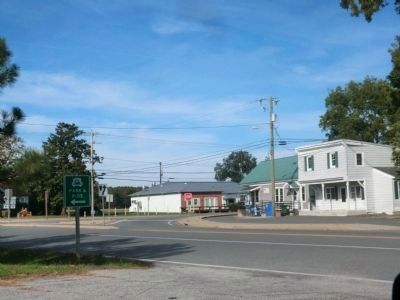

Regionally, this marker is on the Eastern Shore. It is also in the American Mid-Atlantic, on the Delmarva Peninsula, in the Tidewater, in the Chesapeake Bay Region, and on the Eastern Seaboard. Globally, it is in the North Atlantic Region, North America, the Western Hemisphere, the Western World, and the Anglosphere. Historically, it finds itself in what was once one of the original Thirteen Colonies and also the Antebellum South.
Other nearby markers. At least 8 other markers are within 4 miles of this marker, measured as the crow flies: Treaty Oak (approx. ¼ mile away); Church Creek (approx. 0.4 miles away); Walk the Old Trinity Heritage Trail (approx. 0.8 miles away); Writer, War Strategist, Enigma (approx. 0.8 miles away); Trinity P.E. Church (approx. 0.8 miles away); Malone's Church (approx.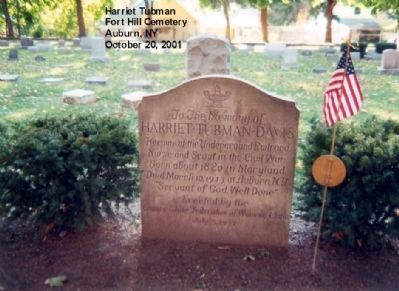
Another marker is no longer nearby. Anna Ella Carroll (was approx. 0.8 miles away but has been replaced with another marker now near it).
Credits. This page was last revised on July 22, 2020. It was originally submitted on November 11, 2014, by Don Morfe of Baltimore, Maryland. This page has been viewed 785 times since then and 26 times this year. Photos: 1, 2, 3, 4. submitted on November 11, 2014, by Don Morfe of Baltimore, Maryland. • Bill Pfingsten was the editor who published this page.
