
Sparrows Point in Baltimore County, Maryland — The American Northeast (Mid-Atlantic)
Wetlands
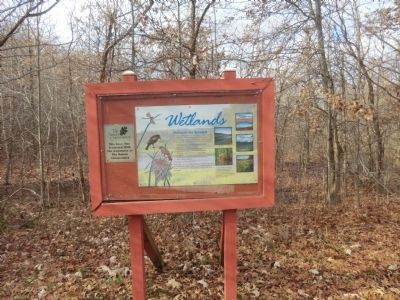
Photographed by Don Morfe, December 18, 2014
1. Wetlands Marker
Wetlands are Valuable
Far from being scary or worthless places, wetlands are wonderful. We know now that wetlands are a vital link in the natural system that supplies the water which sustains all life. Wetlands are important in many ways. *Wetlands lessen the destructive effects of storms and floods. *Wetlands cleanse water of pollutants. *Wetlands recharge groundwater supplies. *Wetlands provide homes for many kinds of wildlife. *Wetlands are beautiful places for people to enjoy being outdoors.
Going, going, gone? Every year we lose another two percent of the remaining wetlands in the United States-an astonishing 290,000 acres-to agriculture, development, mining, and other purposes.
The many kinds of wetlands-including hardwood swamps, freshwater and saltwater marshes, prairie potholes, and bogs-all share the characteristic of having wet or soggy soil for at least part of the year.
Topics. This historical marker is listed in these topic lists: Environment • Horticulture & Forestry.
Location. 39° 12.852′ N, 76° 25.482′ W. Marker is in Sparrows Point, Maryland, in
this page online

Regionally, this marker is in the Baltimore Metro Region and in Central Maryland. It is also in the American Mid-Atlantic, in the Chesapeake Bay Region, and on the Eastern Seaboard. Globally, it is in the North Atlantic Region, North America, the Western Hemisphere, the Western World, and the Anglosphere. Historically, it finds itself in what was once one of the original Thirteen Colonies and also the Antebellum South.
Other nearby markers. At least 8 other markers are within walking distance of this marker: Dreaded Alarm (approx. 0.4 miles away); Join the Adventure (approx. 0.4 miles away); Hard Travel (approx. 0.4 miles away); John Smith Explores the Chesapeake (approx. 0.4 miles away); Nature's Engineer (approx. half a mile away); The Rebirth of a Maryland Historical Treasure (approx. half a mile away); About This Fountain… (approx. half a mile away); War in the Chesapeake (approx. 0.6 miles away).
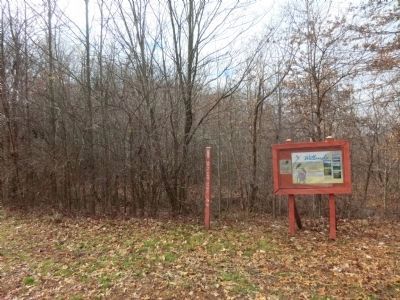
Photographed by Don Morfe, December 18, 2014
2. Wetlands Marker with a Wetland Trail marker
Another marker is no longer nearby. The Trolley Station at Bayshore Park (was approx. half a mile away but has been confirmed missing).
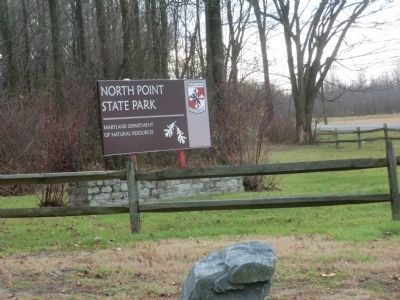
Photographed by Don Morfe, December 18, 2014
3. Sign at the entrance to North Point State Park
Credits. This page was last revised on June 16, 2016. It was originally submitted on December 19, 2014, by Don Morfe of Baltimore, Maryland. This page has been viewed 499 times since then and 9 times this year. Photos: 1, 2, 3. submitted on December 19, 2014, by Don Morfe of Baltimore, Maryland. • Bill Pfingsten was the editor who published this page.
