South Pass City in Fremont County, Wyoming — The American West (Mountains)
South Pass City
Wyoming
Photographed by Barry Swackhamer, August 24, 2014
1. South Pass City Marker
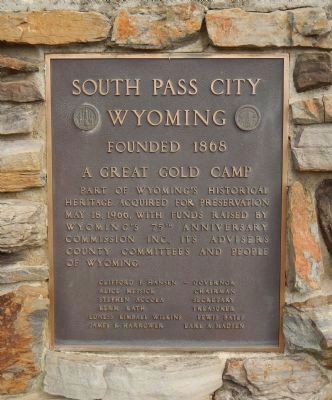
A Great Gold Camp
Part of Wyoming’s historical heritage. Acquired for preservation May 18, 1966, with funds raised by Wyoming;s 75th Anniversary Commission Inc., its advisers, county committees and people of Wyoming. Clifford P. Hansen - Governor
Alice Mesick - Chairman
Stephen Accola - Secretary
Kerm Kath - Treasurer
Edness Kimball Wilkins • Lewis Bath
James K. Harrower • Earl A. Madsen
Topics and series. This historical marker is listed in this topic list: Settlements & Settlers. In addition, it is included in the Oregon Trail series list. A significant historical date for this entry is May 18, 1858.
Location. 42° 28.105′ N, 108° 48.056′ W. Marker is in South Pass City, Wyoming, in Fremont County. It is on South Pass Main Street near Price Street, on the left when traveling east. Touch for map. Marker is at or near this postal address: 14 South Pass Main Street, Lander WY 82520, United States of America. Touch for directions.

Regionally, this marker is in Wind River Country. It is also in the American Mountain West. Globally, it is in North America, the Rocky Mountains, the Western Hemisphere,
this page online
Other nearby markers. At least 8 other markers are within 2 miles of this marker, measured as the crow flies: First Masonic Lodge in Wyoming (about 600 feet away, measured in a direct line); Esther Hobart Morris (about 700 feet away); Crushing Gold Ore (approx. 0.3 miles away); South Pass City: Wyoming’s Biggest Gold Boom and Bust (approx. half a mile away); The Carissa Mine: Cycle of Boom and Bust (approx. half a mile away); How a Stamp Mill Works (approx. 0.6 miles away); The English Tunnel (approx. 0.7 miles away); South Pass and South Pass City (approx. 1.8 miles away). Touch for a list and map of all markers in South Pass City.
Photographed by Barry Swackhamer, August 24, 2014
2. South Pass City Marker
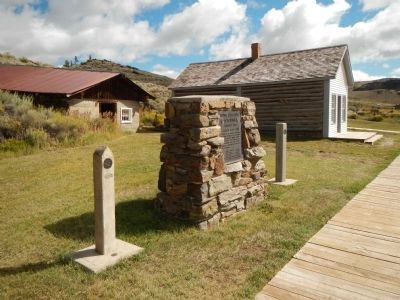
The Cave (l) and John & Lida Sherlock House (r) are in the background.
Photographed by Barry Swackhamer, August 24, 2014
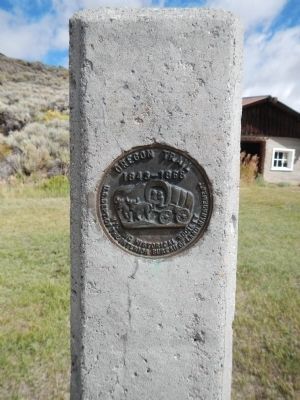
3. Oregon Trail Medallion
On posts located on either side of the South Pass City Monument.
Photographed by Barry Swackhamer, August 24, 2014
4. South Pass City map
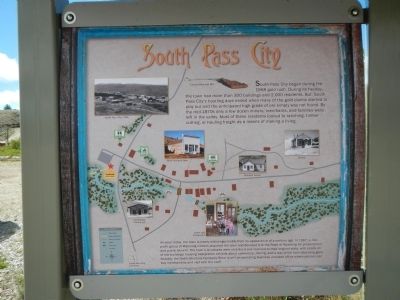
South Pass City began during the 1868 gold rush. During it heyday, the town had more than 300 buildings and 2,000 residents. But, South Pass City’s bustling days ended when many of the gold claims started to play out and the anticipated high grade of ore simply was not found. By the mid-1870s only a few miners, merchants and families were left in the valley. Most of these residents looked to ranching, timber cutting, or hauling freight as a means of making a living.
As seen today, the town is nearly indistinguishable from its appearance of a century ago. In 1967, a non-profit group of Wyoming citizens acquired the town and donated it to the State of Wyoming for preservation and public benefit. The town’s structures were stabilized and restored to their original state, with nearly all of the buildings housing interpretive exhibits about commerce, mining, and a way of life from days long gone. Notably, the Smith-Sherlock Company Store is still an operating business and post office where patrons can by merchandise and visit with the staff. Caption: (top left) South Pass City, 1906.
Click on the image to enlarge the map.
As seen today, the town is nearly indistinguishable from its appearance of a century ago. In 1967, a non-profit group of Wyoming citizens acquired the town and donated it to the State of Wyoming for preservation and public benefit. The town’s structures were stabilized and restored to their original state, with nearly all of the buildings housing interpretive exhibits about commerce, mining, and a way of life from days long gone. Notably, the Smith-Sherlock Company Store is still an operating business and post office where patrons can by merchandise and visit with the staff. Caption: (top left) South Pass City, 1906.
Click on the image to enlarge the map.
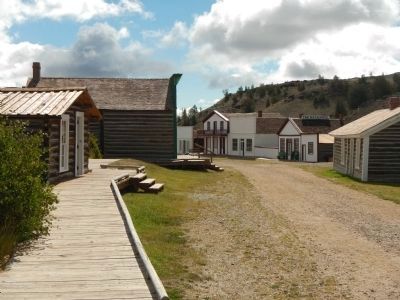
Photographed by Barry Swackhamer, August 24, 2014
5. Main Street from Tibbals Cabin
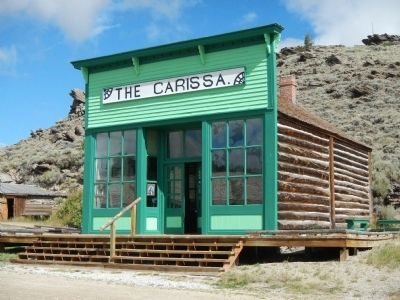
Photographed by Barry Swackhamer, August 24, 2014
6. Carissa Saloon
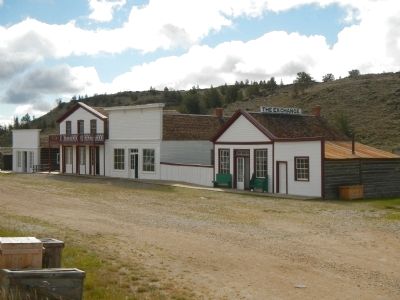
Photographed by Barry Swackhamer, August 24, 2014
7. South Pass City Main Street
W.C. Ervin Store (l), South Pass Hotel (c), Exchange Saloon (r).
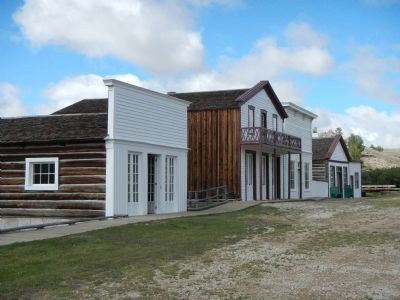
Photographed by Barry Swackhamer, August 24, 2014
8. South Pass City Main Street
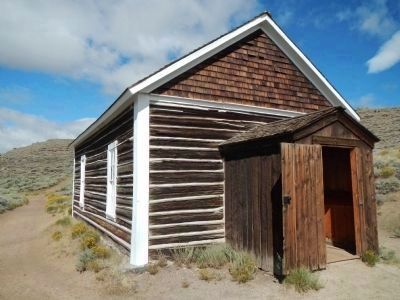
Photographed by Barry Swackhamer, August 24, 2014
9. South Pass School
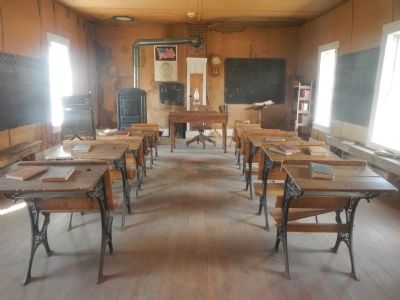
Photographed by Barry Swackhamer, August 24, 2014
10. South Pass School
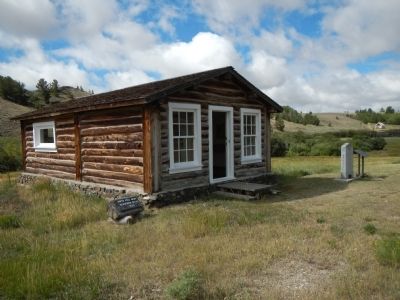
Photographed by Barry Swackhamer, August 24, 2014
11. E.A. Slack Cabine and Esther Morris Monument
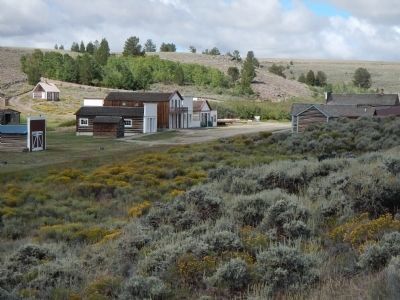
Photographed by Barry Swackhamer, August 24, 2014
12. South Pass City from South Pass School
(left edge to right) Sherlock Garage and Sherlock Barn (above), Libby Cabin (on hill), Ice House, W.C Ervin Store, South Pass Hotel, Exchange Saloon, John & Lida Sherlock House and Smith-Sherlock Co. Store (roofs only).
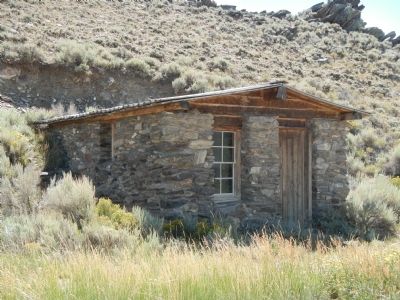
Photographed by Barry Swackhamer, August 24, 2014
13. Miners Shack
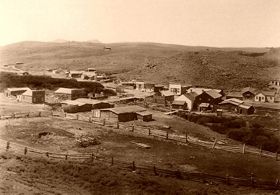
Public Domain
14. South Pass City, 1906
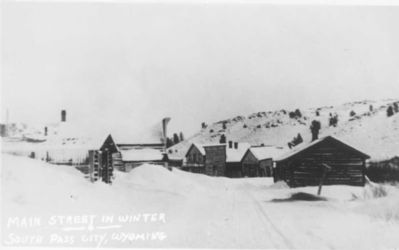
Public Domain
15. Main Street in Winter, South Pass City, Wyoming
Credits. This page was last revised on June 16, 2016. It was originally submitted on January 7, 2015, by Barry Swackhamer of Brentwood, California. This page has been viewed 835 times since then and 43 times this year. Photos: 1, 2, 3, 4, 5, 6, 7, 8, 9, 10, 11, 12, 13, 14, 15. submitted on January 7, 2015, by Barry Swackhamer of Brentwood, California. • Andrew Ruppenstein was the editor who published this page.
