
Eastern Neck National Wildlife Refuge near Rock Hall in Kent County, Maryland — The American Northeast (Mid-Atlantic)
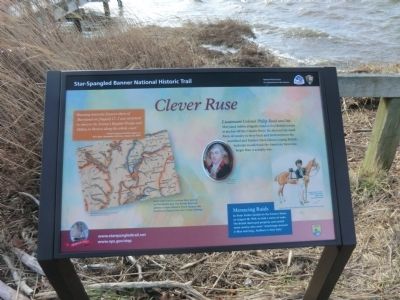
Clever Ruse
Star-Spangled Banner National Historical Trail
| — | National Park Service, U.S. Department of the Interior | — |
Photographed by Don Morfe, January 30, 2015
1. Clever Ruse Marker
Lieutenant Colonel Philip Reed and his Maryland militia allegedly tried to fool British Troops at anchor off the Chester River. He directed his small force of cavalry to ferry back and forth between mainland and Eastern Neck Island, hoping British lookouts would think the American force was larger than it actually was.
Menacing Raids
Sir Peter Parker landed on the Eastern Shore on August 28, 1814, to lead a series of raids. The British destroyed property and routed some cavalry who were “smashingly dressed in Blue and long…feathers in their hats.”
“Running down the Eastern shore of Maryland on (August) 27…I was surprised to observe the Enemy’s Regular Troops and Militia in Motion along the whole coast.”
British Captain Sir Peter Parker to Vice Admiral Alexander Cochrane, August 29, 1814.
Erected by National Park Service, U.S. Department of the Interior.
Topics and series. This historical marker is listed in these topic lists: War of 1812 • Waterways & Vessels. In addition, it is included in the Star-Spangled Banner National Historic Trail series list. A significant historical date for this entry is August 28, 1814.
Location. Marker has been permanently removed.
this page online
We have been informed that this marker is no longer there and will not be replaced. This page is an archival view of what was.
Regionally, this marker was on the Eastern Shore. It was also in the American Mid-Atlantic, on the Delmarva Peninsula, in the Tidewater, in the Chesapeake Bay Region, and on the Eastern Seaboard. Globally, it was in the North Atlantic Region, North America, the Western Hemisphere, the Western World, and the Anglosphere. Historically, it found itself in what was once one of the original Thirteen Colonies and also the Antebellum South.

Other nearby markers. At least 8 other markers are within 3 miles of this location, measured as the crow flies: Tundra Swan Range (within shouting distance
Photographed by Don Morfe, January 30, 2015
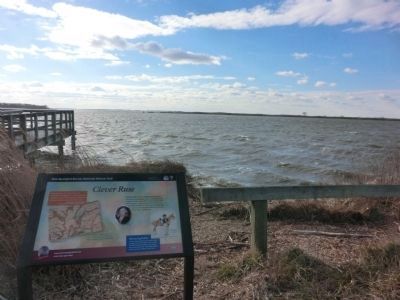
2. Clever Ruse Marker on the shore of the Chester River
Other markers no longer nearby. Long Distance Travelers (was approx. 0.6 miles away but has been permanently removed); Birds of Prey-Hunters in the Sky (was approx. 0.6 miles away but has been permanently removed).
Photographed by Don Morfe, January 30, 2015
3. Sign near the pull off for the Clever Ruse Marker
Photographed by Don Morfe, January 30, 2015
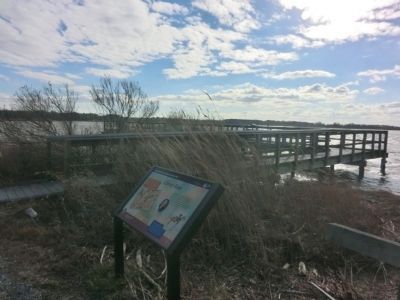
4. Boardwalk near the Clever Ruse Marker
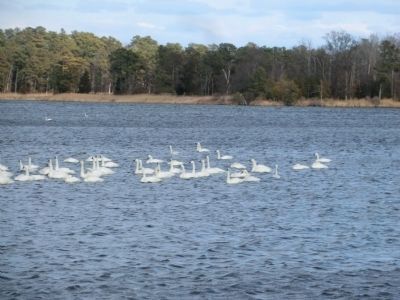
Photographed by Don Morfe, January 30, 2015
5. Tundra Swan in the Chester River
Credits. This page was last revised on May 25, 2025. It was originally submitted on February 6, 2015, by Don Morfe of Baltimore, Maryland. This page has been viewed 541 times since then and 26 times this year. Photos: 1, 2, 3, 4, 5. submitted on February 6, 2015, by Don Morfe of Baltimore, Maryland. • Bill Pfingsten was the editor who published this page.
