Franklin in Williamson County, Tennessee — The American South (East South Central)
Original St. Philip Catholic Church
Built In 1871
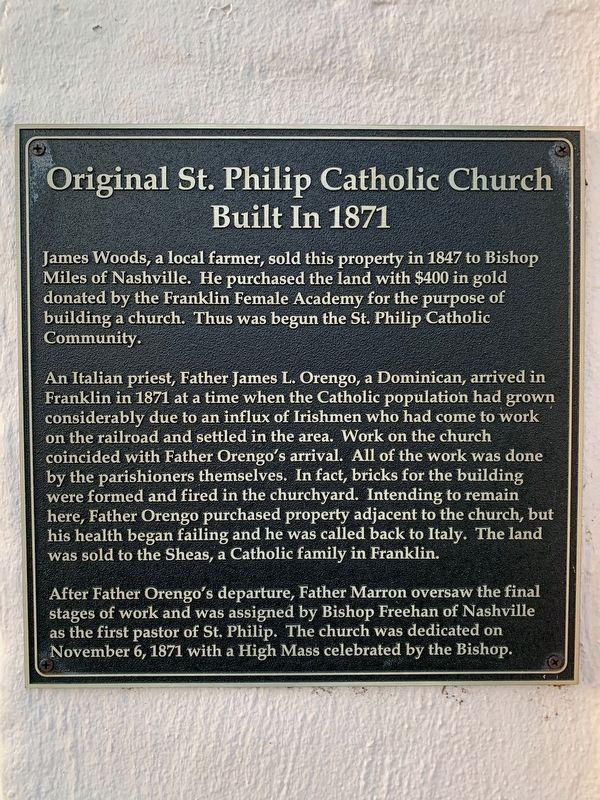
May 19, 2020
1. Original St. Philip Catholic Church Marker
An Italian priest, Father James L. Orengo, a Dominican, arrived in Franklin in 1871 at a time when the Catholic population had grown considerably due to an influx of Irishmen who had come to work on the railroad and settled in the area. Work on the church coincided with Father Orengo’s arrival. All of the work was done by the parishioners themselves. In fact, bricks for the building were formed and fired in the churchyard. Intending to remain here, Father Orengo purchased property adjacent to the church, but his health began failing and he was called back to Italy. The land was sold to the Sheas, a Catholic family in Franklin.
After Father Orengo’s departure, Father Marron oversaw the final stages of work and was assigned by Bishop Freehan of Nashville as the first pastor of St. Philip. The church was dedicated on November 6, 1871 with a High Mass celebrated by the
this page online
Topics. This historical marker is listed in this topic list: Religion & Religious Structures. A significant historical month for this entry is November 1866.
Location. 35° 55.548′ N, 86° 52.032′ W. Marker is in Franklin, Tennessee, in Williamson County. It is on East Main Street east of 2nd Avenue S, on the right when traveling east. Touch for map. Marker is in this post office area: Franklin TN 37064, United States of America. Touch for directions.

Regionally, this marker is in Middle Tennessee and in Greater Nashville. It is also in the American South and specifically in the Upper South. Globally, it is in North America, the Western Hemisphere, the Western World, and the Anglosphere. Historically, it finds itself in what was once the territory of the Mississippian Culture, one of the Confederate States of America, and the Antebellum South.
Other nearby markers. At least 8 other markers are within walking distance of this marker: John H. Eaton (here, next to this marker); St. Philip Catholic Church (a few steps from this marker); Historic Franklin Masonic Hall (within shouting distance of this marker); Masonic Temple (within
Photographed by Don Morfe, July 25, 2013
2. Original St. Philip Catholic Church Marker
Photographed by Don Morfe, July 25, 2013
3. Original St. Philip Catholic Church Marker
May 19, 2020
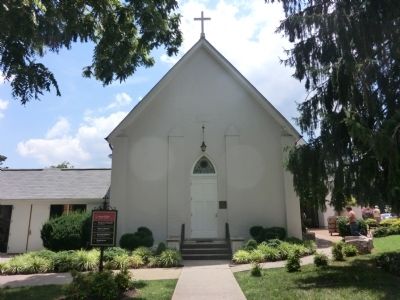
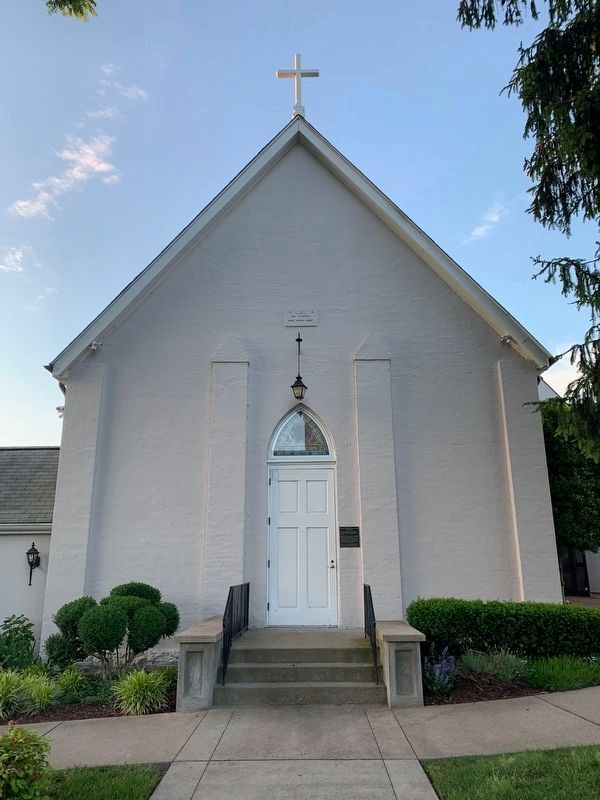
4. Original St. Philip Catholic Church
May 19, 2020
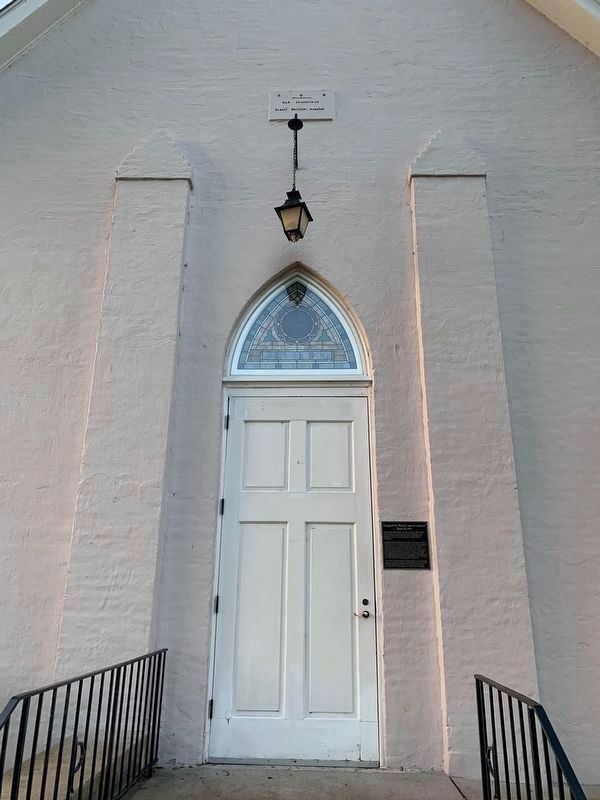
5. Original St. Philip Catholic Church Door detail
Above the light over the door, a sign reads:
D O M
Sub Invocatione
Sanctii Philippi Apostoli
D O M
Sub Invocatione
Sanctii Philippi Apostoli
Credits. This page was last revised on May 19, 2020. It was originally submitted on October 4, 2013, by Don Morfe of Baltimore, Maryland. This page has been viewed 891 times since then and 81 times this year. Last updated on May 12, 2015, by J. Makali Bruton of Washington, District of Columbia. Photos: 1. submitted on May 19, 2020. 2, 3. submitted on October 4, 2013, by Don Morfe of Baltimore, Maryland. 4, 5. submitted on May 19, 2020. • Andrew Ruppenstein was the editor who published this page.
