Moulton in Lawrence County, Alabama — The American South (East South Central)
Warrior Mountains
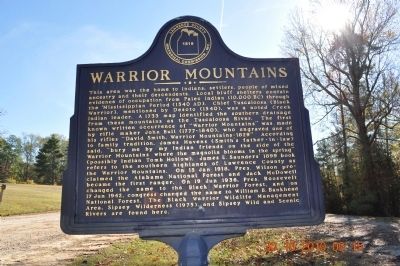
Photographed by Sandra Hughes, October 30, 2010
1. Warrior Mountains Marker
this page online
Erected by Lawrence County Historical Commission Inc.
Topics. This historical marker is listed in these topic lists: Indigenous Peoples and Communities • Settlements & Settlers. A significant historical date for this entry is June 15, 1936.
Location. 34° 20.712′ N, 87° 20.358′ W. Marker is in Moulton, Alabama, in Lawrence County. It is on County Route 33. Located at the Bankhead National Forest-Central Firetower and North Alabama Birding Trail site 14. Marker is at entrance. Directions: From the intersection of AL Hwy 24 and AL Hwy 33 in Moulton, head south on Hwy 33 for 11.4 miles into Bankhead National Forest. Touch for map. Marker is in this post office area: Moulton AL 35650, United States of America. Touch for directions.

Regionally, this marker is in North Alabama. It is also in the American South, specifically in the Deep South, in Appalachia, and specifically in Southern Appalachia. Globally, it is in North America, a Gulf of Mexico state, the Western Hemisphere, the Western World, and the Anglosphere. Historically, it finds itself in what was once the territory of
Photographed by Sandra Hughes, October 30, 2010
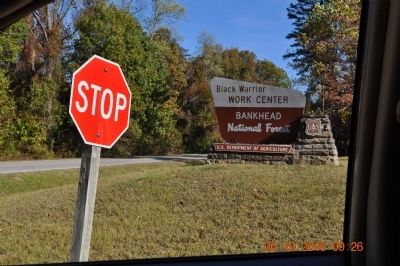
2. Black Warrior Work Center ~Bankhead National Forest
Other nearby markers. At least 8 other markers are within 10 miles of this marker, measured as the crow flies: Birds of North Alabama (about 400 feet away, measured in a direct line); Explore the Forest (about 400 feet away); A Significant Forest (about 400 feet away); Pine Torch Church (approx. 2.8 miles away); High Town Path (approx. 5 miles away); Cheatham Road (approx. 5½ miles away); Youngtown Community (approx. 5.8 miles away); General Leroy Pope Walker (approx. 9.4 miles away). Touch for a list and map of all markers in Moulton.
Photographed by Sandra Hughes, October 30, 2010
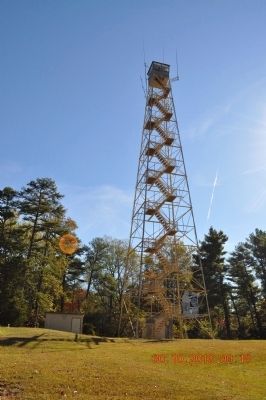
3. Warrior Mountains Marker-nearby Firetower
Photographed by Sandra Hughes, October 30, 2010
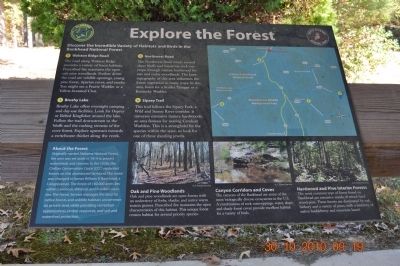
4. Explore the Forest~ You are here
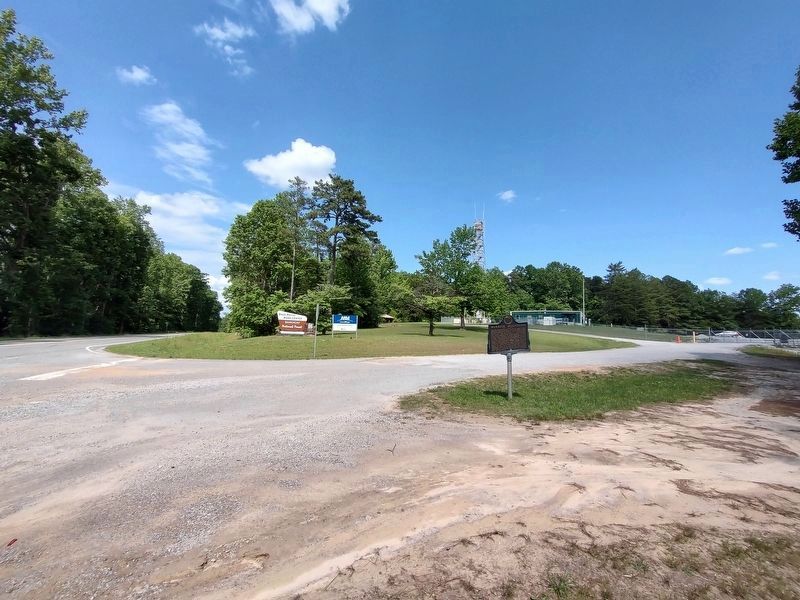
Photographed by Jimmy Emerson, May 10, 2026
5. Warrior Mountains Marker
Credits. This page was last revised on May 11, 2026. It was originally submitted on November 1, 2010, by Sandra Hughes Tidwell of Killen, Alabama, USA. This page has been viewed 4,225 times since then and 256 times this year. Last updated on June 12, 2015, by J. Makali Bruton of Washington, District of Columbia. Photos: 1, 2, 3, 4. submitted on November 1, 2010, by Sandra Hughes Tidwell of Killen, Alabama, USA. 5. submitted on May 10, 2026, by Jimmy Emerson of Dalton, Georgia. • Bill Pfingsten was the editor who published this page.
