Church of Our Lady of Victory
Chiesa di Santa Maria della Vittoria
| — | Architetti: C. Maderno, G. L. Bernini, G. B. Soria, G. B. Contini | — |
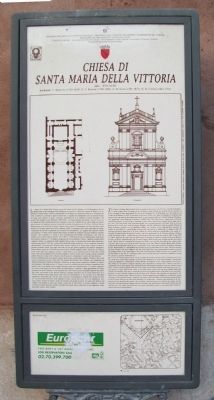
Church of Our Lady of Victory
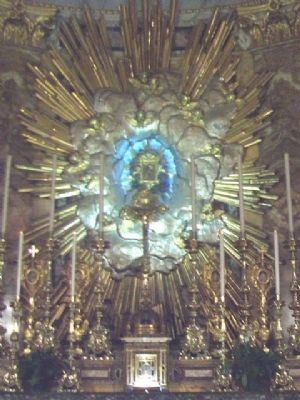
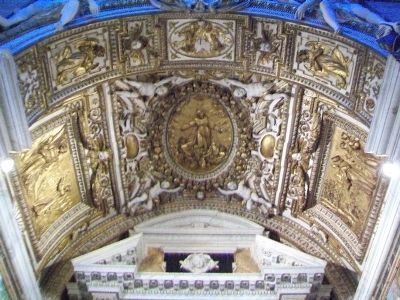
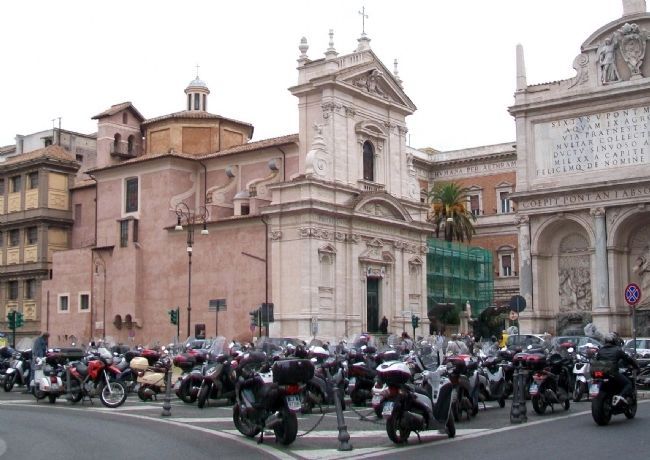
The Church of Santa Maria della Vittoria stands in the former Via Pia (now Via XX Settembre); its name comes from an image of the Madonna found among the remains of the Castello di Pilsen, thought to have determined the victory of Ferdinand IInd of Habsburg over the Lutherans of Frederick of Saxony in 1620. It was built in the early XVIIth cent., after the Barefoot Carmelites had settled where the ancient hermitage had stood; it was commissioned by Cardinal Scipione Borghese, who appointed Carlo Maderno to design it (1608-1620). The church has a single-nave with three connecting chapels on each side, a transept, a choir and a barrel vault ceiling with a dome above the cross. The tall facade with travertine facing was executed between 1624 and 1626 by Giovan Battista Soria (with some work by Sergio Venturi), and the similarities with the nearby Church of Santa Susanna's facade, also by Maderno (1603), are obvious. A two-ordered front enclosed by volutes is preceded by a small flight of steps and crowned by a balustrade. A chapel in the left transept previously dedicated to St. Paul (whom the church had been named after) was ceded to a Venetian Cardinal called Frederick Cornaro, who then dedicated it to St. Theresa of Avila (reformer of the Carmelite Order) commissioning Gian Lorenzo Bernini to do the work in 1647. From 1695 to 1700 a chapel in the right transept dedicated to St. Joseph was built to a design by Giovan Battista Contini, perfectly complementing the Cornaro Chapel. Work on the nave chapels and the decoration of the church interior continued all through the XVIIth cent. and the first half of the century after, with only minor jobs executed in the XIXth and XXth cents. The Church of Santa Maria della Vittoria is filled with exceptional works of art, in particular by
this page online
But it is in the transformation of the Cornaro chapel in the left transept of this Carmelite church that one of the most exceptional examples of XVIIth cent. Roman art is to be acknowledged. Though fully respecting Maderno's architectural scheme Bernini introduced a new compositional concept here that enhanced the theme's religious meaning: this monument in honour of St. Theresa was also a commemmoration [sic] of the family who commissioned it and though its members were not actually buried there, it made a perfect family memorial. The sculptor portrayed Cardinals and Doges from the Cornaro family in high relief on the walls, in arrested action as they lean out from window balconies (Frederick himself is there too) to watch the mystical event taking place at the
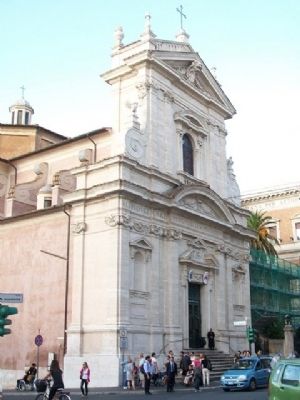
Chiesa di Santa Maria della Vittoria
La chiesa di S. Maria della Vittoria, posta sull'antica via Pia (attuale via XX Settembre), deve la dedicazione ad un'immagine della Madonna rinvenuta tra i rifiuti del Castello di Pilsen, a cui fu attribuito il merito della vittoria di Ferdinando II d'Asburgo sui luterani di Federico di Sassonia, nel 1620. L'edificio fu costruito ai primi del Seicento,
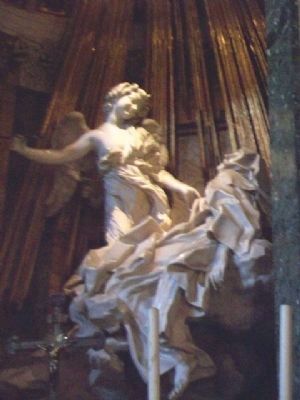
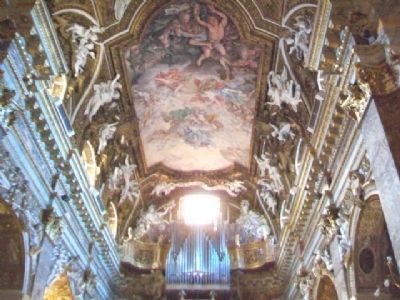
È nella trasformazione del transetto sinistro della chiesa carmelitana (cappella Cornaro), che si può tuttavia riconoscere uno dei vertici dell'arte romana del Seicento. Qui il Bernini, pur rispettando gli schemi architettonici ideati dal Maderno, introdusse un'innovazione compositiva fondata
Erected by Ministero Per I Beni E La Attivia Culturali - Presidenza Del Consiglio Dei Ministri Dipartimento Del Turismo. Soprintendenza Arceologica di Roma - Soprintendenza ai Beni Ambientali e Architettonici di Roma, Comune Di Roma – Assessorato alle Politche Culturali – Sovraintendenza Comunale ai Beni Culturali – Assessorato al Turismo e Giubileo, Azienda di Promozione Turistica di Roma.
Topics. This historical marker is listed in these topic lists: Arts, Letters, Music • Man-Made Features • Religion & Religious Structures. A significant historical year for this entry is 1620.
Location. 41° 54.276′ N, 12° 29.651′ E. Marker is in Roma, Lazio (Latium, Rome), in Città metropolitana di Roma Capitale. It is in Rione XVII Sallustiano. It is at the intersection of Via 20 Settembre and Largo di Santa Susanna, on the left when traveling east on Via 20 Settembre. Touch for map. Marker is at or near this postal address: Via 20 Settembre 17, Roma, Lazio 00187, Italy. Touch for directions.

Regionally, it is in Europe, the European Union, the Schengen Area, a coastal Mediterranean country,
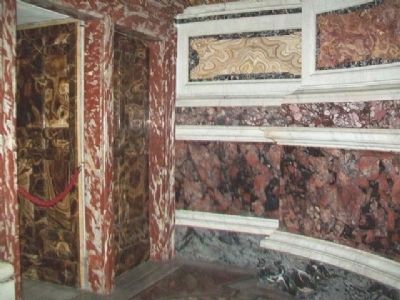
Other nearby markers. At least 8 other markers are within walking distance of this marker: St. Regis Grand (within shouting distance of this marker); Evangelical Methodist Church World War I Memorial (about 150 meters away, measured in a direct line); Federico Mistral (approx. 0.3 kilometers away); Fontana delle Najadi / Najadi Fountain (approx. 0.3 kilometers away); Natatio (approx. 0.4 kilometers away); Le Colossali Teste Animali del Chiostro di Michelangelo (approx. 0.4 kilometers away); Portale della Certosa / The Charterhouse Gateway (approx. 0.4 kilometers away); Elemento Architettonici delle Terme di Diocleziano (approx. 0.4 kilometers away). Touch for a list and map of all markers in Roma.
Also see . . . Chiesa di Santa Maria della Vittoria (Rome). Lonely Planet website entry (Submitted on June 17, 2015, by William Fischer, Jr. of Reynoldsburg, Ohio.)
Credits. This page was last revised on January 11, 2024. It was originally submitted on June 17, 2015, by William Fischer, Jr. of Reynoldsburg, Ohio. This page has been viewed 777 times since then and 65 times this year. Photos: 1, 2, 3, 4, 5, 6, 7. submitted on June 17, 2015, by William Fischer, Jr. of Reynoldsburg, Ohio. 8. submitted on July 26, 2015, by William Fischer, Jr. of Reynoldsburg, Ohio.
