Near Spring Arbor in Jackson County, Michigan — The American Midwest (Great Lakes)
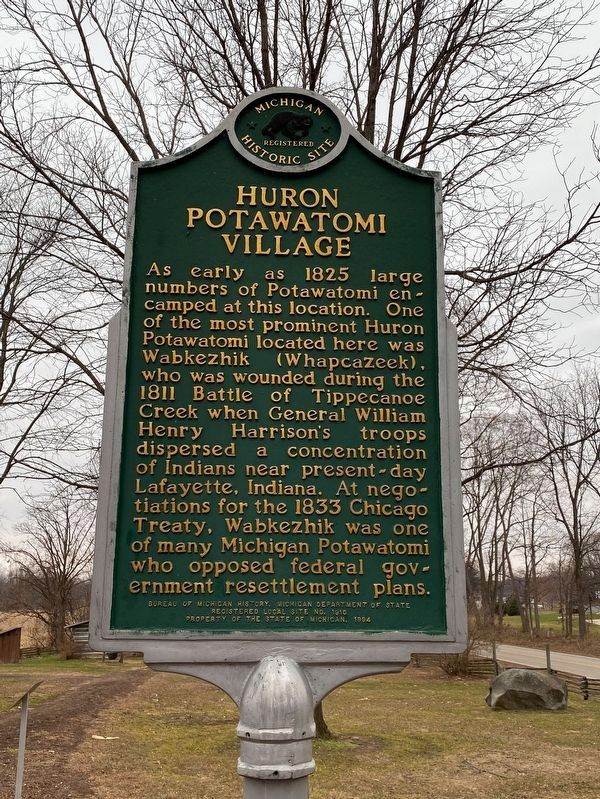
Huron Potawatomi Village
⎯⎯⎯
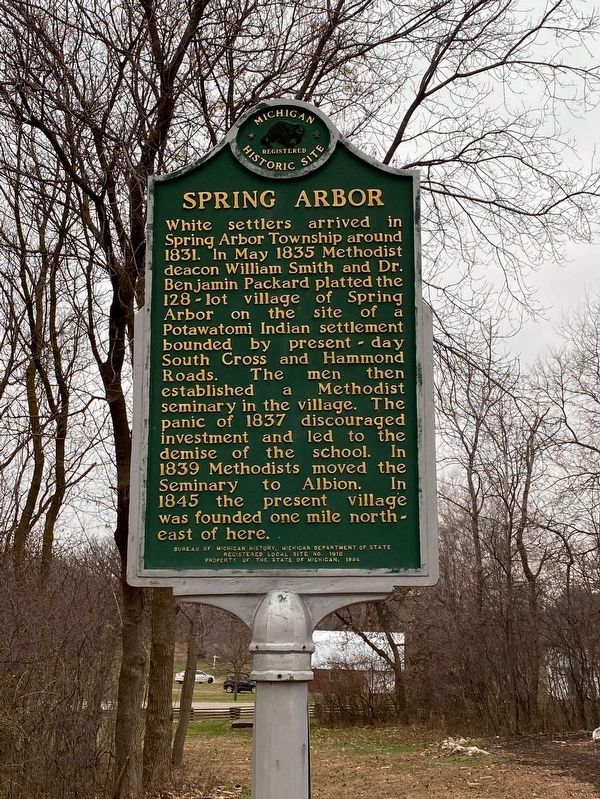
Spring Arbor
Photographed by J.T. Lambrou, December 9, 2022
1. Huron Potawatomi Village / Spring Arbor Marker
Erected 1994 by Bureau of History, Michigan Department of State. (Marker Number L1910.)
Topics and series.
this page online
Location. 42° 11.371′ N, 84° 34.481′ W. Marker is near Spring Arbor, Michigan, in Jackson County. It is at the intersection of Hammond Road and Cross Road, on the right when traveling east on Hammond Road. On the grounds of the Falling Waters Park. Touch for map. Marker is in this post office area: Spring Arbor MI 49283, United States of America. Touch for directions.

Regionally, this marker is in Mid-Michigan. It is also in the American Midwest. Globally, it is in North America, the Western Hemisphere, the Western World, and the Anglosphere. Historically, it finds itself in what was once the Northwest Territory.
Other nearby markers. At least 8 other markers are within walking distance of this marker: No They Are Not Here (a few steps from this marker); 1835 Spring Arbor Village (within shouting distance of this marker);
Photographed by J.T. Lambrou, December 9, 2022
2. Huron Potawatomi Village / Spring Arbor Marker
Photographed by Joel Seewald, October 5, 2014
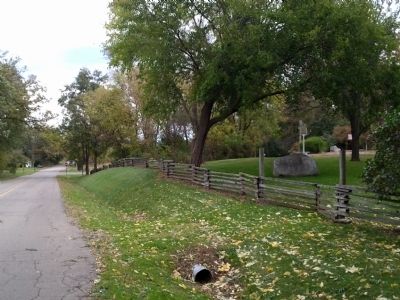
3. Huron Potawatomi Village / Spring Arbor Marker
Photographed by Michael St. John, 1996
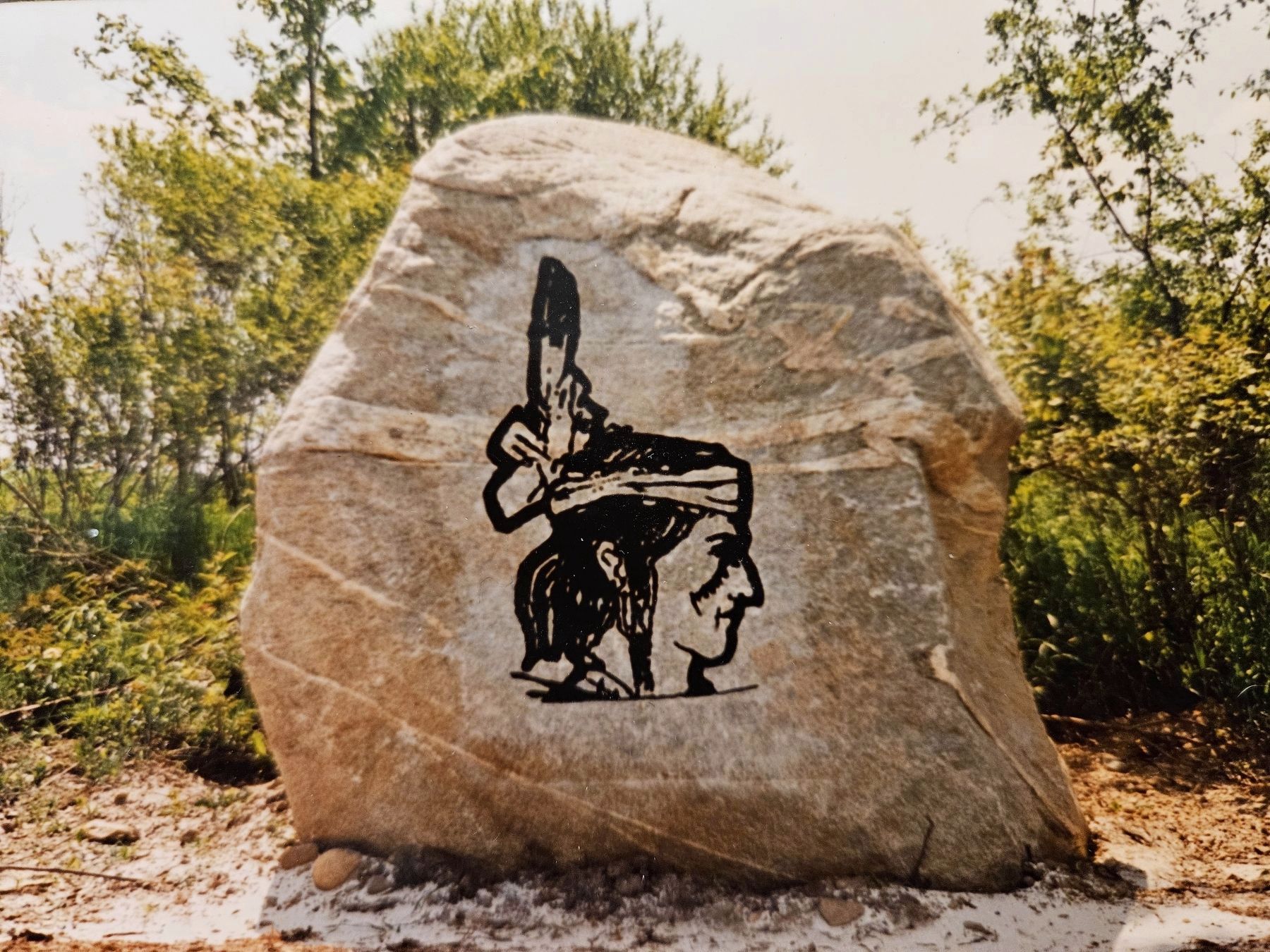
4. Engraving of indian head
Michael St. John, owner of Sandblast Plus+, was recruited to engrave a Potawatomi Indian head on the original cornerstone of Spring Arbor Township back in 1996. This was done through a technique called portable sandblasting.
Credits. This page was last revised on April 26, 2025. It was originally submitted on June 26, 2015, by Joel Seewald of Madison Heights, Michigan. This page has been viewed 1,648 times since then and 111 times this year. Photos: 1, 2. submitted on December 9, 2022, by J.T. Lambrou of New Boston, Michigan. 3. submitted on June 26, 2015, by Joel Seewald of Madison Heights, Michigan. 4. submitted on April 26, 2025, by Michael St. John of Jackson, Michigan. • Bill Pfingsten was the editor who published this page.
