Loachapoka in Lee County, Alabama — The American South (East South Central)
Loachapoka Historic District
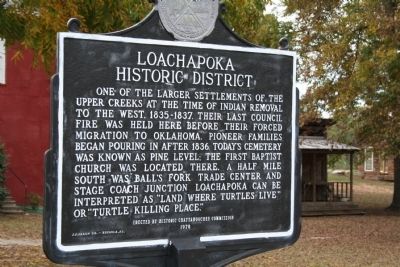
Photographed by L Stanford, November 10, 2006
1. Loachapoka Historic District Marker
Erected 1978 by Historic Chattahoochee Commission.
Topics. This historical marker is listed in these topic lists: Indigenous Peoples and Communities • Settlements & Settlers. A significant historical year for this entry is 1836.
Location. 32° 36.266′ N, 85° 35.91′ W. Marker is in Loachapoka, Alabama, in Lee County. It is on Stage Road (Alabama Route 14) 0.2 miles east of Waverly Road, on the left when traveling east. Located in Pioneer Park. Touch for map. Marker is at or near this postal address: 6500 Stage Rd, Loachapoka AL 36865, United States of America. Touch for directions.

Regionally, this marker is in East Alabama and in Greater Columbus.
this page online
Other nearby markers. At least 8 other markers are within 6 miles of this marker, measured as the crow flies: Dr. Alexander Nunn / Lee County Historical Society (here, next to this marker); Boom and Change (a few steps from this marker); First Rosenwald School (approx. 0.4 miles away); Birthplace of Zora Neale Hurston (approx. 4.8 miles away); Auburn University College of Veterinary Medicine (approx. 5.2 miles away); Notasulga (approx. 5.2 miles away); Bethlehem (approx. 5.7 miles away); Second Baptist Church of Notasulga Cemetery (approx. 5.7 miles away). Touch for a list and map of all markers in Loachapoka.
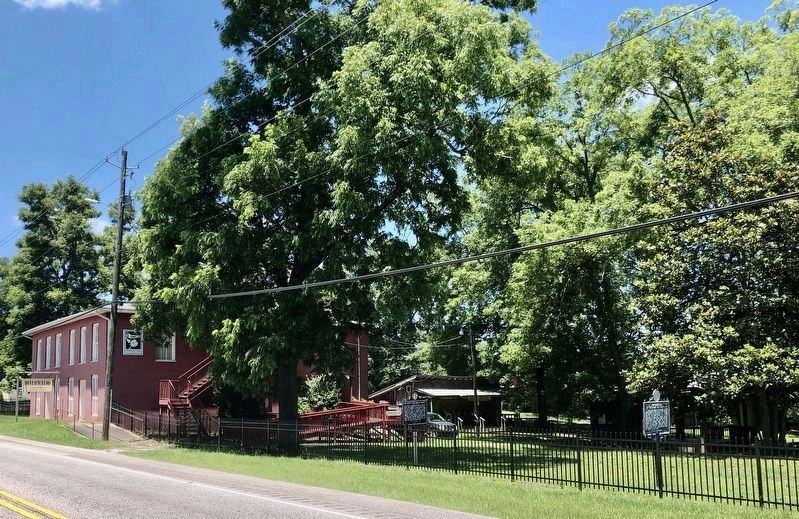
Photographed by Mark Hilton, June 11, 2020
2. Marker in center with Lee County Historical Society Museum on left.
The Museum, known as "The Old Trade Center" is the oldest commercial structure in Lee County.
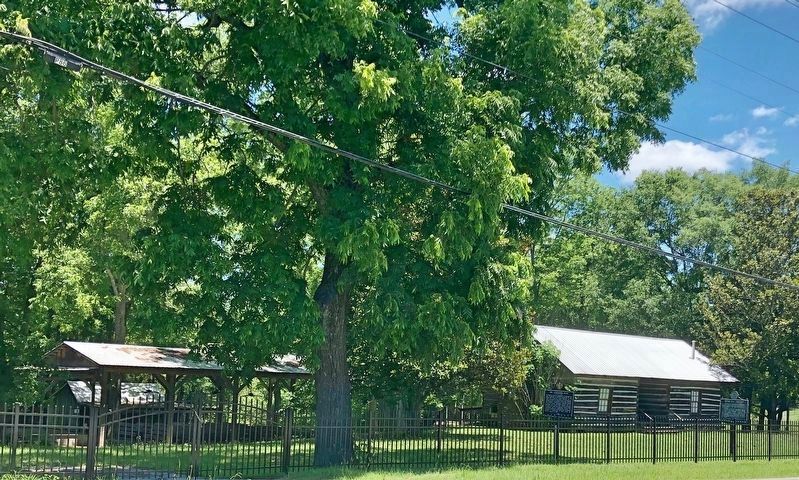
Photographed by Mark Hilton, June 11, 2020
3. Marker is on left of right side log building and part of Pioneer Park.
The Ruth Purdy Speake Cabin offers a look at the frontier days of Alabama. It was moved on site from its original location in nearby Chambers County and named for a long-time President of the LCHS who supervised its relocation. It also contains a one-room school typical of the late 1800s.
Credits. This page was last revised on June 11, 2020. It was originally submitted on May 31, 2010, by L Stanford of Auburn, United States. This page has been viewed 2,272 times since then and 88 times this year. Last updated on July 8, 2015, by J. Makali Bruton of Washington, District of Columbia. Photos: 1. submitted on May 31, 2010, by L Stanford of Auburn, United States. 2, 3. submitted on June 11, 2020, by Mark Hilton of Montgomery, Alabama. • Bernard Fisher was the editor who published this page.
