Baton Rouge in East Baton Rouge Parish, Louisiana — The American South (West South Central)
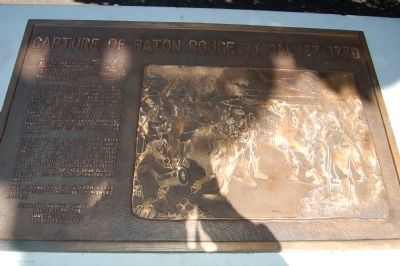
Capture of Baton Rouge by Galvez, 1779
Photographed by Cajun Scrambler, November 26, 2010
1. Capture of Baton Rouge by Galvez, 1779 Marker
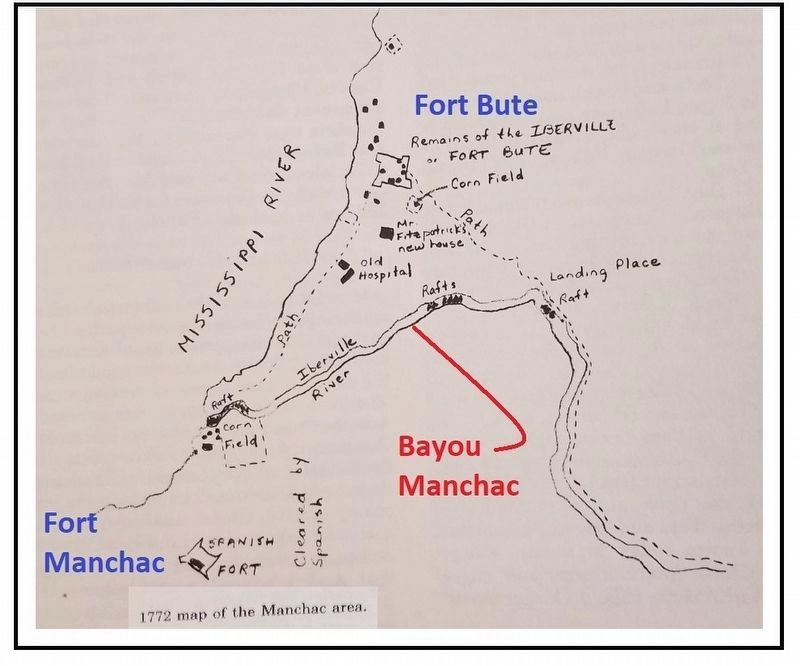
The Spanish forces, consisting of about 750 regulars, carabineers, militiamen and free blacks, left New Orleans on August 27, 1779. After being joined by about 150 Indians and another 600 militiamen from the German and Acadian coasts and other parts of Louisiana, they captured the British Fort Bute, at Bayou Manchac. Accompanying the expedition were nine Americans, "under America's banners," commanded by Oliver Pollock, the New Orleans agent of the Continental Congress.
As a result of the surrender, which occurred after an eight-day siege, and a three-hour bombardment by the Spanish forces, military supplies could be sent upriver from New Orleans to the American Army. The British fort at Baton Rouge was manned by 400 regular troops, including members of the German Waldeck Regiment and 100 local planters and blacks.
This plaque was made from a 1976 bicentennial
this page online
Dedicated to the memory of Erich Sternberg Goudchaux's, Inc. September, 1979
Erected 1979.
Topics. This historical marker is listed in these topic lists: Colonial Era • Forts and Castles • Settlements & Settlers • War, US Revolutionary. A significant historical month for this entry is September 1985.
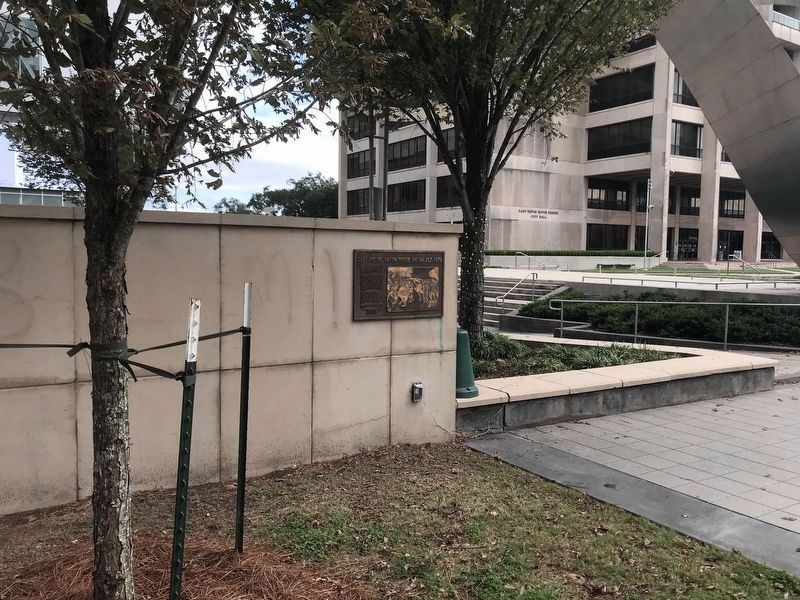
Location. 30° 26.783′ N, 91° 11.313′ W. Marker is in Baton Rouge, Louisiana, in East Baton Rouge Parish. It can be reached from North Boulevard west of St Louis Street, on the right when traveling east. Located in Galvez Plaza park. Touch for map. Marker is at or near this postal address: 100 North Boulevard, Baton Rouge LA 70802, United States of America. Touch for directions.

Regionally, this marker is in the Florida Parishes. It is also in the American South, specifically in the Deep South, and in the Great River Road Region. Globally, it is in North America, a Gulf of Mexico state, the Western Hemisphere, the Western World, and the Anglosphere. Historically, it finds itself in what was once New Spain, the territory of the Mississippian Culture, the Louisiana Purchase, one of the
Photographed by Cajun Scrambler, October 24, 2020
2. Capture of Baton Rouge by Galvez, 1779 Marker
Other nearby markers. At least 8 other markers are within walking distance of this marker: Marcha de Galvez (a few steps from this marker); Old State Capitol (within shouting distance of this marker); Repentance Fountain (within shouting distance of this marker); Oliver Pollock (within shouting distance of this marker); Site of Early Gunsmith Shop (within shouting distance of this marker); Battle of Baton Rouge (within shouting distance of this marker); Merci Train (within shouting distance of this marker); a different marker also named Merci Train (within shouting distance of this marker). Touch for a list and map of all markers in Baton Rouge.
Also see . . . Capture of Fort Bute. Bernardo de Gálvez informed his troops of the Spanish Declaration of War against the English when Fort Bute was sighted in what is now Iberville Parish on September 6, 1779. The troops cheered with patriotism, moving on to fight the English in America. (Submitted on May 7, 2018, by Kenneth Ramagost of Louisiana, USA.)
Photographed by Kenneth Ramagost, January 20, 2021
3. Capture of Baton Rouge by Galvez, 1779 Marker
Photographed by Kenneth Ramagost
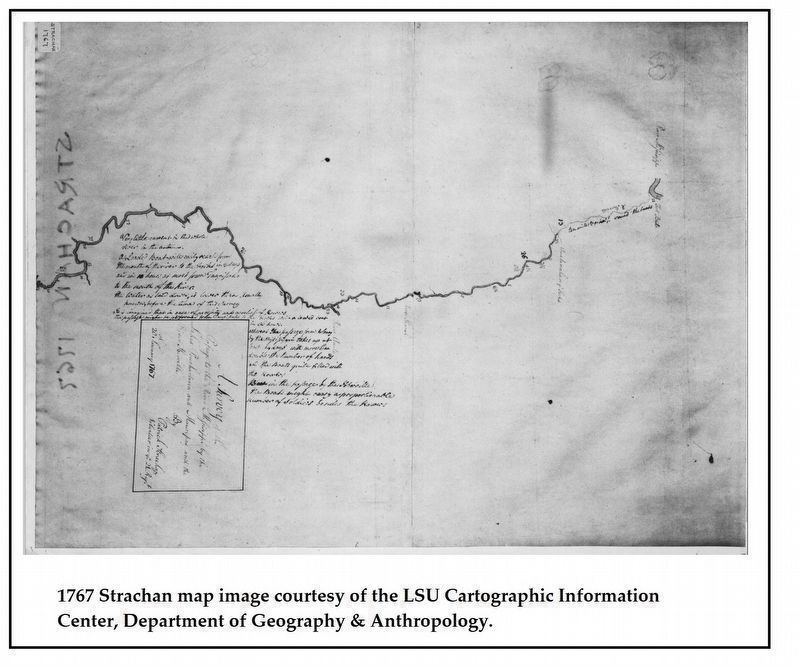
4. Capture Of Baton Rouge by Galvez, 1779 Marker
Fort Bute is close to the Mississippi River.
Credits. This page was last revised on February 5, 2026. It was originally submitted on July 9, 2015. This page has been viewed 3,078 times since then and 252 times this year. Photos: 1. submitted on July 9, 2015. 2. submitted on October 25, 2020, by Cajun Scrambler of Assumption, Louisiana. 3. submitted on May 2, 2021, by Kenneth Ramagost of Louisiana, USA. 4. submitted on May 8, 2018, by Kenneth Ramagost of Louisiana, USA. • Bernard Fisher was the editor who published this page.
Editor’s want-list for this marker. Clear photo of plaque. • Can you help?
