Port Barre in St. Landry Parish, Louisiana — The American South (West South Central)
Port Barre
Photographed by Karl Stelly, July 7, 2015
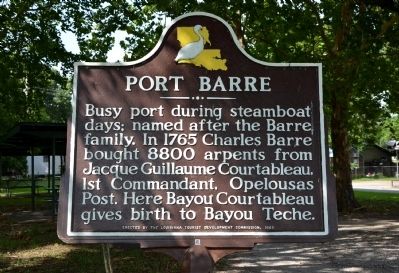
1. Port Barre Historical Marker
Erected 1965 by The Louisiana Tourist Development Commission.
Topics. This historical marker is listed in these topic lists: Industry & Commerce • Settlements & Settlers • Waterways & Vessels. A significant historical year for this entry is 1765.
Location. 30° 32.816′ N, 91° 58.056′ W. Marker is in Port Barre, Louisiana, in St. Landry Parish. It is at the intersection of Teche Street and Ronald Reagan Highway (U.S. 190), on the left when traveling north on Teche Street. Marker is located in a roadside park on the east side of the Bayou Teche bridge. Touch for map. Marker is in this post office area: Port Barre LA 70577, United States of America. Touch for directions.

Regionally, this marker is in Louisiana’s Acadiana — Cajun Country. It is also in the American South and specifically in the Deep South. Globally, it is in North America, a Gulf of Mexico state, the Western Hemisphere,
this page online
Other nearby markers. At least 8 other markers are within 7 miles of this marker, measured as the crow flies: A different marker also named Port Barre (approx. 1.1 miles away); Bayou Courtableau at Bayou Teche Headwaters (approx. 1.1 miles away); Welcome to Port Barre (approx. 1.1 miles away); Welcome to Leonville (approx. 5.1 miles away); The Opelousas Post Militia of 1779 (approx. 6.4 miles away); Preston "Sweet" Fontenot (approx. 6.4 miles away); Myrtle Grove Cemetery (approx. 6.4 miles away); Le Vieux Village (approx. 6.4 miles away). Touch for a list and map of all markers in Port Barre.
Photographed by Karl Stelly, July 7, 2015
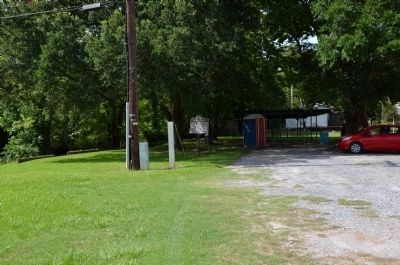
2. Port Barre Historical Marker
A wider view, showing the roadside park and rest area. Marker is near the center of the photo.
Photographed by Karl Stelly, July 7, 2015
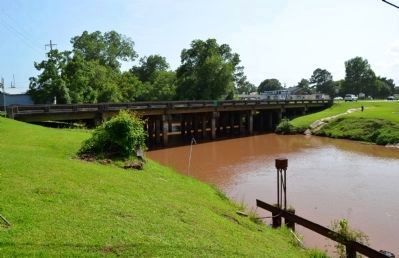
3. Bayou Teche
This view shows Bayou Teche and the bridge that carries U.S. Highway 190 over the bayou.
Photographed by Karl Stelly, July 7, 2015
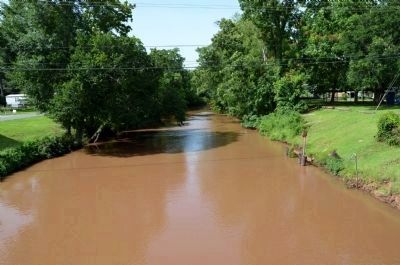
4. Bayou Teche
Taken from the bridge over the bayou, looking towards the north
Credits. This page was last revised on June 16, 2016. It was originally submitted on July 21, 2015, by Karl Stelly of Gettysburg, Pennsylvania. This page has been viewed 812 times since then and 47 times this year. Photos: 1, 2, 3, 4. submitted on July 21, 2015, by Karl Stelly of Gettysburg, Pennsylvania. • Bernard Fisher was the editor who published this page.
