Pamphilj Palace on Navona Square
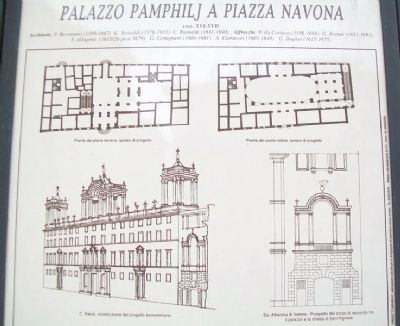
Palazzo Pamphilj a Piazza Navona
| — | built 16th-17th centuries / secc. XVI-XVII | — |
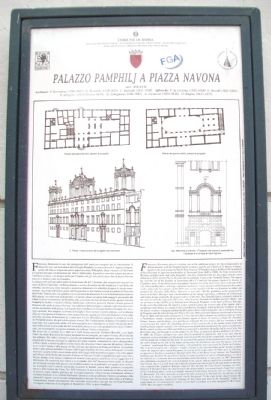
Architetti [Architects]: F. Borromini (1599-1667) G. Rainaldi (1570-1655) C. Rainaldi (1611-1690)
Affreschi [Frescoes]: P. da Cortona (1596-1669) G. Brandi (1621-1691) F. Allegrini (1615/20-post 1679) G. Gimignani (1606-1681) A. Camassei (1602-1649) G. Dugher (1615-1675)
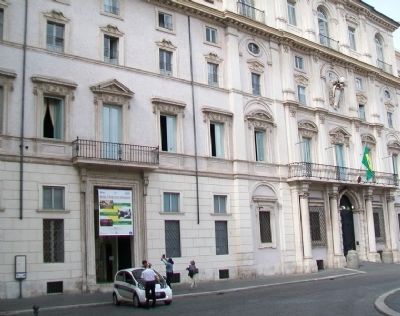
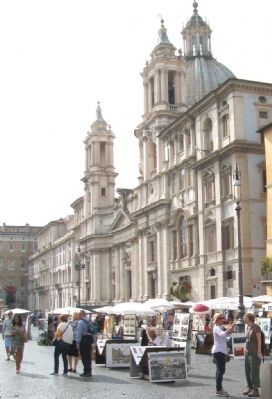
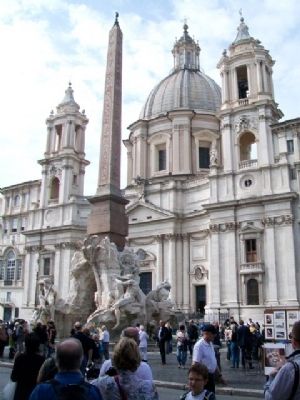
Franceso Borromini played a leading role in the ambitious project for the reorganisation of Piazza Navona, with the Pamphilj family residence and the new Church of St. Agnese in Agone [St. Agnes in Agony], thanks to the trust granted to him by Pope Innocent X Pamhilj. In fact, further to the restoration of San Giovanni in Laterano (undertaken by Borromini from 1646 to 1660), the Pope involved this Ticinese architect more and more frequently, and also summoned him for the project that he cared about most of all: to turn Piazza Navona into an authentic Court of the Pamphilj Family.
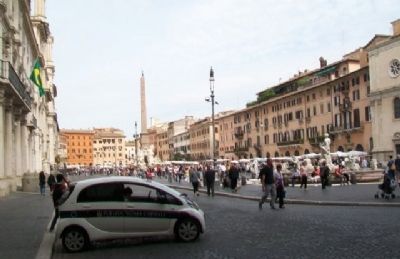
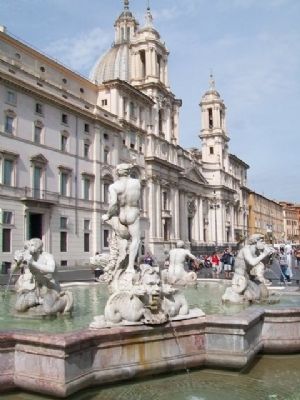
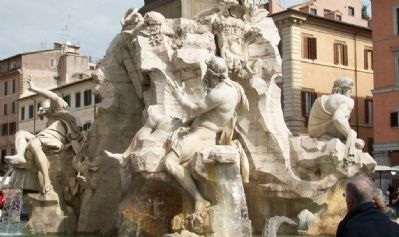
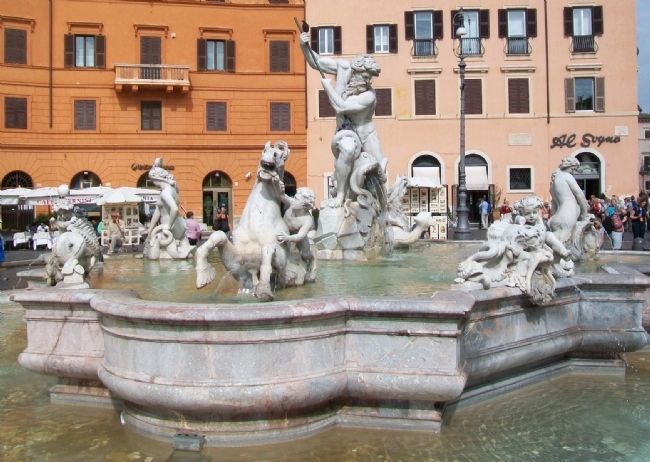
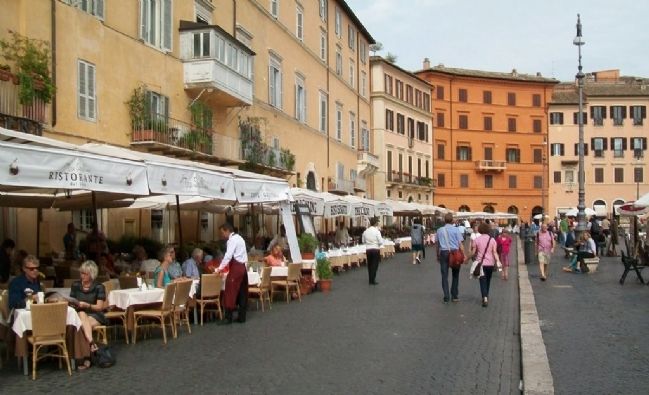
The square lay over the site of the Stadium of Domiziano (86 d.C.) built for the games (agones) in honour of Capitoline Jove; in the Renaissance it gradually became one of the most lively spots in the life of the city, with a market, fairs, workshops and numerous houses; it was adorned with monumental decorative works, and in the last quarter of the XVIth cent. it was regaled with the two fountains at either end designed by Giacomo della Porta. However it was only with the grandiose works promoted by Innocent X that a Baroque-style transformation of the square took place, with feats of architecture and urban design created by the greatest artists of the time. The Pamphilj family originally settled in the area towards the end of the XVth cent., when Antonio Pamphilj da Gubbio moved to Rome, and set up house in the old Piazza di Parone (now Piazza di Pasquino, at the back of Piazza Navona). In the years that followed, the family's estate extended along the western
this page online
Work carried out between 1645 and 1648 was entrusted to Girolano Rainaldi and his son Carlo, but Borromini also was brought in on the project by the Pope, to supervise the two architects' activities. In 1646, the Ticinese architect was more directly involved in operations, and it was then that he proposed a series of designs for the
Francesco Borromini fu uno dei protagonisti dell'ambizioso progetto per la sistemazione di piazza Navona, con la residenza della famiglia Pamphilj e la nuova chiesa di S. Agnese in Agone, grazie alla fiducia conquistata presso papa Innocenzo X Pamphilj. Dopo i restauri a S. Giovanni in Laterano (intrapresi da Borromini dal 1646 al 1660) infatti, il pontefice coinvolse sempre più spesso l'architetto ticinese, e lo chiamò anche per l'impresa che gli stava più a cuore: fare di piazza Navona una vera e propria
La piazza sorse sull'area dello stadio di Domiziano (86 d.C.) destinato alle competizioni (agones) in onore di Giove Capitolino; nel Rinascimento si avviò a diventare uno dei luoghi più vivaci della vita cittadina, con mercato, fiere, botteghe e numerose abitazioni, e fu abbellita da opere di arredo monumentale, ricevendo nell'ultimo quarto del Cinquecento le due fontane laterali progettate da Giacomo della Porta. Tuttavia solo con i grandiosi lavori promossi da Innocenzo X ci fu la trasformazione barocca della piazza, con interventi architettonici e di arredo urbano ad opera delle maggiori personalità del tempo. Il primo insediamento dei Pamphilj nella zona risale alla fine del Quattrocento, quando Antonio Pamphilj da Gubbio si trasferì a Roma, stabilendosi nell'antica piazza di Parione (attuale piazza di Pasquino, alle spalle di piazza Navona). I possedimenti della famiglia si estesero negli anni successivi sul lato occidentale della piazza, con il particolare contributo di Giovanni Battista Pamphilj che, divenuto cardinale, fece ampliare la dimora di famiglia e fece construire il primo palazzo, con un doppio
Dei lavori che si svolsero tra il 1645 ed il 1648 furono incaricati Girolamo Rainaldi e suo figlio Carlo, ma anche Borromini fu inserito dal pontefice nel progetto, per supervisionare all'attività dei due architetti. Nel 1646 il ticinese fu coinvolto più direttamente nei lavori, propose allora una serie di progetti per la facciata ed eseguì la copertura del salone centrale, rialzandone la volta e disegnandone soffitto e porta, e construì la galleria sul lato nord, che attraversa l'intero spessore del palazzo, affacciata su via dell'Anima e sulla piazza con due serlaine,
Erected by Assessorato alle Politiche Culturali - Sovraintendenza Cumunale ai Beni Culturali - Palazzo delle Esposizioni - Ambasciata di Svizzera - Bibliotheca Hartziana (Max-Planck-Institut).
Topics. This historical marker is listed in these topic lists: Man-Made Features • Religion & Religious Structures. A significant historical year for this entry is 1646.
Location. 41° 53.872′ N, 12° 28.364′ E. Marker is in Roma, Lazio (Latium, Rome), in Città metropolitana di Roma Capitale. It is in Rione VI Parione. It is at the intersection of Piazza Navona and Piazza di Pasquino, on the left when traveling north on Piazza Navona. Touch for map. Marker is at or near this postal address: Piazza di Pasquino 8, Roma, Lazio 00186, Italy. Touch for directions.

Regionally, it is in Europe, the European Union, the Schengen Area, a coastal Mediterranean country, and the Western World. Historically, it finds itself in what was once the Roman Empire.
Other nearby markers. At least 8 other markers are within walking distance of this marker: 13th Century St. Gregory Monastery Cross-stone (within shouting distance of this marker); Chiesa di Sant'Ivo Alla Sapienza / The Church of Sant'Ivo alla Sapienza (about 90 meters away, measured in a direct line); Libreria Croce (about 150 meters away); Pilastro dello Stadio di Domiziano / Pillar of the Stadium of Domitian (about 150 meters away); Piazza Massimo Alle Colonne (about 150 meters away); Galleria Spada / Spada Gallery (about 180 meters away); Adelaide Ristori and Aldo Palazzeschi (approx. 0.2 kilometers away); Adelaide Ristori Capranica del Grillo and Aldo Palazzeschi (approx. 0.2 kilometers away). Touch for a list and map of all markers in Roma.
Also see . . . Pope Innocent X Bio. (Submitted on July 26, 2015, by William Fischer, Jr. of Reynoldsburg, Ohio.)
Credits. This page was last revised on August 22, 2020. It was originally submitted on July 26, 2015, by William Fischer, Jr. of Reynoldsburg, Ohio. This page has been viewed 806 times since then and 76 times this year. Photos: 1, 2, 3, 4, 5, 6, 7, 8, 9, 10. submitted on July 26, 2015, by William Fischer, Jr. of Reynoldsburg, Ohio.
