Mobile in Mobile County, Alabama — The American South (East South Central)
Bettie Hunter House
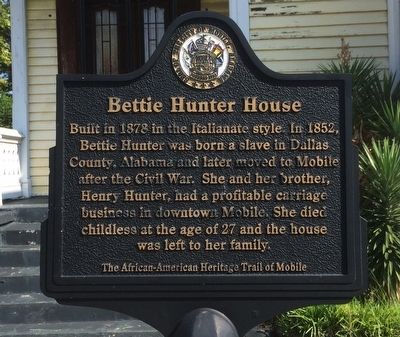
Photographed by Mark Hilton, July 26, 2015
1. Bettie Hunter House Marker
Erected by The African-American Heritage Trail of Mobile. (Marker Number 4.)
Topics and series. This historical marker is listed in these topic lists: African Americans • Industry & Commerce • Notable Buildings • Roads & Vehicles. In addition, it is included in the Dora Franklin Finley African-American Heritage Trail of Mobile series list. A significant historical year for this entry is 1878.
Location. 30° 41.438′ N, 88° 2.934′ W. Marker is in Mobile, Alabama, in Mobile County. It is on St Francis Street 0.1 miles west of North Lawrence Street, on the right when traveling west. Touch for map. Marker is at or near this postal address: 504 St Francis Street, Mobile AL 36602, United States of America. Touch for directions.

Regionally, this marker is on Alabama’s Gulf Coast and in the Mobile
this page online
Other nearby markers. At least 8 other markers are within walking distance of this marker: John L. LeFlore (about 300 feet away, measured in a direct line); Dr. Thomas N. Harris (about 400 feet away); Andrew N. Johnson (about 400 feet away); Creole Firehouse #1 (about 700 feet away); Dr. H. Roger Williams (about 700 feet away); St. Louis Street Missionary Baptist Church (approx. 0.2 miles away); Shaarai Shomayim (approx. 0.2 miles away); The Cathedral-Basilica of the Immaculate Conception (approx. 0.2 miles away). Touch for a list and map of all markers in Mobile.
Regarding Bettie Hunter House. Bettie Hunter was born in 1852 in Cahaba, Alabama. As a point of reference, this was the same year Harriet
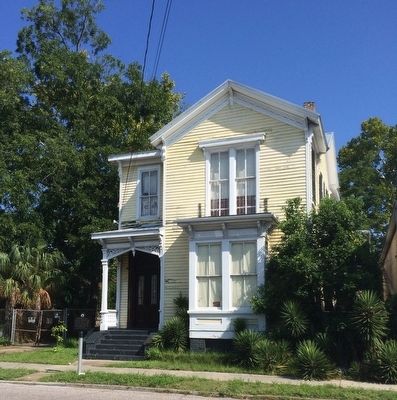
Photographed by Mark Hilton, July 26, 2015
2. Bettie Hunter House
Bettie Hunter's descendants still maintain the property today. It was added to the National Register of Historic Places in 1985 for architectural and historic value.
Also see . . . Wikipedia article on house. (Submitted on July 28, 2015, by Mark Hilton of Montgomery, Alabama.)
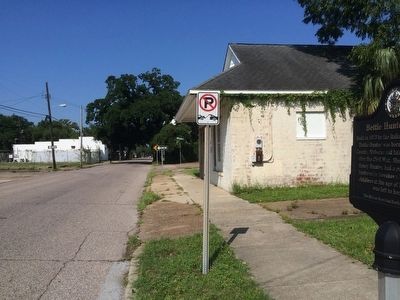
Photographed by Mark Hilton, July 26, 2015
3. View looking down St Francis Street.
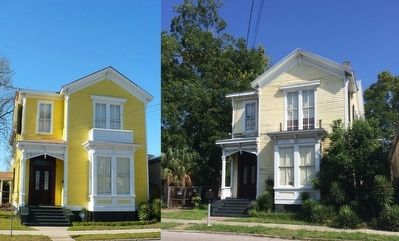
Public Domain/Mark Hilton
4. Bettie Hunter House circa 2008 & in July 2015.
Photos shows the aging of the house in just 8 years.
Credits. This page was last revised on August 30, 2020. It was originally submitted on July 28, 2015, by Mark Hilton of Montgomery, Alabama. This page has been viewed 1,672 times since then and 84 times this year. Photos: 1, 2, 3, 4. submitted on July 28, 2015, by Mark Hilton of Montgomery, Alabama.
