Near Fayette in Jefferson County, Mississippi — The American South (East South Central)
Bullen Creek

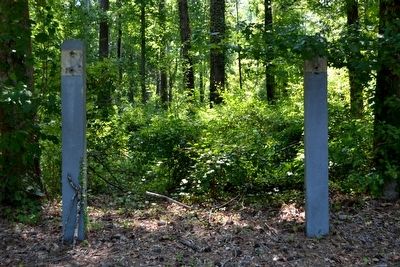
1. Bullen Creek Marker (Missing)
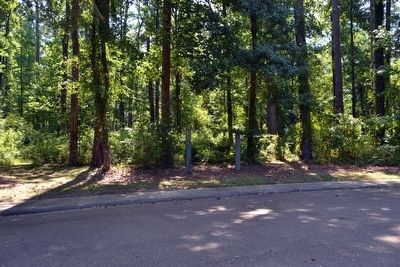
Marker is missing. If you have a picture of the missing marker, please add it to this page using the Add Photo link above.
Erected by National Park Service.
Topics and series. This historical marker is listed in this topic list: Environment. In addition, it is included in the Natchez Trace series list.
Location. Marker has been reported missing. It was located near 31° 43.42′ N, 91° 10.53′ W. Marker was near Fayette, Mississippi, in Jefferson County. It was on Natchez Trace Parkway (at milepost 18.4), 1.6 miles south of Mississippi Highway 553, on the right when traveling north. Touch for map. Marker was in this post office area: Fayette MS 39069, United States of America. Touch for directions.

Regionally, this marker was in Southwest Mississippi and in Natchez Trace Corridor. It was also in the American South, specifically in the Deep South, and in the Great River Road Region. Globally, it was in North America, a Gulf of Mexico state, the Western Hemisphere, the Western World, and the Anglosphere. Historically, it found itself in what was once New Spain, the territory of the Mississippian Culture, one of the Confederate States of America, and the Antebellum South.
Other nearby markers. At least 8 other markers are within 6 miles of this location, measured as the crow flies: Springfield (approx. 2.1 miles
this page online
Also see . . . Natchez Trace Parkway ⍼. Official National Park Service website. (Submitted on August 16, 2015.)
Photographed by Duane Hall, August 4, 2015
2. Support Posts for Missing Bullen Creek Marker
Photographed by Duane Hall, August 4, 2015
3. Bullen Creek Marker (Missing)
Photographed by Duane Hall, August 4, 2015
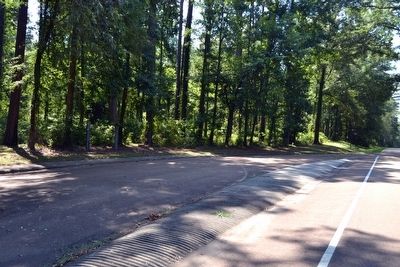
4. View to South from Natchez Trace Parkway
Photographed by Duane Hall, August 4, 2015
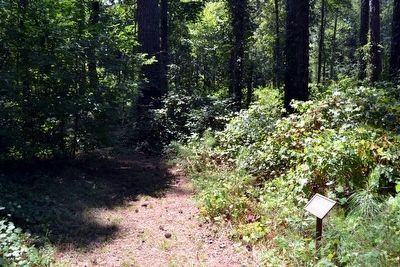
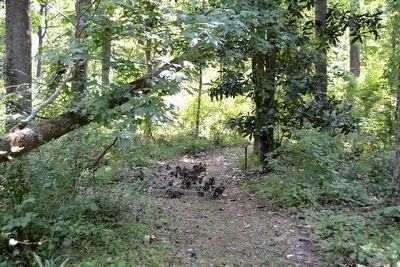
5. The Beginning of the Bullen Creek Nature Trail
Photographed by Duane Hall, August 4, 2015
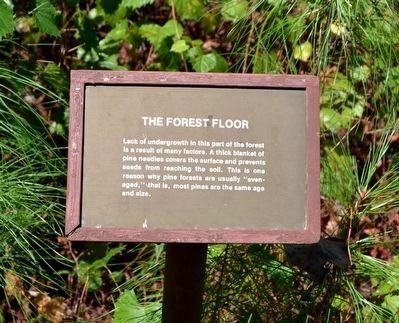
6. The Forest Floor Interpretive Sign
Lack of undergrowth in this part of the forest is a result of many factors. A thick blanket of pine needles covers the surface and prevents seeds from reaching the soil. This is one reason why pine forests are usually “even-aged,” that is, most pines are the same age and size.
Photographed by Duane Hall, August 4, 2015
7. Southern Magnolia Tree next to Trail
Photographed by Duane Hall, August 4, 2015
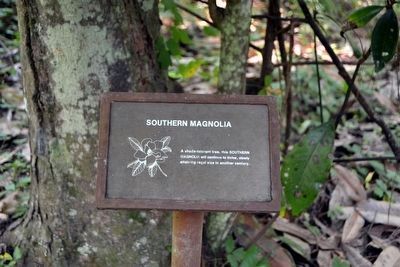
8. Southern Magnolia Interpretive Sign
A shade-tolerant tree, this southern magnolia will continue to thrive, slowly attaining regal size in another century.
Photographed by Duane Hall, August 4, 2015
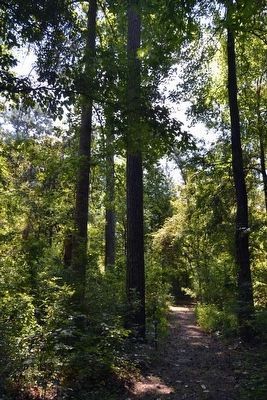
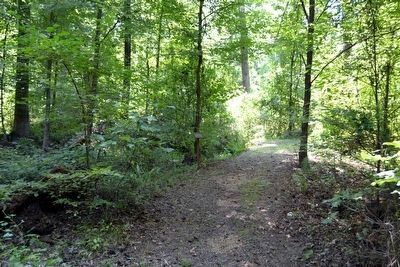
9. Loblolly Pine Tree
Photographed by Duane Hall, August 4, 2015
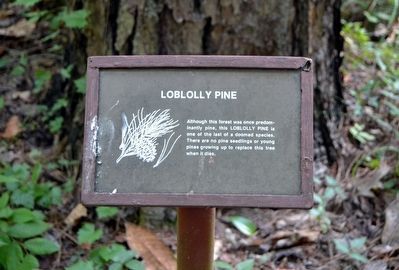
10. Loblolly Pine Interpretive Sign
Although this forest was once predominantly pine, this loblolly pine is one of the last of a doomed species. There are no pine seedlings or young pines growing up to replace this tree when it dies.
Photographed by Duane Hall, August 4, 2015
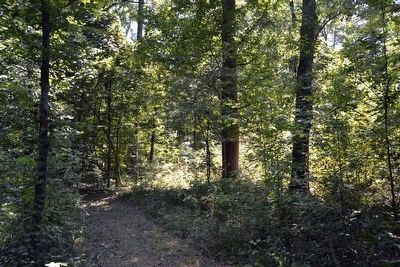
11. Black Cherry Tree
Photographed by Duane Hall, August 4, 2015
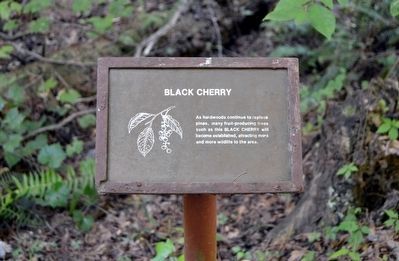
12. Black Cherry Interpretive Sign
As hardwoods continue to replace pines, many fruit-producing trees such as this black cherry will become established, attracting more and more wildlife to this area.
Photographed by Duane Hall, August 4, 2015
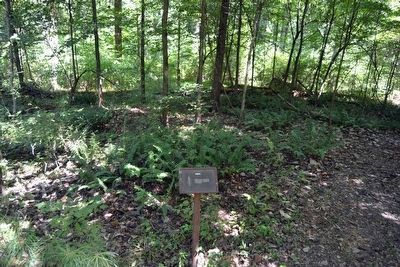
13. Trail near Southern Pine Beetle Interpretive Sign
Photographed by Duane Hall, August 4, 2015
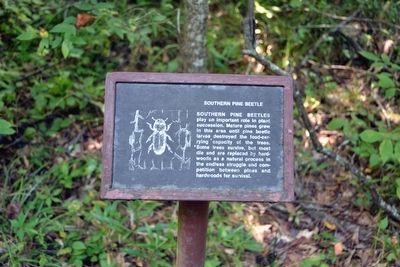
14. Southern Pine Beetle Interpretive Sign
Southern pine beetles play an important role in plant succession. Mature pines grew in this area until pine beetle larvae destroyed the food-carrying capacity of the trees. Some trees survive, but most die and are replaced by hardwoods as a natural process in the endless struggle and competition between pines and hardwoods for survival.
Photographed by Duane Hall, August 4, 2015
15. Ferns
Photographed by Duane Hall, August 4, 2015
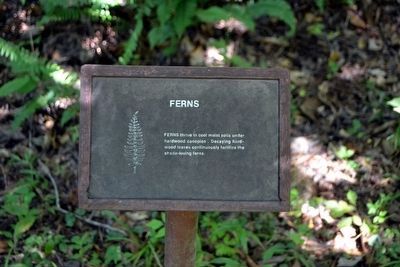
16. Ferns Interpretive Sign
Ferns thrive in cool moist soils under hardwood canopies. Decaying hardwood leaves continuously fertilize the shade-loving ferns.
Photographed by Duane Hall, August 4, 2015
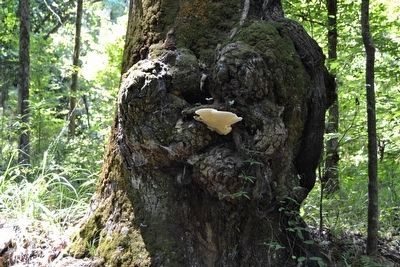
17. A Tree Gall
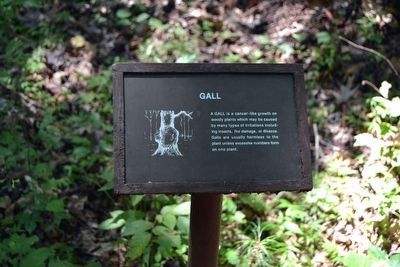
Photographed by Duane Hall, August 4, 2015
18. Gall Interpretive Sign
A gall is a cancer-like growth on woody plants which may be caused by many types of irritations including insects, fire damage, or disease. Galls are usually harmless to the plant unless excessive numbers form on one plant.
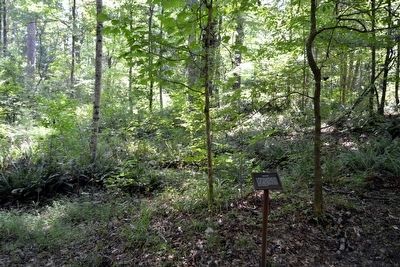
Photographed by Duane Hall, August 4, 2015
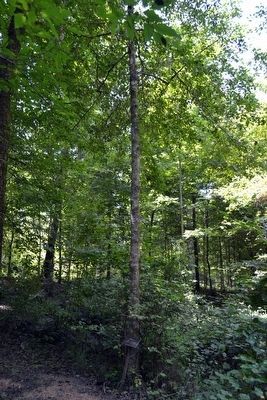
19. Pines Infested by Southern Pine Beetles
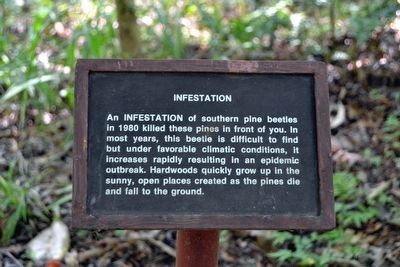
Photographed by Duane Hall, August 4, 2015
20. Infestation Interpretive Sign
An infestation of southern pine beetles in 1980 killed those pines in front of you. In most years, this beetle is difficult to find but under favorable climatic conditions, it increases rapidly resulting in a epidemic outbreak. Hardwoods quickly grow up in the sunny, open spaces created as the pines die and fall to the ground.
Photographed by Duane Hall, August 4, 2015
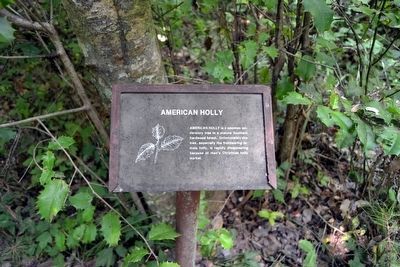
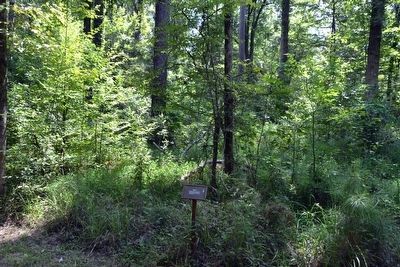
21. American Holly Tree
Photographed by Duane Hall, August 4, 2015
22. American Holly Interpretive Sign
American holly is a common understory tree in a mature Southern hardwood forest. Unfortunately this tree, especially the fruitbearing female holly, is rapidly disappearing because of man’s Christmas holly market.
Photographed by Duane Hall, August 4, 2015
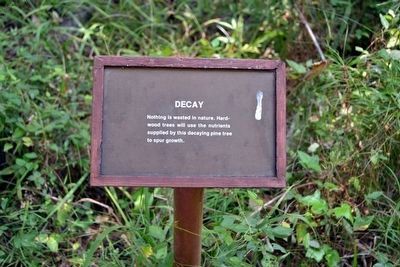
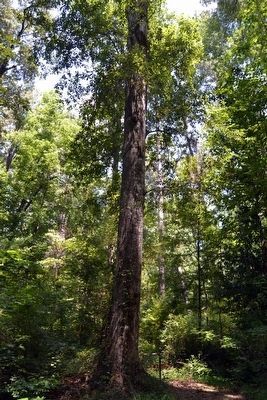
23. Decaying Pine Tree
Photographed by Duane Hall, August 4, 2015
24. Decay Interpretive Sign
Nothing is wasted in nature. Hardwood trees will use the nutrients supplied by this decaying pine tree to spur growth.
Photographed by Duane Hall, August 4, 2015
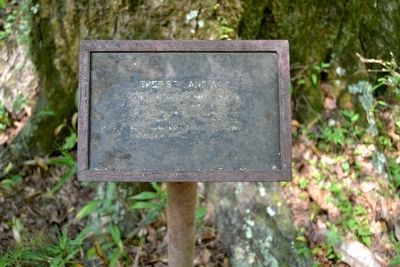
25. Large Tree along Trail
Photographed by Duane Hall, August 4, 2015
26. Tree Size and Age Interpretive Sign
A tree may grow six inches in width in a single year under favorable conditions but may not grow one inch in 50 years under unfavorable conditions. Consequently, trunk size is an unreliable indicator of the age of a tree.
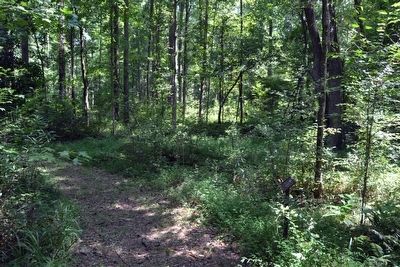
Photographed by Duane Hall, August 4, 2015
27. Area near Yellow Poplar Interpretive Sign
Photographed by Duane Hall, August 4, 2015
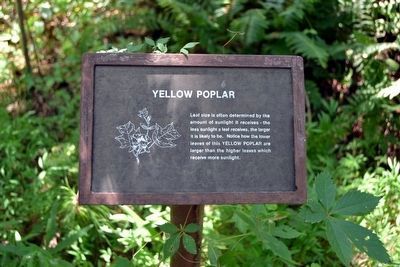
28. Yellow Poplar Interpretive Sign
Leaf size is often determined by the amount of sunlight it receives - the less sunlight a leaf receives, the larger it is likely to be. Notice how the lower leaves of this yellow poplar are larger than the higher leaves which receive more sunlight.
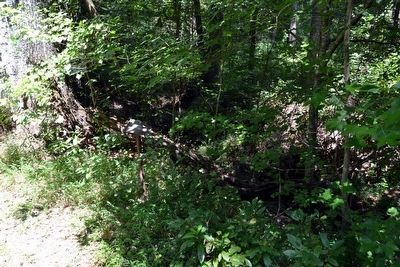
Photographed by Duane Hall, August 4, 2015
29. Loess Soil
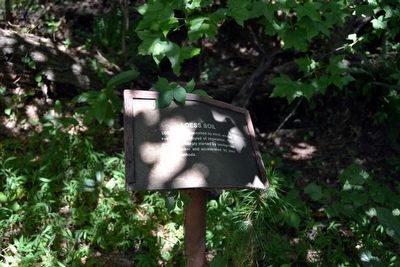
Photographed by Duane Hall, August 4, 2015
30. Loess Soil Interpretive Sign
Loess, a soil deposited by wind, erodes easily when stripped of vegetation. This gully was probably started by lumbermen cutting timber and accelerated by poor farming methods.
Photographed by Duane Hall, August 4, 2015
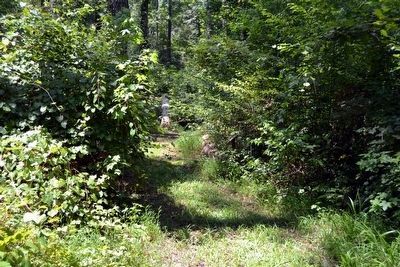
31. Former Farmland
Photographed by Duane Hall, August 4, 2015
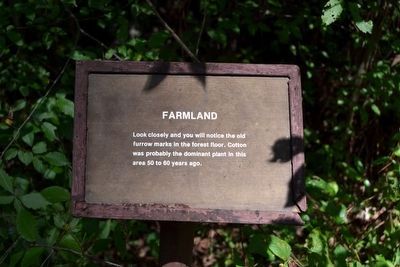
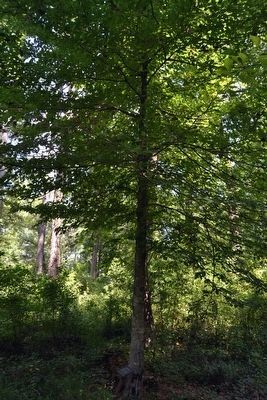
32. Farmland Interpretive Sign
Look closely and you will notice the old furrow marks in the forest floor. Cotton was probably the dominant plant in this area 50 to 60 years ago.
Photographed by Duane Hall, August 4, 2015
33. American Beech Tree
Photographed by Duane Hall, August 4, 2015
34. American Beech Interpretive Sign
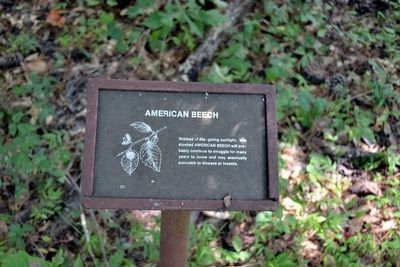
Robbed of life-giving sunlight, this stunted american beech will probably continue to struggle for many years to come and may eventually succumb to disease or insects.
Photographed by Duane Hall, August 4, 2015
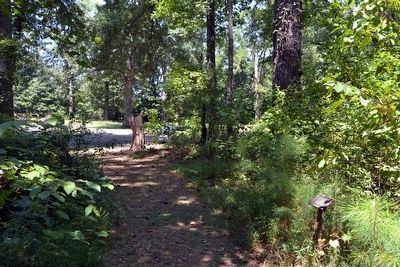
35. The End of the Bullen Creek Nature Trail
Photographed by Duane Hall, August 4, 2015
36. Forest Succession Interpretive Sign
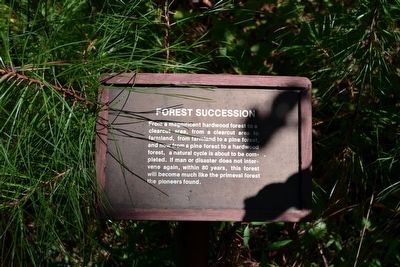
From a magnificent hardwood forest to a clearcut area, from a clearcut area to farmland, from farmland to a pine forest, and now from a pine forest to a hardwood forest, a natural cycle is about to be completed. If man or disaster does not intervene again, within 80 years, this forest will become much like the primeval forest the pioneers found.
May 11, 2022
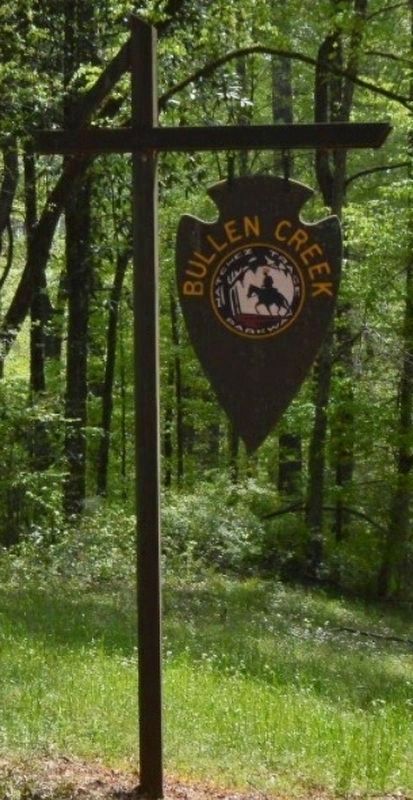
37. Bullen Creek sign
Credits. This page was last revised on May 12, 2022. It was originally submitted on August 16, 2015, by Duane Hall of Abilene, Texas. This page has been viewed 1,050 times since then and 29 times this year. Photos: 1, 2, 3, 4. submitted on August 16, 2015, by Duane Hall of Abilene, Texas. 5, 6, 7, 8. submitted on October 19, 2015, by Duane Hall of Abilene, Texas. 9. submitted on August 16, 2015, by Duane Hall of Abilene, Texas. 10, 11, 12, 13, 14, 15, 16, 17, 18, 19, 20, 21, 22, 23, 24, 25, 26, 27, 28, 29, 30, 31, 32, 33, 34, 35, 36. submitted on October 19, 2015, by Duane Hall of Abilene, Texas. 37. submitted on May 11, 2022, by Angela Pearson of Spokane, Washington.
