Winchester, Virginia — The American South (Mid-Atlantic)
Birthplace of James Wood, Junior
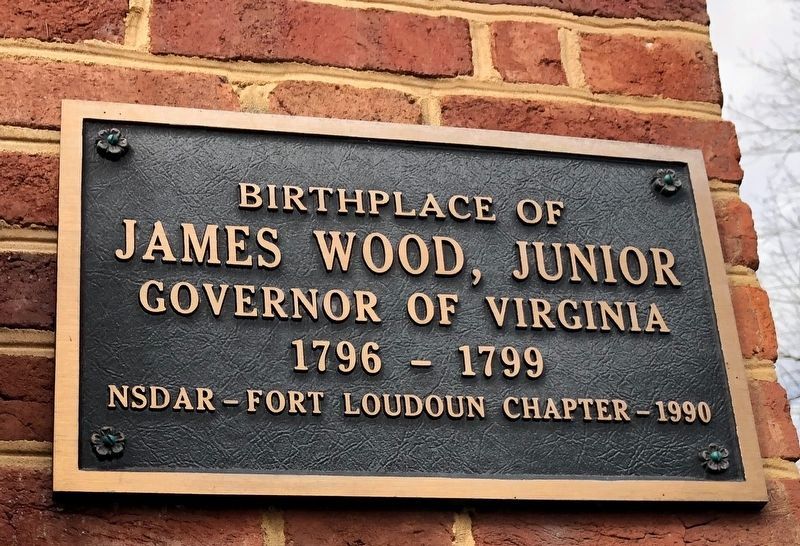
1796 - 1799
Erected 1990 by National Society of the Daughters of the American Revolution, Loudoun Chapter.
Topics and series. This historical marker is listed in this topic list: Government & Politics. In addition, it is included in the Daughters of the American Revolution (DAR) series list. A significant historical year for this entry is 1796.
Location. 39° 11.224′ N, 78° 10.702′ W. Marker is in Winchester, Virginia. It can be reached from U.S. 50. Touch for map. Marker is at or near this postal address: 801 Amherst Street, Winchester VA 22601, United States of America. Touch for directions.

Regionally, this marker is in Virginia’s Shenandoah Valley. It is also in the American South, specifically in the Upper South, and in the Mid-Atlantic. Globally, it is in North America, the Western Hemisphere, the Western World, and the Anglosphere. Historically, it finds itself in what was once the territory of the Mississippian Culture, one of the original Thirteen Colonies, one of the Confederate States of America, and the Antebellum South.
Other nearby markers. At least 8 other
this page online
Another marker is no longer nearby. Glen Burnie (was about 300 feet away, measured in a direct line but has been replaced with another marker now near it).
Also see . . . Glen Burnie. Virginia Department of Historic Resources website entry (Submitted on October 25, 2015, by Allen C. Browne of Silver Spring, Maryland.)
Additional commentary.
1. James Wood Senior
James Wood, Sr. (1707?-1759) was born, according to a grandson, in Winchester, Hampshire, England. He attended Oxford University, was a lieutenant in the Royal Navy, and came to Virginia with one of the colonial governors. Around 1735,
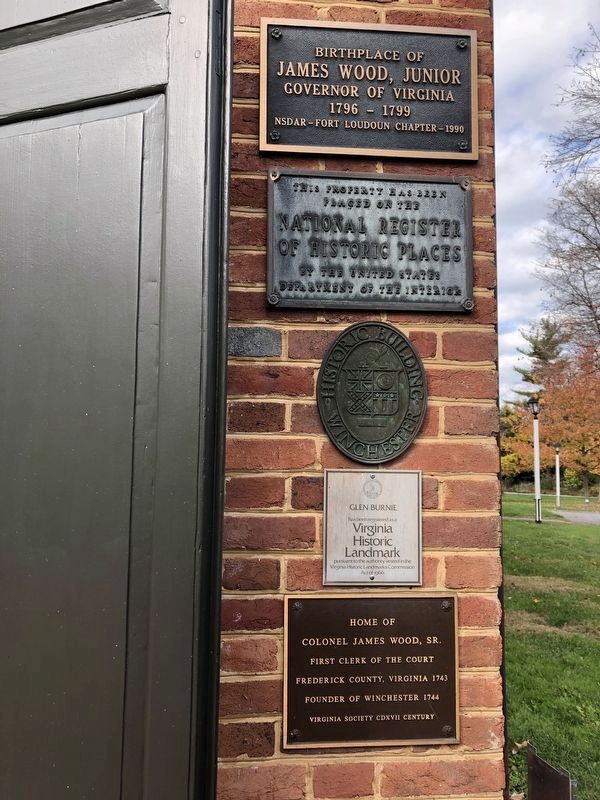
James Wood, Sr., built the first "Glen Burnie" in 1738. He married Mary Rutherford (died 1798) in 1738 with whom he had children Elizabeth (b. 1739), James, Jr. (b. 1741), Mary (b. 1742), John (b. 1743-44), and Robert (b. 1747). He is buried in the family graveyard at Glen Burnie. — Handley Regional Libary
— Submitted October 25, 2015, by Allen C. Browne of Silver Spring, Maryland.
2. JamesWood Junior
James Wood, Jr. (1741-1813) was deputy surveyor of Frederick County and represented the county in the Virginia House
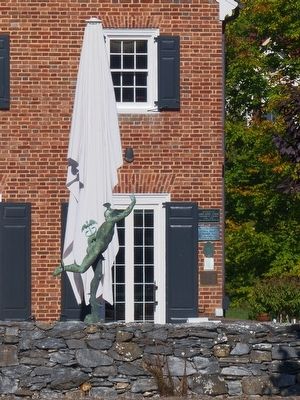
Photographed by Allen C. Browne, October 21, 2015
3. Five Markers
— Submitted October 25, 2015, by Allen C. Browne of Silver Spring, Maryland.
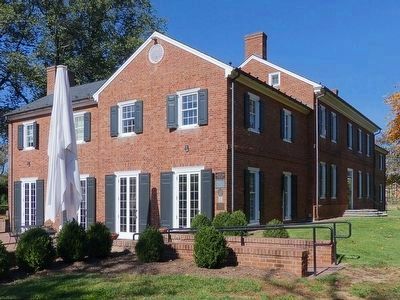
Photographed by Allen C. Browne, October 21, 2015
4. Glen Burnie
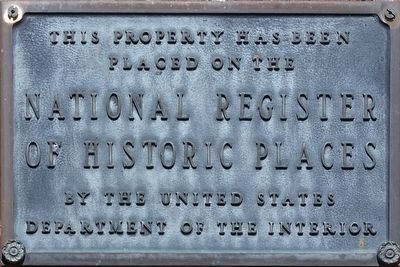
Photographed by Allen C. Browne, October 21, 2015
5. National Register of Historic Places plaque on the building
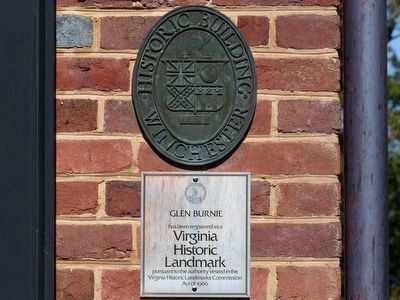
Photographed by Allen C. Browne, October 21, 2015
6. Virginia Historic Landmark
Has been registered as a
Virginia
Historic
Landmark
pursuant to the authority vested in the
Virginia Historic Landmarks Commission
Act of 1966
Credits. This page was last revised on July 14, 2022. It was originally submitted on October 25, 2015, by Allen C. Browne of Silver Spring, Maryland. This page has been viewed 975 times since then and 62 times this year. Photos: 1, 2. submitted on November 2, 2020, by Devry Becker Jones of Washington, District of Columbia. 3, 4, 5, 6. submitted on October 25, 2015, by Allen C. Browne of Silver Spring, Maryland. • Bernard Fisher was the editor who published this page.
