
Santiago de Querétaro in Querétaro, Mexico — The Central Highlands (North America)
Church and Former Convent of San Agustín
Templo y Antiguo Convento de San Agustín
Photographed by J. Makali Bruton, May 31, 2021
1. Temple and former Convent of San Agustín Marker
This marker with updated text replaced an older marker in 2018.

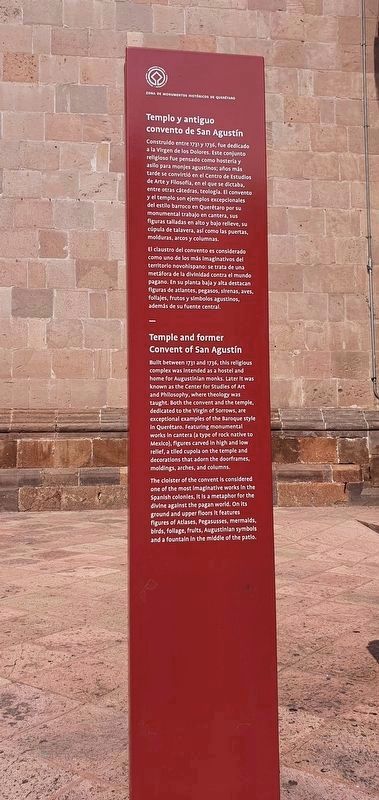
Templo y antiguo convento de San Agustín
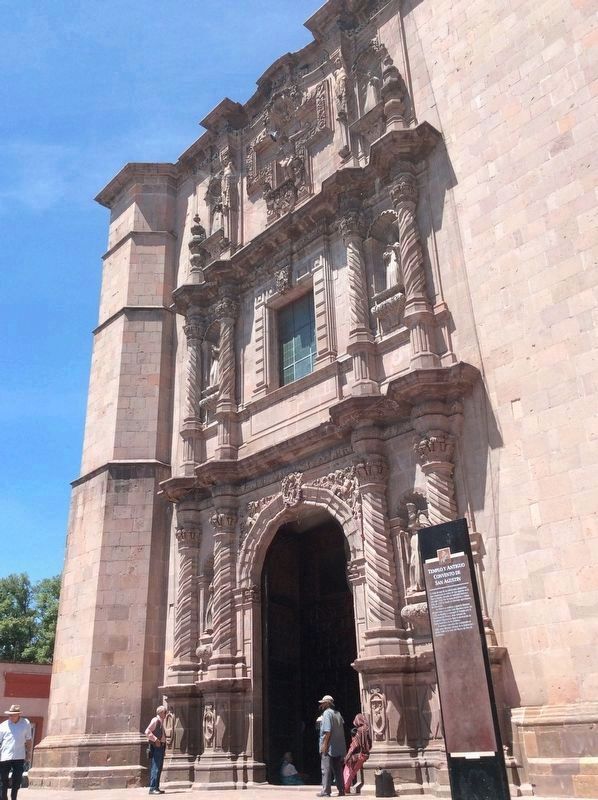
Construido entre 1731 y 1736, fue dedicado a la Virgen de los Dolores. Este conjunto religioso fue pensado como hostería y asilo para monjes agustinos; años más tarde se convirtió en el Centro de Estudios de Arte y Filosofía, en el que se dictaba, entre otras cátedras, teología. El convento y el templo son ejemplos excepcionales del estilo barroco en Querétaro por su monumental trabajo en cantera, sus figuras talladas en alto y bajo relieve, su cúpula de talavera, así como las puertas, molduras, arcos y columnas.
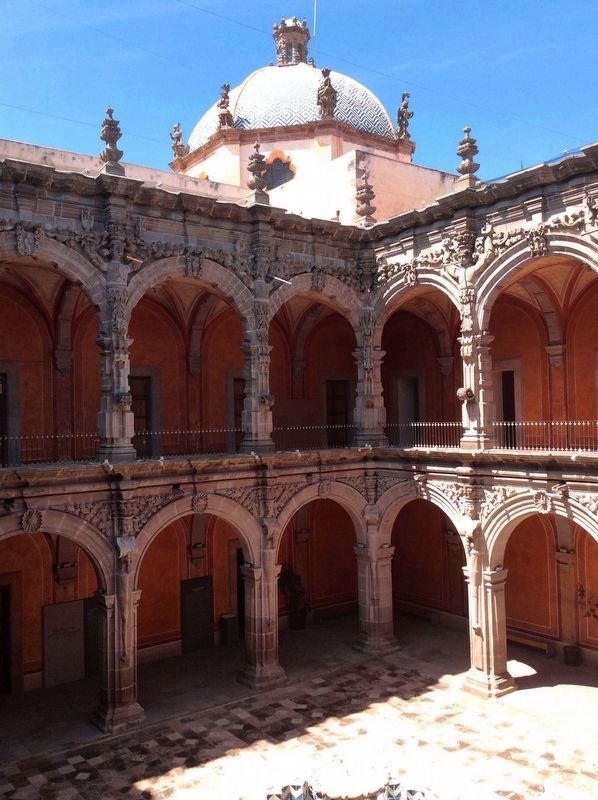
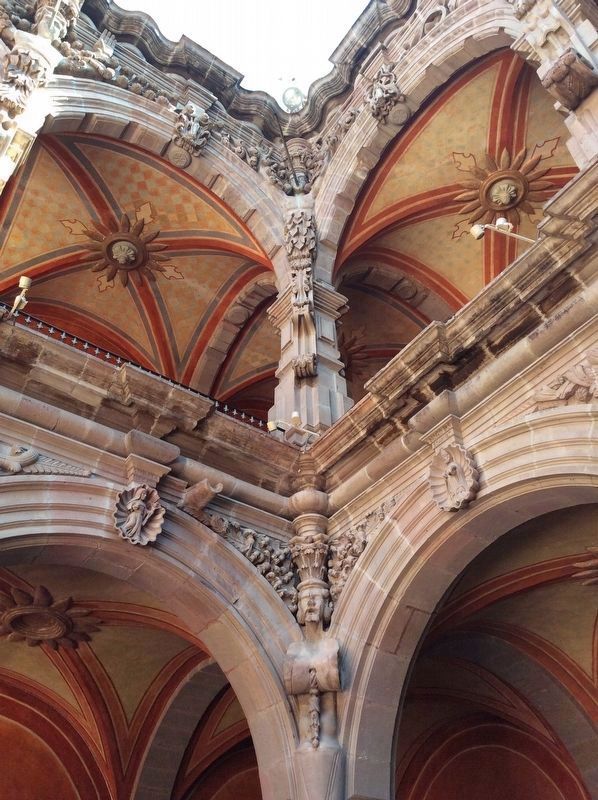
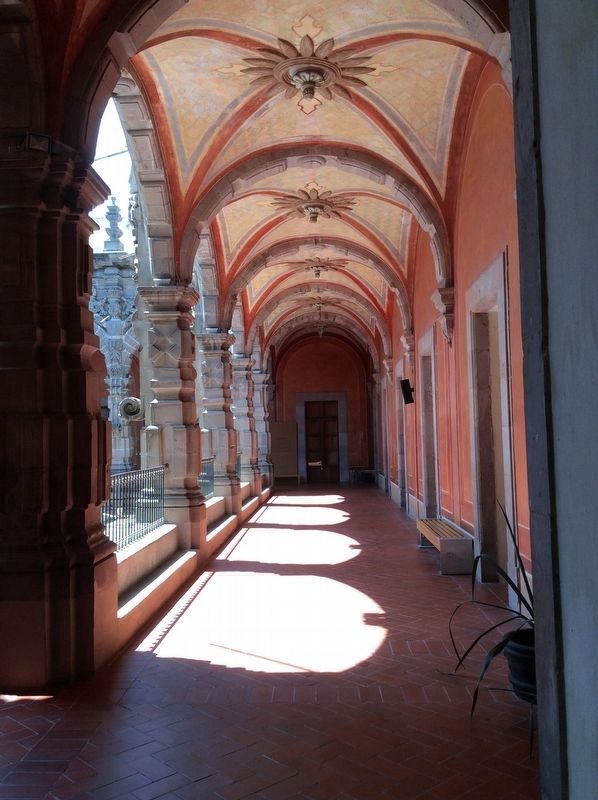
El claustro del convento es considerado como uno de los más imaginativos del territorio novohispano: se trata de una metáfora de la divinidad contra el mundo pagano. En su planta baja y alta destacan figuras de atlantes, pegasos, sirenas, aves, follajes, frutos y símbolos agustinos, además de su fuente central.
Temple and former Convent of San Agustín
Built between 1731 and 1736, this religious complex was intended as a hostel and home for Augustinian monks. Later it was known as the Center for Studies of Art and Philosophy, where theology was taught. Both the convent and the temple, dedicated to the Virgin of Sorrows, are exceptional examples of the Baroque style in Querétaro. Featuring monumental works in cantera (a type of rock native to Mexico), figures carved in high and low relief, a tiled cupola on the temple and decorations that adorn the doorframes, moldings, arches, and columns.
The cloister of the convent is considered one of the most imaginative works in the Spanish colonies, it is a metaphor for the divine against the pagan world. On its ground and upper floors it features figures of Atlases, Pegasusses, mermaids, birds, foliage, fruits, Augustinian symbols and a fountain in the middle of the patio.
Erected 2018 by Municipalidad
this page online
Topics. This historical marker is listed in these topic lists: Man-Made Features • Religion & Religious Structures. A significant historical year for this entry is 1728.
Location. 20° 35.455′ N, 100° 23.609′ W. Marker is in Santiago de Querétaro, Querétaro. It is at the intersection of Allende Sur and José María Pino Suárez, on the left when traveling north on Allende Sur. Touch for map. Marker is in this post office area: Santiago de Querétaro QUE 76000, Mexico. Touch for directions.

Regionally, this marker is in Central Mexico and in the Bajío. Globally, it is in North America, specifically in Mesoamerica, on the Ring of Fire, and in the Western Hemisphere. Historically, it finds itself in what was once New Spain, a Spanish colony, and the Aztec Empire.
Other nearby markers. At least 8 other markers are within walking distance of this marker: Captain Julian Diaz House (within shouting distance of this marker); The House of the Marquesa (about 120 meters away, measured in a direct line); Fountain of Neptune (about 120 meters away); Temple of the Ex-Convent of Santa Clara de Jesus (about 150 meters away);
Photographed by J. Makali Bruton, October 29, 2015
2. The previous Temple and Old Convent of San Agustin Marker
This previous marker was replaced in 2018. Its text read:
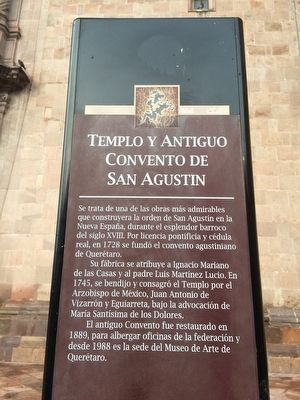
Se trata de una de las obras más admirables que construyera la orden de San Agustín en la Nueva España, durante el esplendor barroco del siglo XVII. Por licencia pontificia y cédula real, en 1728 se fundó el convento agustiniano de Querétaro.
Su fábrica se atribuye a Ignacio Mariano de las Casas y al padre Luis Martínez Lucio. En 1745, se bendijo y consagró el Templo por el Arzobispo de México, Juan Antonio de Vizarrón y Eguiarreta, bajo la advocación de María Santísima de los Dolores.
El antiguo Convento fue restaurado en 1889, para albergar oficinas de la federación y desde 1988 es la sede del Museo de Arte de Querétaro.
Su fábrica se atribuye a Ignacio Mariano de las Casas y al padre Luis Martínez Lucio. En 1745, se bendijo y consagró el Templo por el Arzobispo de México, Juan Antonio de Vizarrón y Eguiarreta, bajo la advocación de María Santísima de los Dolores.
El antiguo Convento fue restaurado en 1889, para albergar oficinas de la federación y desde 1988 es la sede del Museo de Arte de Querétaro.
More about this marker. The marker was replaced in 2018 with updated text but in the same location as a marker with the same name. The marker also mentions that the area is part of the Zone of Historical Monuments of Querétaro (Zona de Monumentos Históricos de Querétaro) as part of its designation as a UNESCO World Heritage Site.
Photographed by J. Makali Bruton, October 29, 2015
3. The previous Temple and Old Convent of San Agustin Marker English text
This previous marker was replaced in 2018. Its text read:
English:
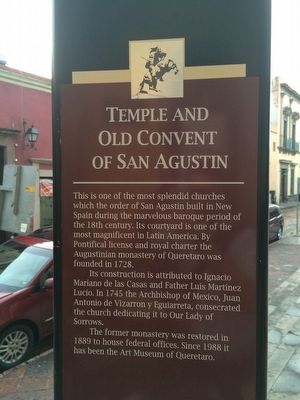
This is one of the most splendid churches which the order of San Agustin built in New Spain during the marvelous baroque period of the 18th century. Its courtyard is one of the most magnificent in Latin America. By Pontifical license and royal charter the Augustinian monastery of Queretaro was founded in 1728.
Its construction is attributed to Ignacio Mariano de las Casas and Father Luis Martinez Lucio. In 1745 the Archbishop of Mexico, Juan Antonio de Vizarron y Eguiarreta, consecrated the Church dedicating it to Our Lady of Sorrows.
The former monastery was restored in 1889 to house federal offices. Since 1988 it has been the Art Museum of Queretaro.
English:
This is one of the most splendid churches which the order of San Agustin built in New Spain during the marvelous baroque period of the 18th century. Its courtyard is one of the most magnificent in Latin America. By Pontifical license and royal charter the Augustinian monastery of Queretaro was founded in 1728.
Its construction is attributed to Ignacio Mariano de las Casas and Father Luis Martinez Lucio. In 1745 the Archbishop of Mexico, Juan Antonio de Vizarron y Eguiarreta, consecrated the Church dedicating it to Our Lady of Sorrows.
The former monastery was restored in 1889 to house federal offices. Since 1988 it has been the Art Museum of Queretaro.
Photographed by J. Makali Bruton, October 29, 2015
4. The Temple and Old Convent of San Agustin
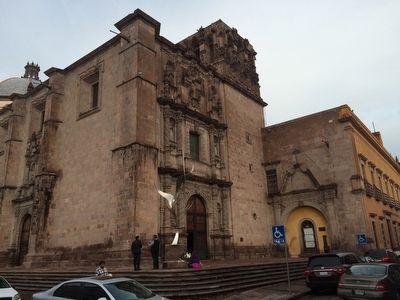
The previous marker was at the far right in front of the church. The 2018 marker is in the same location.
Photographed by J. Makali Bruton, July 30, 2017
5. The previous Temple and Old Convent of San Agustin Marker
Photographed by J. Makali Bruton, July 30, 2017
6. An interior view of the Former Convent of San Agustín
As the previous marker mentioned, "Its courtyard is one of the most magnificent in Latin America." The convent is now the Querétaro Museum of Art (Museo de Arte).
Photographed by J. Makali Bruton, July 30, 2017
7. The interior of the Former Convent of San Agustín
Photographed by J. Makali Bruton, July 30, 2017
8. The interior of the Former Convent of San Agustín
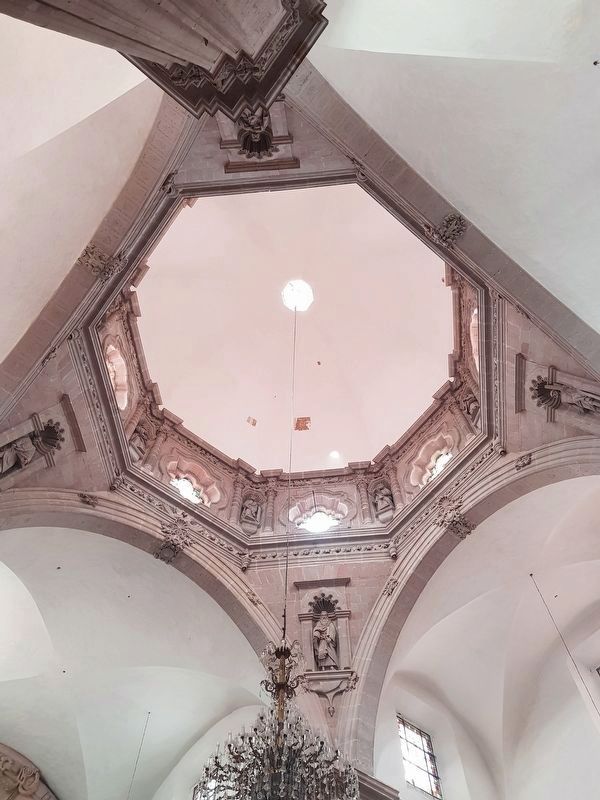
Photographed by J. Makali Bruton, February 22, 2019
9. The dome of the Temple of San Agustín
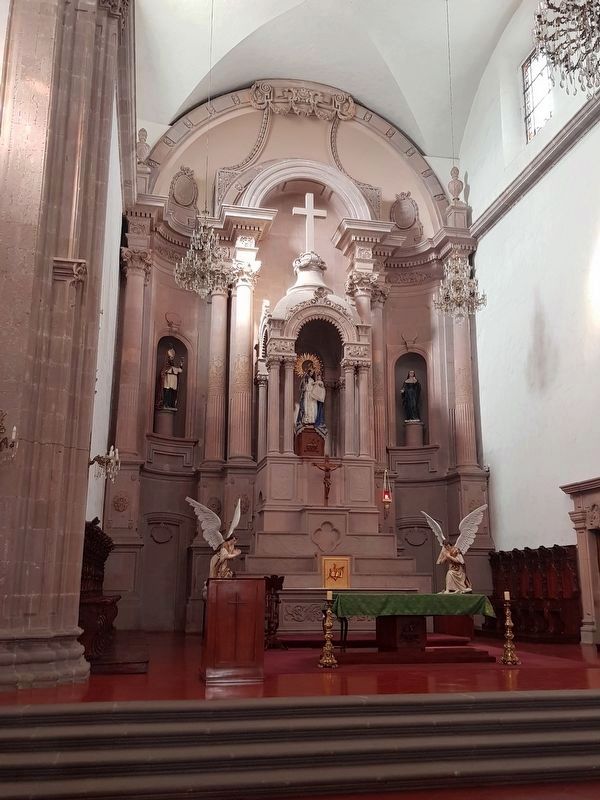
Photographed by J. Makali Bruton, February 22, 2019
10. A view of the altar of the Temple of San Agustín
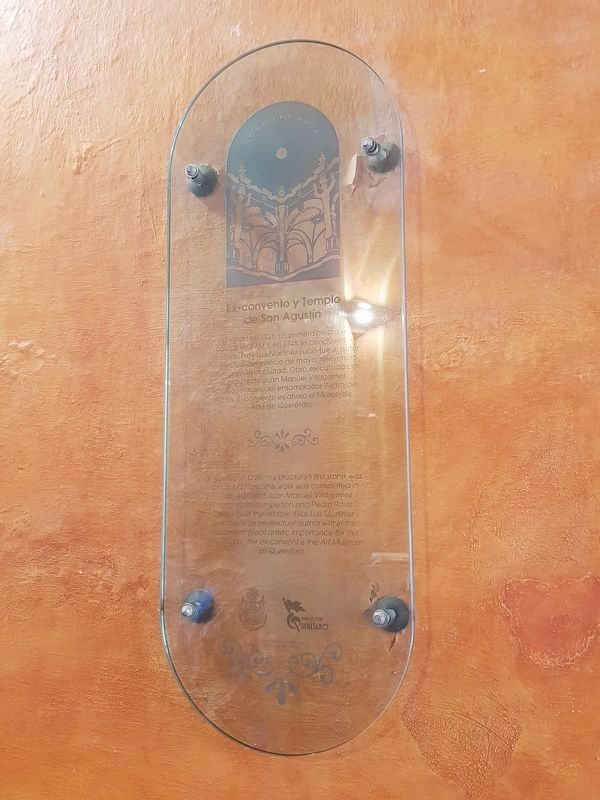
Photographed by J. Makali Bruton, February 22, 2019
11. An additional marker for the Temple and former Convent of San Agustín
This additional marker is in the entry corridor to the current Art Museum of Querétaro. It reads:
Ex-convent y Templo de San Agustín Fundado en 1728. La primera piedra se colocó en 1731 y en 1745 se concluyeron las obras. Fray Luis Martínez Lucio fue el autor intelectual del edificio de mayor relevancia artística en esta ciudad. Obra ejecutada por el arquitecto Juan Manuel Villagómez. Poseyó retablos del ensamblador Pedro de Rojas. El convento es ahora el Museo de Arte de Querétaro.
English:
Founded in 1728, this structure’s first stone was laid in 1731 and the work was completed in 1745. Architect Juan Manuel Villagomez directed its completion and Pedro Rojas assembled the retable. Friar Luis Martinez Lucio was an intellectual author within this building of great artistic importance for the city. Today, the ex-convent is the Art Museum of Queretaro.
Founded in 1728, this structure’s first stone was laid in 1731 and the work was completed in 1745. Architect Juan Manuel Villagomez directed its completion and Pedro Rojas assembled the retable. Friar Luis Martinez Lucio was an intellectual author within this building of great artistic importance for the city. Today, the ex-convent is the Art Museum of Queretaro.
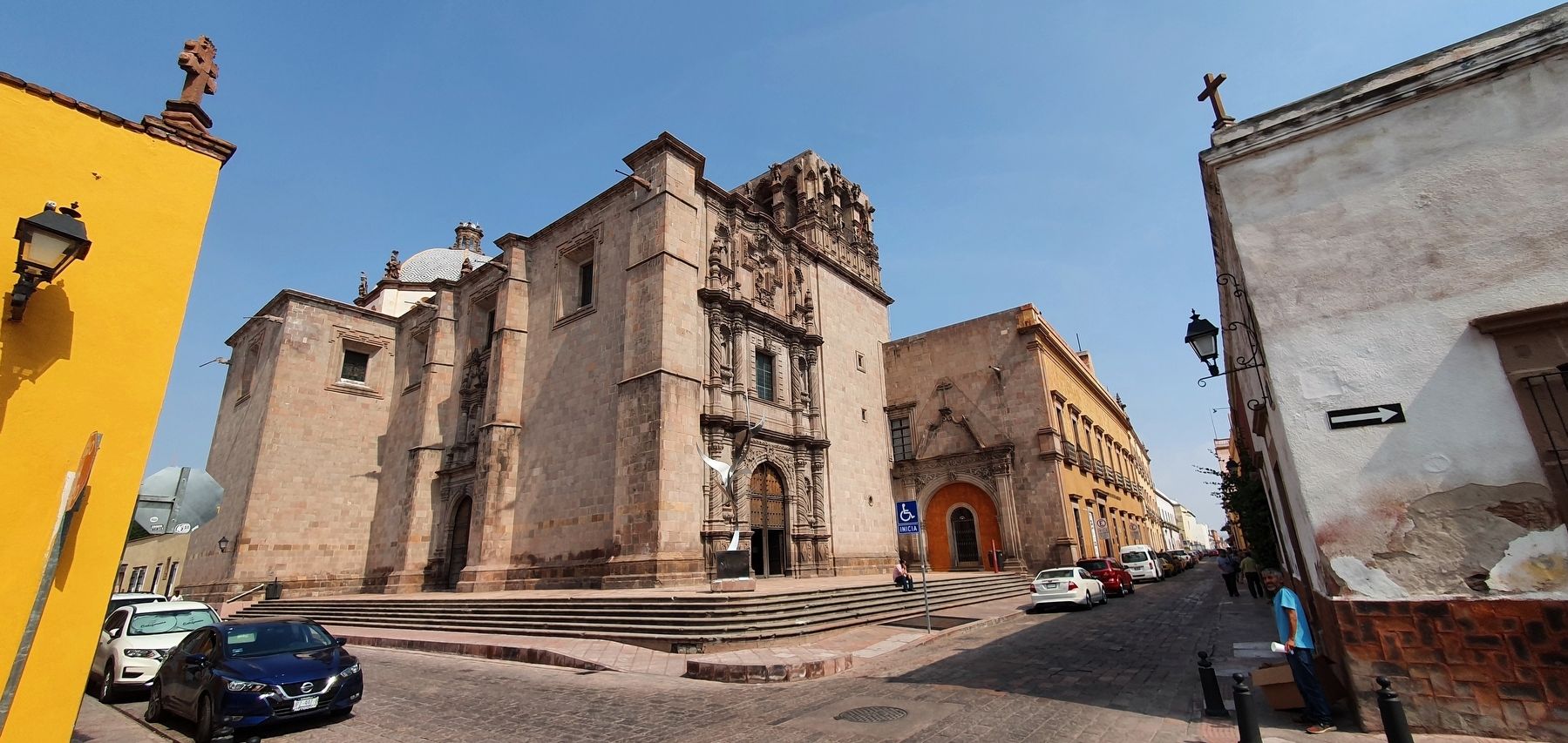
Photographed by J. Makali Bruton, May 31, 2021
12. Temple and former Convent of San Agustín and Marker
Credits. This page was last revised on July 11, 2023. It was originally submitted on November 11, 2015, by J. Makali Bruton of Washington, District of Columbia. This page has been viewed 872 times since then and 38 times this year. Photos: 1. submitted on June 6, 2021, by J. Makali Bruton of Washington, District of Columbia. 2, 3. submitted on November 11, 2015, by J. Makali Bruton of Washington, District of Columbia. 4. submitted on November 12, 2015, by J. Makali Bruton of Washington, District of Columbia. 5, 6, 7, 8. submitted on August 9, 2017, by J. Makali Bruton of Washington, District of Columbia. 9, 10. submitted on March 24, 2019, by J. Makali Bruton of Washington, District of Columbia. 11. submitted on April 9, 2019, by J. Makali Bruton of Washington, District of Columbia. 12. submitted on June 6, 2021, by J. Makali Bruton of Washington, District of Columbia.
