
Barstow in San Bernardino County, California — The American West (Pacific Coastal)
Stoddard Wells Road
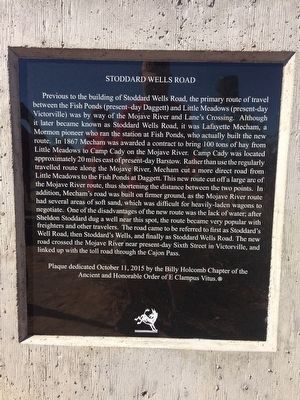
Photographed by Michael Kindig, October 11, 2015
1. Stoddard Wells Road Marker
this page online
Erected 2015 by Billy Holcomb Chapter No. 1069, E Clampus Vitus. (Marker Number 156.)
Topics and series. This historical marker is listed in these topic lists: Roads & Vehicles • Settlements & Settlers. In addition, it is included in the E Clampus Vitus series list.
Location. 34° 45.659′ N, 117° 0.625′ W. Marker is in Barstow, California, in San Bernardino County. It is on Barstow Road (California Route 247), on the left when traveling north. Touch for map. Marker is in this post office area: Barstow CA 92311, United States of America. Touch for directions.

Regionally, this marker is in Greater Los Angeles, in the Mojave Desert, in the Peninsular Ranges, and specifically in the Transverse Ranges. It is also in the American Southwest. Globally, it is
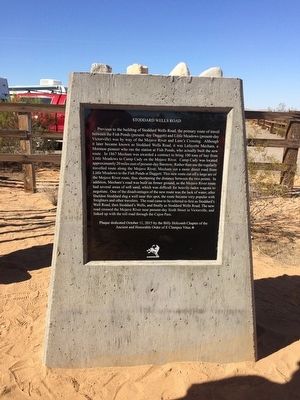
Photographed by Michael Kindig, October 11, 2015
2. Stoddard Wells Road Marker
Other nearby markers. At least 8 other markers are within 10 miles of this marker, measured as the crow flies: Slash X Ranch (here, next to this marker); Susie De Ridder (approx. 7.8 miles away); History of MCLB Barstow & U.S. Route 66 (approx. 8½ miles away); Log Cabin (approx. 8.8 miles away); The Old Spanish Trail (approx. 8.8 miles away); Mojave Riverbed Trail (approx. 8.8 miles away); Prohibition & Bootlegging in the High Desert (approx. 9.6 miles away); Marine Corps Logistic Base (approx. 9.6 miles away). Touch for a list and map of all markers in Barstow.
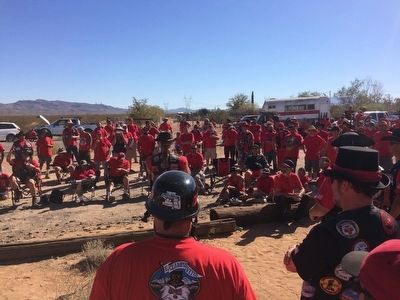
Photographed by Michael Kindig, October 11, 2015
3. Clampers Awaiting the Unveiling
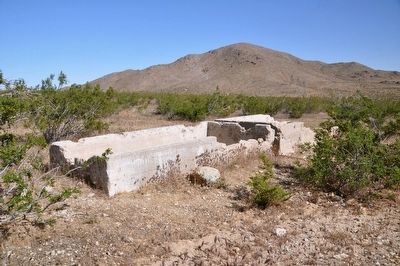
Photographed by Michael Kindig, April 30, 2011
4. Stoddard Wells Cistern
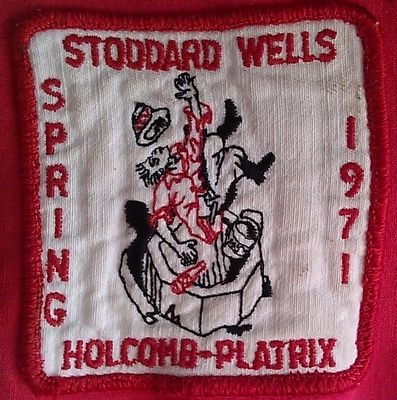
Photographed by Michael Kindig, April 23, 1971
5. Dedication Patch
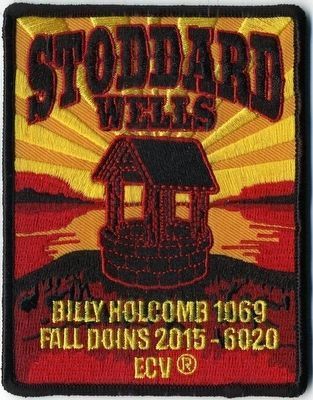
Photographed by Michael Kindig, October 11, 2015
6. Dedication Patch
Billy Holcomb 1069
Fall Doins 2015 - 6020
ECV
Credits. This page was last revised on June 16, 2016. It was originally submitted on September 29, 2015, by Michael Kindig of Elk Grove, California. This page has been viewed 2,324 times since then and 128 times this year. Last updated on March 2, 2016, by Michael Kindig of Elk Grove, California. Photos: 1, 2, 3, 4, 5, 6. submitted on October 18, 2015, by Michael Kindig of Elk Grove, California. • Syd Whittle was the editor who published this page.
