Barnwell in Barnwell County, South Carolina — The American South (South Atlantic)
William Gilmore Simms
April 17, 1806 - June 11, 1870
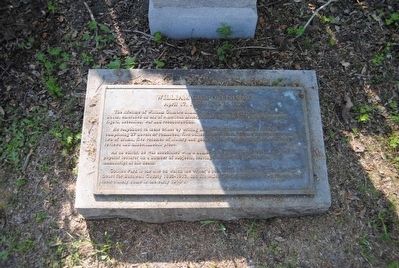
Photographed by Brian Scott, March 22, 2016
1. William Gilmore Simms Monument
The lifetime of William Gilmore Simms, the preeminent man of letters in the Old South, embraced an era of American history marked by nullification, states rights, secession, war and reconstruction.
He responded to these crises by writing and publishing a total of 65 volumes comprising 27 novels of romances, five collections of short fiction, 18 volumes of poetry, two of drama, five volumes of history and geography, four of biography, five volumes of reviews and miscellaneous prose.
As an editor, he was associated with a number of significant periodicals. He was a popular lecturer on a number of subjects, leaving a number of important works in manuscript at his death.
Collins Park is the site on which the writer's son, William Gilmore Simms, Jr., Clerk of Court for Barnwell County 1883-1912, and his wife, Emma Gertrude Hartzog Simms built their stately home in the early 1900's.
Topics. This historical marker is listed in these topic lists: Arts, Letters, Music • Communications • Education • War, US Civil.
Location. 33° 14.65′ N, 81° 21.55′ W. Marker
this page online

Regionally, this marker is in the Midlands. It is also in the American South and specifically in the Deep South. Globally, it is in North America, the Western Hemisphere, the Western World, and the Anglosphere. Historically, it finds itself in what was once the territory of the Mississippian Culture, one of the original Thirteen Colonies, one of the Confederate States of America, and the Antebellum South.
Other nearby markers. At least 10 other markers are within walking distance of this marker: The Barnwell Ring Monument (within shouting distance of this marker); Barnwell (within shouting distance of this marker); Collins Park (within shouting distance of this marker); The Police Station (approx. 0.3 miles away); “The Sundial” (approx. 0.3 miles away); Barnwell County Courthouse (approx. 0.3 miles away); Bank Of Barnwell / Edgar A. Brown Law Office
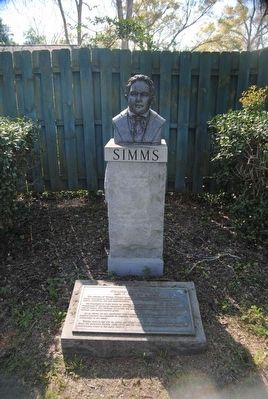
Photographed by Brian Scott, March 22, 2016
2. William Gilmore Simms Monument
Also see . . . William Gilmore Simms. William Gilmore Simms (April 17, 1806 – June 11, 1870) was a poet, novelist and historian from the American South. His writings achieved great prominence during the 19th century, with Edgar Allan Poe pronouncing him the best novelist America had ever produced. (Submitted on June 14, 2016, by Brian Scott of Anderson, South Carolina.)
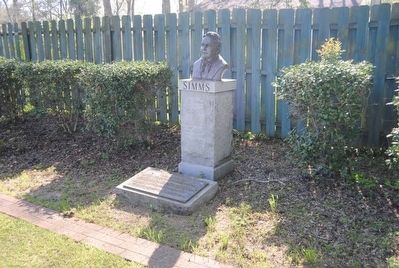
Photographed by Brian Scott, March 22, 2016
3. William Gilmore Simms Monument
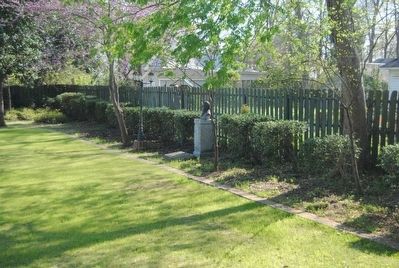
Photographed by Brian Scott, March 22, 2016
4. William Gilmore Simms Monument
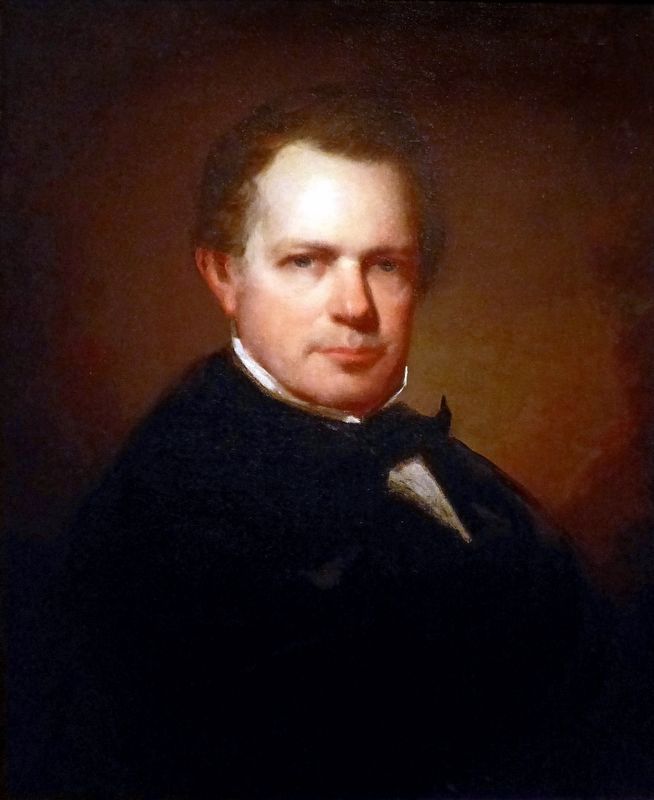
Photographed by Allen C. Browne, July 25, 2017
5. William Gilmore Simms
This undated portrait of William Gilmore Simms by an unknown artist hangs in the National Portrait Gallery in Washington, DC.
“Novelist and poet William Gilmore Simms was a founder of a distinctly southern literary perspective, one that is influential in history and literature to this day. Simms spent his life writing, turning out a series of colorful novels as well as a substantial body of verse. He invested his fiction with local color and details of southern history, especially from the Revolutionary War period. Like Washington Irving, he adapted the style of Sir Walter Scott's historical novels to American narratives. Simms's writings were a conscious defense of southern civilization (including slavery) as humane, patriotic, and chivalric, especially in contrast to the cold capitalism of the North. This contrast, minus the defense of slavery, remains a staple of southern writing.” — National Portrait Gallery
“Novelist and poet William Gilmore Simms was a founder of a distinctly southern literary perspective, one that is influential in history and literature to this day. Simms spent his life writing, turning out a series of colorful novels as well as a substantial body of verse. He invested his fiction with local color and details of southern history, especially from the Revolutionary War period. Like Washington Irving, he adapted the style of Sir Walter Scott's historical novels to American narratives. Simms's writings were a conscious defense of southern civilization (including slavery) as humane, patriotic, and chivalric, especially in contrast to the cold capitalism of the North. This contrast, minus the defense of slavery, remains a staple of southern writing.” — National Portrait Gallery
Credits. This page was last revised on December 11, 2019. It was originally submitted on June 14, 2016, by Brian Scott of Anderson, South Carolina. This page has been viewed 911 times since then and 42 times this year. Photos: 1, 2, 3, 4. submitted on June 14, 2016, by Brian Scott of Anderson, South Carolina. 5. submitted on August 16, 2017, by Allen C. Browne of Silver Spring, Maryland.
