Farmington in Capitol Region, Connecticut — The American Northeast (New England)
Farmington and the Freedom Trail
Photographed by Alan M. Perrie, July 19, 2016
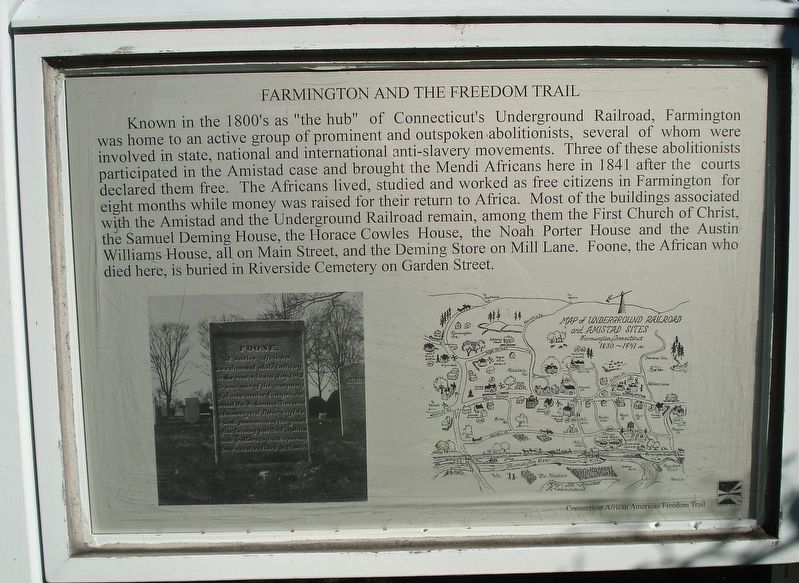
1. Farmington and the Freedom Trail Marker
Known in the 1800’s as “the hub” of Connecticut’s Underground Railroad, Farmington was home to an active group of prominent and outspoken abolitionists, several of whom were involved in state, national and international anti-slavery movements. Three of these abolitionists participated in the Amistad case and brought the Mendi Africans here in 1841 after the courts declared them free. The Africans lived, studied and worked as free citizens in Farmington for eight months while money was raised for their return to Africa. Most of the buildings associated with the Amistad and the Underground Railroad remain, among them the First Church of Christ, the Samuel Deming House, the Horace Cowles House, the Noah Porter House, and the Austin Williams House, all on Main Street, and the Deming Store on Mill Lane. Foone, the African who died here, is buried in Riverside Cemetery on Garden Street.
Erected by Connecticut African American Freedom Trail.
Topics. This historical marker is listed in these topic lists: Abolition & Underground RR • African Americans • Cemeteries & Burial Sites. A significant historical year for this entry is 1841.
Location. 41° 43.283′ N,
this page online

Regionally, this marker is in the Connecticut River Valley, in Greater Hartford, and in the Knowledge Corridor. It is also in the American Northeast and in New England. Globally, it is in North America, the Western Hemisphere, the Western World, and the Anglosphere. Historically, it finds itself in what was once Hartford County and also one of the original Thirteen Colonies.
Other nearby markers. At least 8 other markers are within 3 miles of this marker, measured as the crow flies: Farmington (about 700 feet away, measured in a direct line); "American Board" (approx. ¼ mile away); American Board of Commissioners For Foreign Missions (approx. ¼ mile away); Rochambeau Route 1781-82 (approx. 0.4 miles away); Lest We Forget (approx. 0.4 miles away); a different marker
Photographed by Alan M. Perrie, July 19, 2016
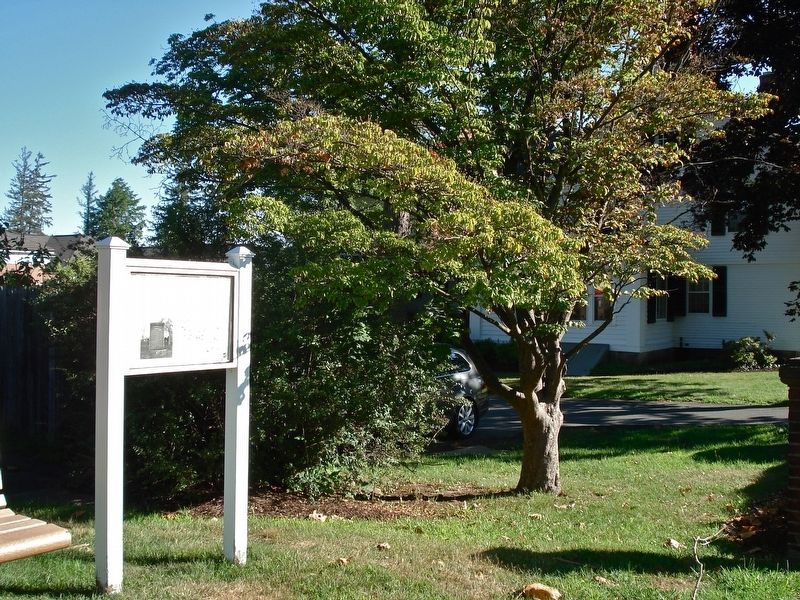
2. The Samuel Deming House
This marker has been placed next to the home of Samuel Deming, an abolitionist who supervised the African’s stay in Farmington.
Other markers no longer nearby. Pitkin's Basin (was approx. 0.2 miles away but has been confirmed missing); The Legend of Will Warren’s Den (was approx. 1.6 miles away but has been confirmed missing); Unionville Feeder Canal (was approx. 2.2 miles away but has been confirmed missing).
Also see . . .
1. Freedom Trail in Connecticut map. (Submitted on July 20, 2016, by Alan M. Perrie of Unionville, Connecticut.)
2. Cinque. (Submitted on July 20, 2016, by Alan M. Perrie of Unionville, Connecticut.)
Photographed by Alan M. Perrie, July 19, 2016
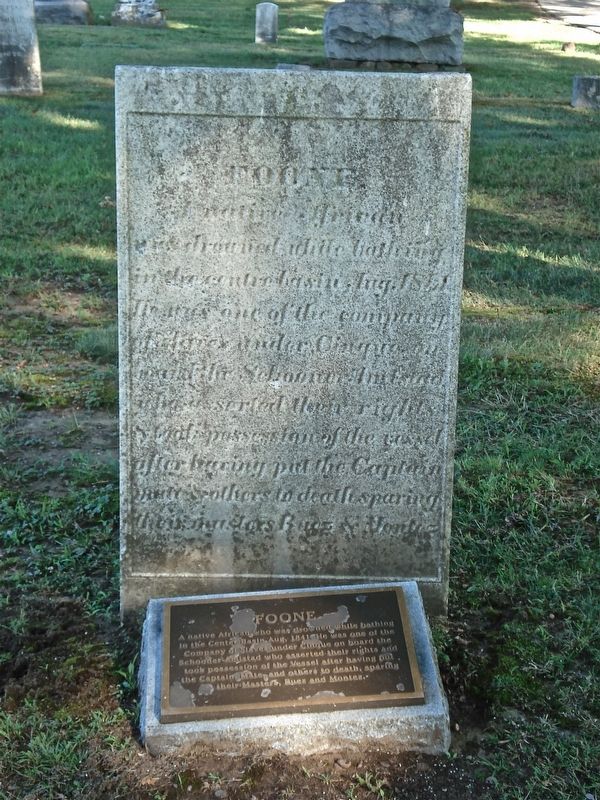
3. Foone’s burial site at Riverside Cemetery
A native African who drowned while bathing in the Center Basin Aug, 1841. He was one of the Company of Slaves under Cinque on board the Schooner Amistad who asserted their rights and took possession of the Vessel after having put the Captain, Mate, and others to death, sparing their Masters, Ruez and Montez.
Photographed by Alan M. Perrie, July 19, 2016
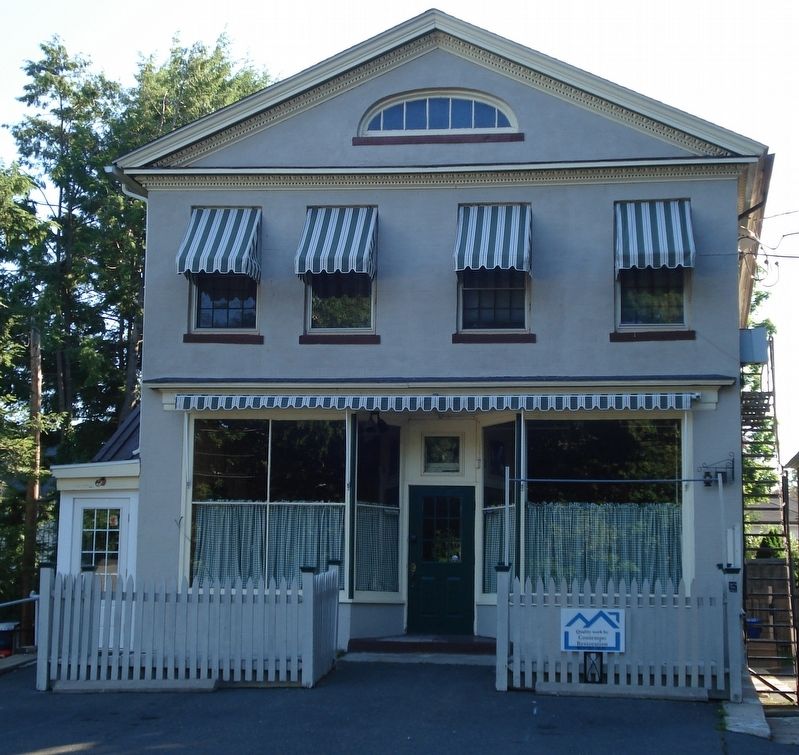
4. The Deming Store on Mill Lane
The second floor was used to educated the Africans for 5 hours per day, 6 days a week.
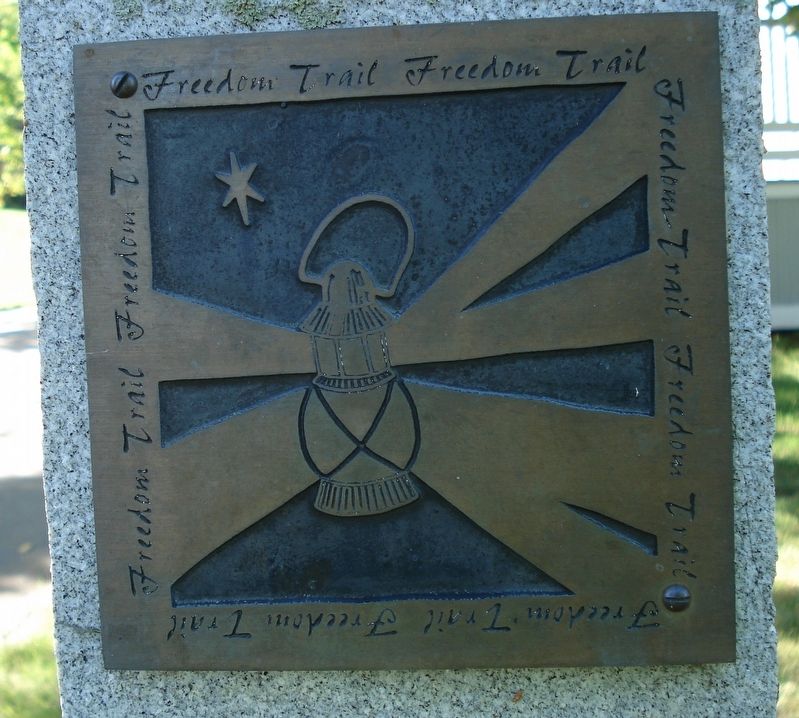
Photographed by Alan M. Perrie, July 19, 2016
5. Freedom Trail
The Freedom Trail sites are identified by this brass marker placed on a granite post.
Credits. This page was last revised on May 19, 2026. It was originally submitted on July 20, 2016, by Alan M. Perrie of Unionville, Connecticut. This page has been viewed 1,563 times since then and 64 times this year. Photos: 1, 2, 3, 4, 5. submitted on July 20, 2016, by Alan M. Perrie of Unionville, Connecticut. • Bill Pfingsten was the editor who published this page.
