Reynoldsburg in Franklin County, Ohio — The American Midwest (Great Lakes)
Mile Markers
Reynoldsbirg
| — | One of Several Identical Markers | — |
Photographed by Rev. Ronald Irick, September 2, 2016
1. Mile Markers Marker
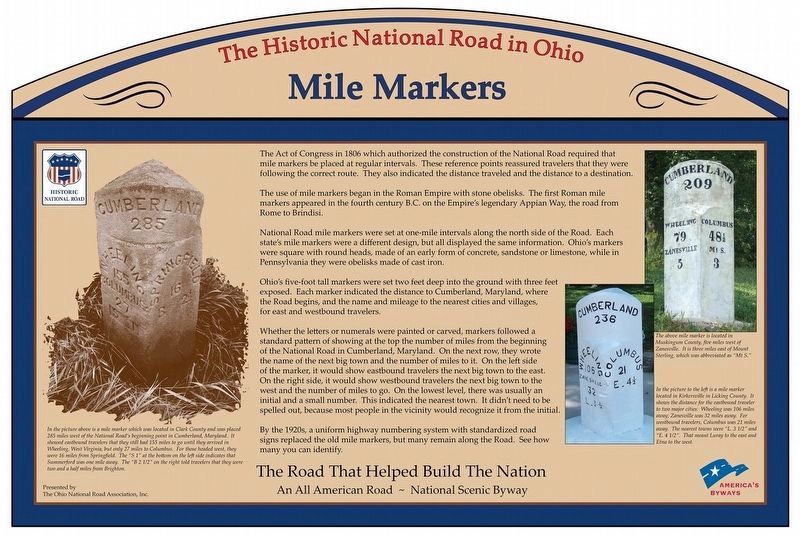
The Act of Congress in 1806 which authorized the construction of the National Road required that mile markers be placed at regular intervals. These reference points reassured travelers that they were following the correct route. They also indicated the distance traveled and the distance to a destination.
The use of mile markers began in the Roman Empire with the use of stone obelisks. The first Roman mile markers appeared in the fourth century B.C. on the empire’s legendary Appian Way, the road from Rome to Brindisi.
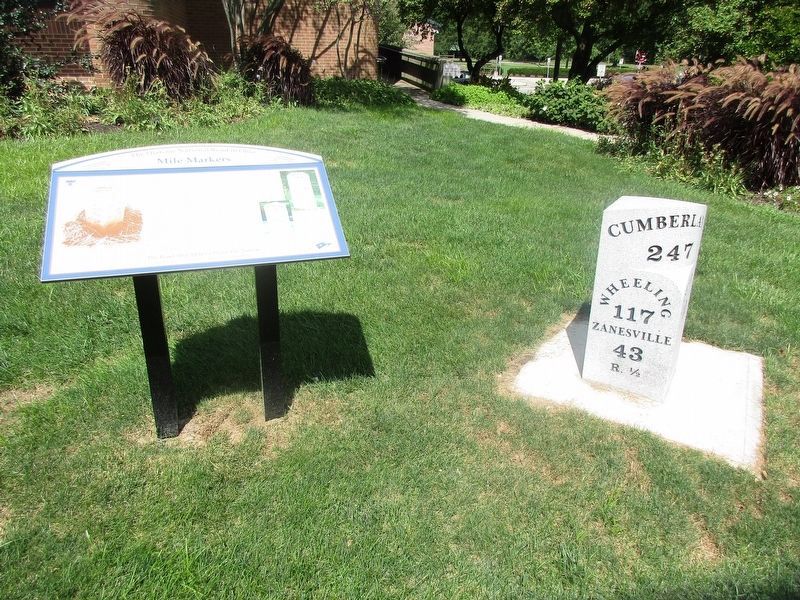
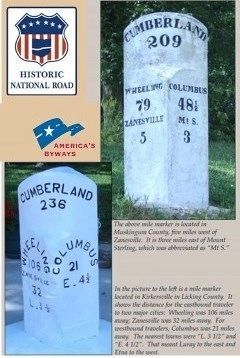
National Road mile markers are set at one mile intervals along the north side of the Road. Each state’s mile markers were a different design, but all displayed the same information. Ohio’s markers were square with round heads, made of an early form of concrete, sandstone or limestone, while in Pennsylvania they were obelisks made of cast iron. Ohio’s five-foot tall markers were set two feet deep into the ground with three feet exposed. Each marker indicated the distance to Cumberland, Maryland, where the Road begins, and the name and mileage to the nearest cities and villages, for east and westbound
this page online
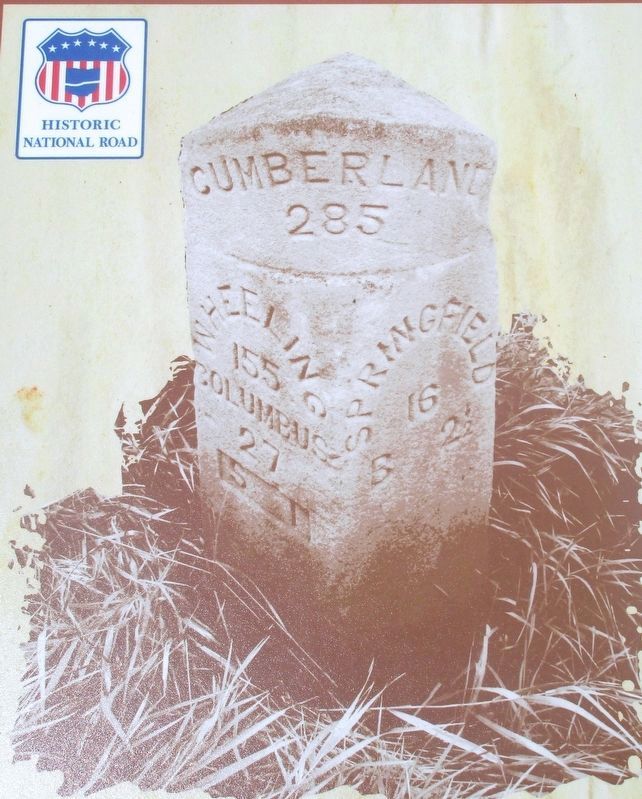
Whether the letters or numerals were painted or carved, markers followed a standard pattern of showing at the top the number of miles from the beginning of the Road in Cumberland, Maryland. On the next row, they wrote the name of the next big town and number of miles to it. On the left side of the marker, it would show eastbound travelers the next big town to the east. On the right side, it would show westbound travelers the next big town to the west and the number of miles to go. On the lowest level, there was usually an initial and a small number. This indicated the nearest town. It didn’t need to be spelled out, because most people from the vicinity would recognize it from the initial.
By the 1920’s, a uniform highway numbering system with standardized road signs replaced the old mile markers, but many remain along the Road. See how many you can identify.
Erected 2015 by The Ohio National Road Association, Inc.
Topics and series. This historical marker is listed in this topic list: Roads & Vehicles. In addition, it is included in the The Historic National Road series list.
Location. 39° 57.322′ N,
Photographed by Rev. Ronald Irick, September 2, 2016
2. Mile Markers Marker
Full view of marker and restored original mile post

Regionally, this marker is in the Scioto Valley and in the Columbus Metropolitan Area. It is also in the American Midwest and in the Corn Belt. Globally, it is in North America, the Western Hemisphere, the Western World, and the Anglosphere. Historically, it finds itself in what was once the Haudenosaunee (Iroquois) Confederacy, the territory of the Mississippian Culture, and the Northwest Territory.
Other nearby markers. At least 8 other markers are within walking distance of this marker: Reynoldsburg (approx. 0.2 miles away); City of Reynoldsburg (approx. 0.2 miles away); Civil War Memorial (approx. 0.4 miles away); Veterans Memorial (approx. 0.4 miles away); Lewis W. Krumm (approx. 0.4 miles
Photographed by Rev. Ronald Irick, September 2, 2016
3. Mile Markers Marker
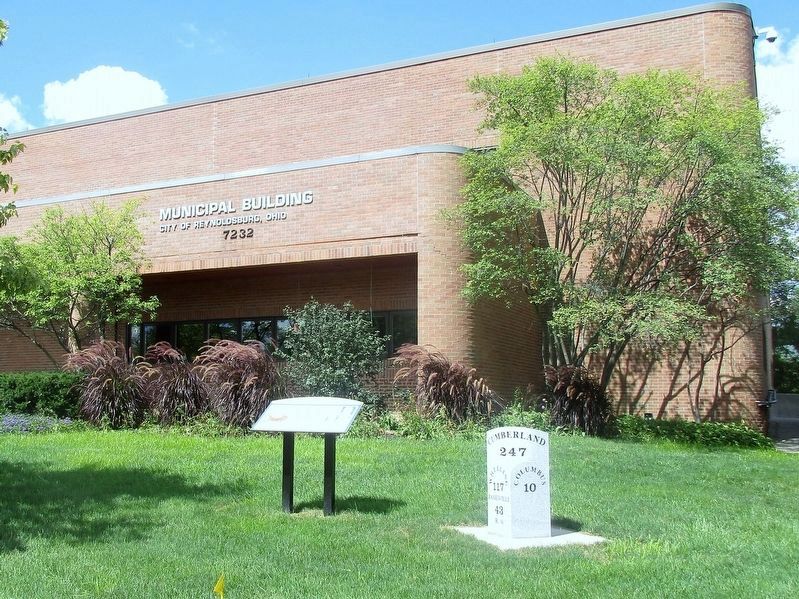
Markers can be seen at a distance, in front of the Municipal; Building
Additional keywords. Old National Road
Photographed by Rev. Ronald Irick, September 2, 2016
4. Mile Markers Marker
Picture on the marker
Photographed by Rev. Ronald Irick, September 2, 2016
5. Mile Markers Marker
Pictures on the marker
Credits. This page was last revised on February 9, 2023. It was originally submitted on September 6, 2016, by Rev. Ronald Irick of West Liberty, Ohio. This page has been viewed 902 times since then and 77 times this year. Photos: 1, 2, 3, 4, 5. submitted on September 6, 2016, by Rev. Ronald Irick of West Liberty, Ohio. • Bill Pfingsten was the editor who published this page.
