Hillsborough in Orange County, North Carolina — The American South (South Atlantic)
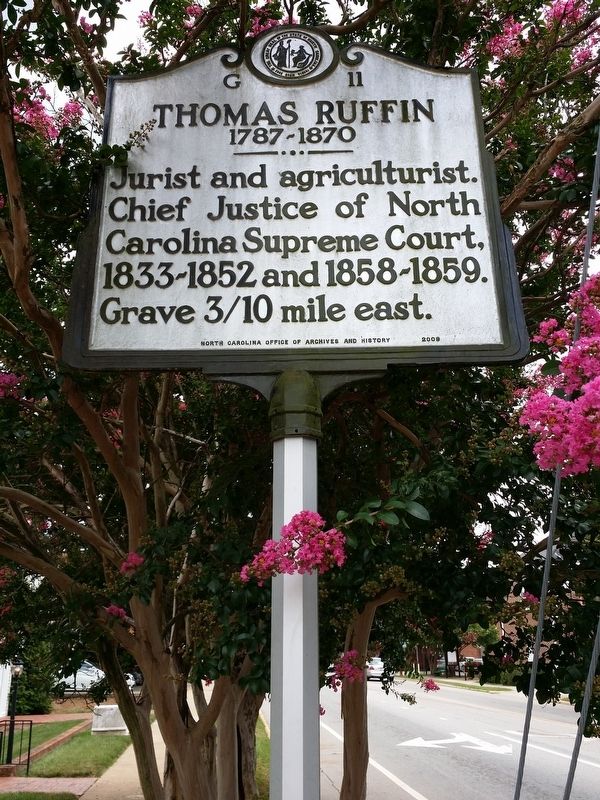
Thomas Ruffin
1787-1870
Photographed by Michael C. Wilcox, June 30, 2014
1. Thomas Ruffin Marker
Erected 2009 by North Carolina Office of Archives and History. (Marker Number G-11.)
Topics and series. This historical marker is listed in these topic lists: Agriculture • Cemeteries & Burial Sites • Government & Politics. In addition, it is included in the North Carolina Division of Archives and History series list. A significant historical year for this entry is 1833.
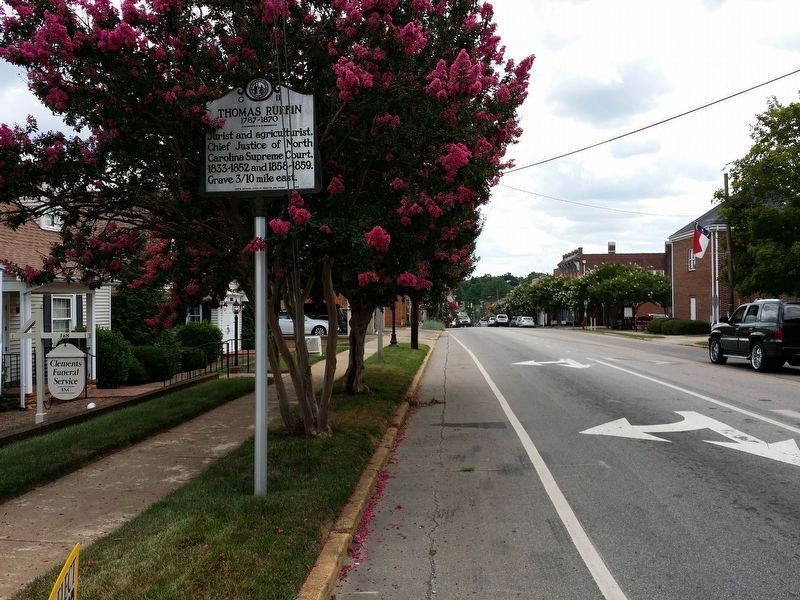
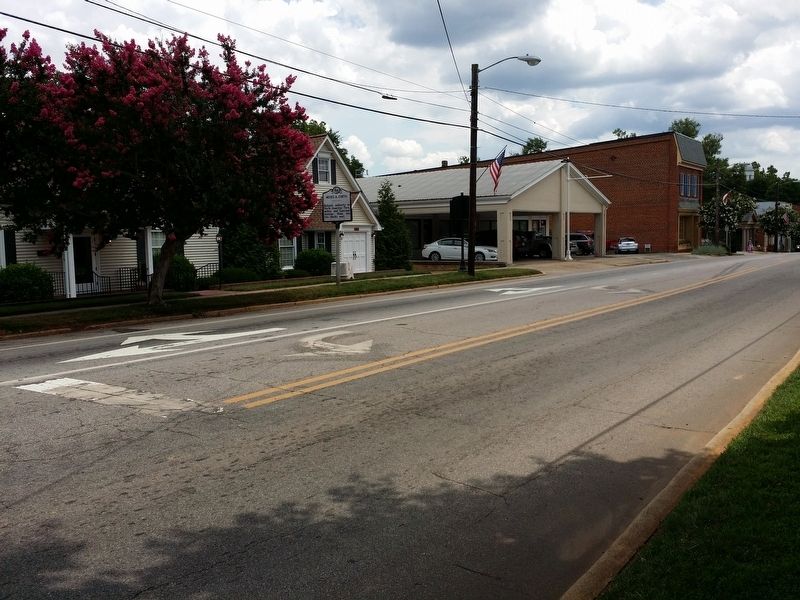
Location. 36° 4.616′ N, 79° 5.965′ W. Marker is in Hillsborough, North Carolina, in Orange County. It is at the intersection of North Churton Street (U.S. 70) and East Tryon Street, on the right when traveling north on North Churton Street. Touch for map. Marker is at or near this postal address: 148 N Churton St, Hillsborough NC 27278, United States of America. Touch for directions.

Regionally, this marker is in North Carolina’s Piedmont and in the Research Triangle. It is also in the American South and specifically in the Upper South. Globally, it is in North America, the Western Hemisphere, the Western World,
this page online
Other nearby markers. At least 8 other markers are within walking distance of this marker: J. G. de Roulhac Hamilton (a few steps from this marker); Moses A. Curtis (a few steps from this marker); Francis Nash (within shouting distance of this marker); Historic Corner (within shouting distance of this marker); William A. Graham (within shouting distance of this marker); Site of First North Carolina Convention 1788 (within shouting distance of this marker); Old Town Cemetery (within shouting distance of this marker); William Hooper (within shouting distance of this marker). Touch for a list and map of all markers in Hillsborough.
Another marker is no longer nearby. Archibald Debow Murphey (was within shouting distance of this marker but has been permanently removed).
Also see . . .
1. Find a Grave link. (Submitted on October 9, 2016, by Michael C. Wilcox of Winston-Salem, North Carolina.)
2. Supreme Court to Remove Portrait of Chief Justice Thomas Ruffin from Its Courtroom.
Photographed by Michael C. Wilcox, June 30, 2014
2. Thomas Ruffin Marker
Ruffin served as chief justice from 1833 to 1852. A slave owner himself, Ruffin authored opinions as chief justice defending the institution of slavery and was regarded even by his contemporaries as particularly brutal in his ownership of slaves. Calls for his legacy to be re-examined and for the removal of the prominent, larger-than-life portrait from the Supreme Court’s courtroom often cite Ruffin’s most notorious opinion, State v. Mann. In that case, in which an enslaved woman had been shot in the back after fleeing a brutal whipping, Ruffin rejected the notion that a slave owner could be guilty of assault or battery of an enslaved person, writing, “The power of the master must be absolute to render the submission of the slave perfect... This discipline belongs to the state of slavery.”(Submitted on December 8, 2021, by Duane and Tracy Marsteller of Murfreesboro, Tennessee.)
Photographed by Michael C. Wilcox, June 30, 2014
3. Thomas Ruffin Marker
Photographed by Richard Hawkins, August 2, 2025
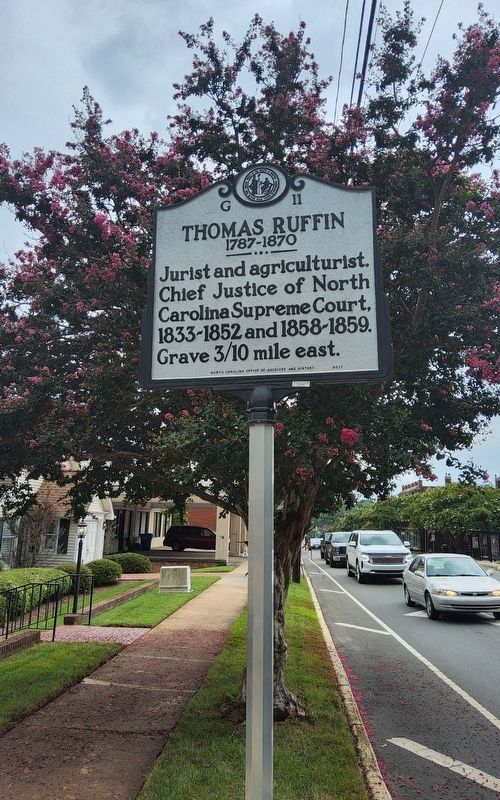
4. Thomas Ruffin Marker
Credits. This page was last revised on August 5, 2025. It was originally submitted on October 9, 2016, by Michael C. Wilcox of Winston-Salem, North Carolina. This page has been viewed 540 times since then and 29 times this year. Photos: 1, 2, 3. submitted on October 9, 2016, by Michael C. Wilcox of Winston-Salem, North Carolina. 4. submitted on August 2, 2025, by Richard Hawkins of Phelan, California. • Bernard Fisher was the editor who published this page.
