Kenova in Wayne County, West Virginia — The American South (Appalachia)
Ceredo - Kenova
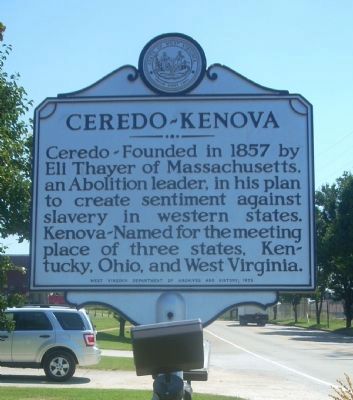
Photographed by John Desaulniers, Jr., September 1, 2010
1. Ceredo - Kenova Marker
Erected 1975 by West Virginia Department of Archives and History.
Topics and series. This historical marker is listed in these topic lists: Abolition & Underground RR • Settlements & Settlers. In addition, it is included in the West Virginia Archives and History series list. A significant historical year for this entry is 1857.
Location. 38° 24.199′ N, 82° 35.451′ W. Marker is in Kenova, West Virginia, in Wayne County. It is at the intersection of Chestnut Street (U.S. 60) and Virginia Point Drive, on the right on Chestnut Street. Touch for map. Marker is in this post office area: Kenova WV 25530, United States of America. Touch for directions.

Regionally, this marker is in the Kyova Tri-State Region and in the Southern Coalfields. It is also in the American South, specifically in the Upper South, in the Ohio River Valley, in Appalachia, and specifically in Southern Appalachia.
this page online
Other nearby markers. At least 8 other markers are within walking distance of this marker: West Virginia (Wayne County) / Kentucky (within shouting distance of this marker); Welcome to Virginia Point Park (approx. 0.6 miles away); "Lest We Forget" (approx. 0.7 miles away); Here Lies James H. McCoy / Here Lies Floyd McCoy (approx. ¾ mile away in Kentucky); Pauline S. Hunt Recreational Grounds (approx. ¾ mile away in Kentucky); County Named, 1860 (approx. 0.9 miles away in Kentucky); Country Music Highway (approx. 0.9 miles away in Kentucky); Judge John M. Elliott (approx. 0.9 miles away in Kentucky). Touch for a list and map of all markers in Kenova.
Another marker is no longer nearby. Dreamland Pool (was within shouting distance of this marker but has been permanently removed).
Also see . . .
1. Biographical Directory of the US Congress - THAYER, Eli. Eli Thayer's political career is provided here with minor acknowledgment
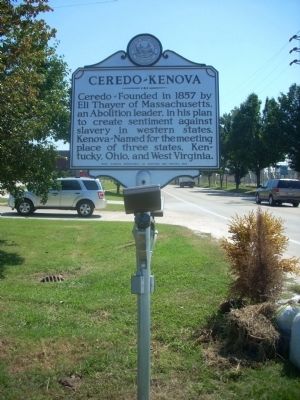
Photographed by John Desaulniers, Jr.
2. Ceredo - Kenova Marker
2. Eli Thayer. Wikipedia's entry about Eli Thayer is much more focused on his Abolitionist interests as noted on the sign. It also describes why he chose the site of Ceredo for his town, rightly noting that, when the town was founded, it was still part of Virginia. (Submitted on September 2, 2010, by John Desaulniers, Jr. of Mingo, Iowa.)
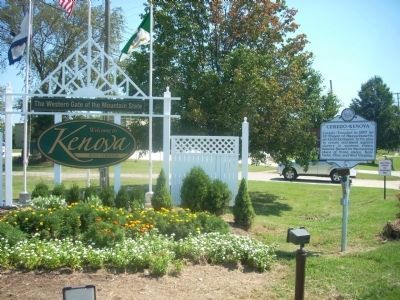
Photographed by John Desaulniers, Jr., September 1, 2010
3. Ceredo - Kenova Marker with Kenova Welcome Sign
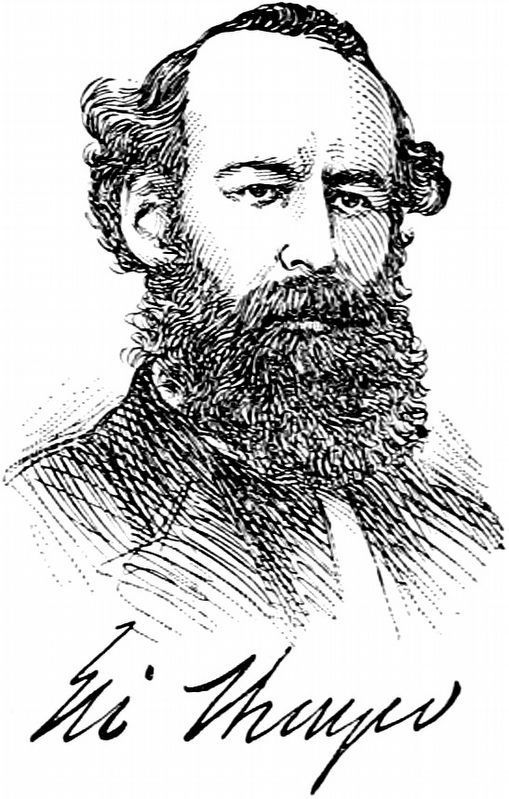
Internet Archive
4. Eli Thayer
from The Biographical Dictionary of America, 1906, by Rossiter Johnson.
Credits. This page was last revised on July 20, 2018. It was originally submitted on September 2, 2010, by John Desaulniers, Jr. of Mingo, Iowa. This page has been viewed 2,292 times since then and 64 times this year. Photos: 1, 2, 3. submitted on September 2, 2010, by John Desaulniers, Jr. of Mingo, Iowa. 4. submitted on July 5, 2018, by Allen C. Browne of Silver Spring, Maryland. • Syd Whittle was the editor who published this page.
