Wapakoneta in Auglaize County, Ohio — The American Midwest (Great Lakes)
Wapakoneta Heritage Parkway
Photographed by Rev. Ronald Irick, October 21, 2013
1. Wapakoneta Heritage Parkway Marker
close up. showing text of Plaque #1
Inscription.
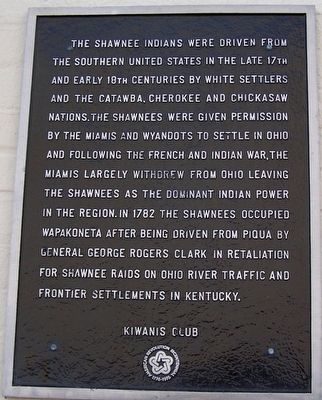
Wapakoneta Heritage Parkway. . , Plaque # 1 , The Shawnee Indians were driven from the southern United States in the late 17th and early 18th centuries by white settlers and Catawba, Cherokee and Chickasaw Nations. the Shawnee were given permission by the Miamis and Wyandots to settle in Ohio and following the French and Indian War, the Miamis largely withdrew from Ohio leaving the Shawnees as the dominant Indian power in the region. In 1782 the Shawnees occupied Wapakoneta after being driven from Piqua by General George Rogers Clark in retaliation for Shawnee raids on Ohio River traffic and frontier settlements in Kentucky.
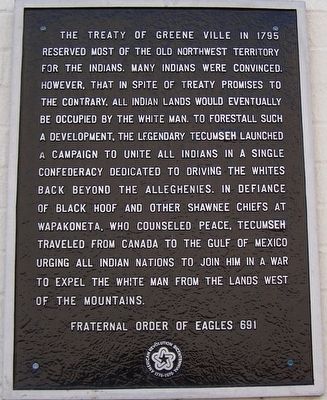
Plaque #2 , The Treaty of Greenville in 1795 reserved most of the Old Northwest Territory for the Indians. Many Indians were convinced however, that in spite of Treaty promises to the contrary, all Indian lands would eventually be occupied by the white man. To forestall such a development, the legendary Tecumseh launched a campaign to unite all Indians in a single confederacy dedicated to driving the whites back beyond the Alleghenies. In defiance of Black Hoof and other Shawnee chiefs at Wapakoneta, who counseled peace, Tecumseh traveled from Canada to the Gulf of Mexico urging all Indian Nations to join him in a war to expel the white man from lands west of the mountains.
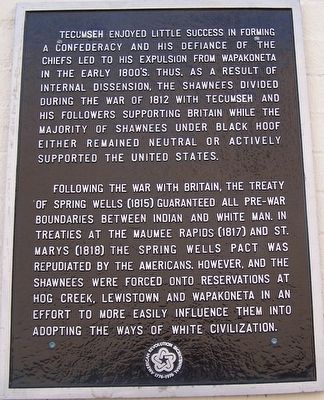
Plaque #3 , Tecumseh enjoyed little success in forming a confederacy and his defiance of the chiefs led to his expulsion from Wapakoneta in the early 1800s. This, as a result of internal dissension. The Shawnee divided during the War of 18 12 with Tecumseh and his followers supporting Britain while the majority of the Shawnees under Black Hoof either remained neutral or actively supported the United States. Following the war with Britain, the Treaty of Spring Wells (1815) guaranteed all pre-war boundaries between Indian and white man. In treaties at the Maumee Rapids (1817) and St. Marys (1818) The Spring Wells pact was repudiated by the Americans, however, and the Shawnees were forced onto reservations at Hog Creek, Lewistown, and Wapakoneta in an effort to more easily influence them into adopting the ways of white civilization.
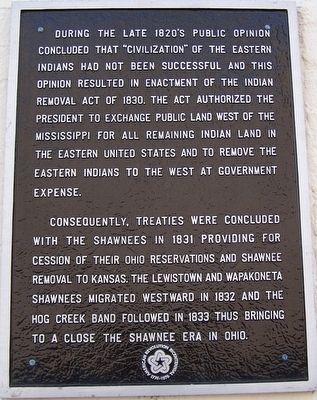
Plaque #4 , During the 1820s public opinion concluded that “civilization” of the eastern Indians had not been successful and this opinion resulted in enactment of the Indian Removal Act of 1830. The Act authorized the President to exchange public land west of the Mississippi for all remaining land in the eastern United States and to remove the eastern Indians to the west at government expense. Consequently, treaties were concluded with the Shawnee in 1831 providing for cession of their Ohio reservations and Shawnee removal to Kansas. The Lewistown and Wapakoneta Shawnees migrated westward in 1832 thus bringing to a close the Shawnee era in Ohio.
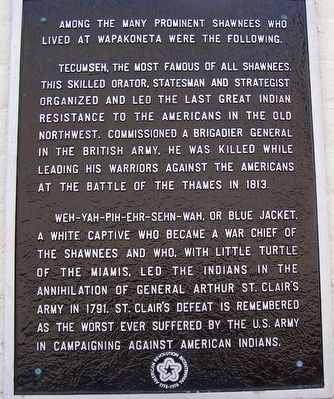
Plaque #5 , Among the many prominent Shawnees who lived at Wapakoneta were the following, Tecumseh, the most famous of all Shawnees this skilled orator, statesman and strategist organized and led the last great Indian resistance to the Americans in the old northwest. Commissioned a Brigadier General in the British army, he was killed while leading his warriors against the Americans at the Battle of the Thames in 1813. Weh-Yah-Pih-Ehr-Sehn-Wah, or Blue Jacket, a white captive who became a war chief of the Shawnees and who, with Little Turtle of the Miamis, led the Indians in the annihilation of General Arthur St. Clairs army in 1791. St. Clairs Defeat is remembered as the worst ever suffered by the U.S. Army in campaigning against American Indians.
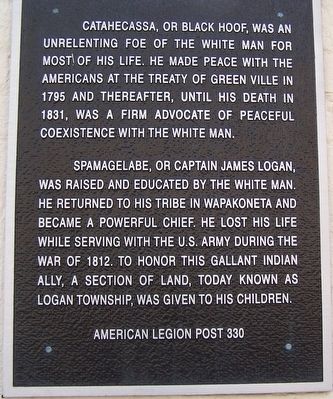
Plaque #6 , Catahecassa, or Black Hoof, was an unrelenting foe of the white man for most of his life. he made peace with the Americans at the Treaty of Green Ville in 1975 and thereafter, until his death in 1831, was a firm advocate of peaceful coexistence with the white man. Spamagelabe, or Captain James Logan, was raised and educated by the white man. He returned to his tribe in Wapakoneta and became a powerful chief. He lost his life while serving with the U.S.Army during the War of 18 12. To honor this gallant Indian ally, a section of land, today known as Logan Township, was given to his children.
Plaque # 1 The Shawnee Indians were driven from
the southern United States in the late 17th
and early 18th centuries by white settlers
and Catawba, Cherokee and Chickasaw
Nations. the Shawnee were given permission
by the Miamis and Wyandots to settle in Ohio
and following the French and Indian War, the
Miamis largely withdrew from Ohio leaving
the Shawnees as the dominant Indian power
in the region. In 1782 the Shawnees occupied
Wapakoneta after being driven from Piqua by
General George Rogers Clark in retaliation
for Shawnee raids on Ohio River traffic and
frontier settlements in Kentucky.
Plaque #2
The Treaty of Greenville in 1795
reserved most of the Old Northwest Territory
for the Indians. Many Indians were convinced
however, that in spite of Treaty promises to
the contrary, all Indian lands would eventually
be occupied by the white man. To forestall such
a development, the legendary Tecumseh launched
a campaign to unite all Indians in a single
confederacy dedicated to driving the whites
back beyond the Alleghenies. In defiance
of Black Hoof and other Shawnee chiefs at
Wapakoneta, who counseled peace, Tecumseh
traveled from Canada to the Gulf of Mexico
urging all Indian Nations to join him in a war
to expel the white man from lands west
of the mountains.
Plaque #3 Tecumseh enjoyed little success in forming
a confederacy and his defiance of the
chiefs led to his expulsion from Wapakoneta
in the early 1800s. This, as a result of
internal dissension. The Shawnee divided
during the War of 1812 with Tecumseh and
his followers supporting Britain while the
majority of the Shawnees under Black Hoof
either remained neutral or actively
supported the United States.
Following the war with Britain, the Treaty
of Spring Wells (1815) guaranteed all pre-war
boundaries between Indian and white man. In
treaties at the Maumee Rapids (1817) and St.
Marys (1818) The Spring Wells pact was
repudiated by the Americans, however, and the
Shawnees were forced onto reservations at
Hog Creek, Lewistown, and Wapakoneta in an
effort to more easily influence them into
adopting the ways of white civilization.
Plaque #4 During the 1820s public opinion
concluded that “civilization” of the eastern
Indians had not been successful and this
opinion resulted in enactment of the Indian
Removal Act of 1830. The Act authorized the
President to exchange public land west of the
Mississippi for all remaining land in
the eastern United States and to remove the
eastern Indians to the west at government
expense.
Consequently, treaties were concluded
with the Shawnee in 1831 providing for
cession of their Ohio reservations and Shawnee
removal to Kansas. The Lewistown and Wapakoneta
Shawnees migrated westward in 1832 thus bringing
to a close the Shawnee era in Ohio.
Plaque #5 Among the many prominent Shawnees who
lived at Wapakoneta were the following,
Tecumseh, the most famous of all Shawnees
this skilled orator, statesman and strategist
organized and led the last great Indian
resistance to the Americans in the old
northwest. Commissioned a Brigadier General
in the British army, he was killed while
leading his warriors against the Americans
at the Battle of the Thames in 1813.
Weh-Yah-Pih-Ehr-Sehn-Wah, or Blue Jacket,
a white captive who became a war chief of
the Shawnees and who, with Little Turtle
of the Miamis, led the Indians in the
annihilation of General Arthur St. Clairs
army in 1791. St. Clairs Defeat is remembered
as the worst ever suffered by the U.S. Army
in campaigning against American Indians.
Plaque #6 Catahecassa, or Black Hoof, was an
unrelenting foe of the white man for
most of his life. he made peace with the
Americans at the Treaty of Green Ville in
1975 and thereafter, until his death in
1831, was a firm advocate of peaceful
coexistence with the white man.
Spamagelabe, or Captain James Logan,
was raised and educated by the white man.
He returned to his tribe in Wapakoneta and
became a powerful chief. He lost his life
while serving with the U.S.Army during the
War of 1812. To honor this gallant Indian
ally, a section of land, today known as
Logan Township, was given to his children.
Erected 2004
Click or scan to see this page online
by Kiwanis Fraternal Order of Eagles 691 American Legion Post 330.
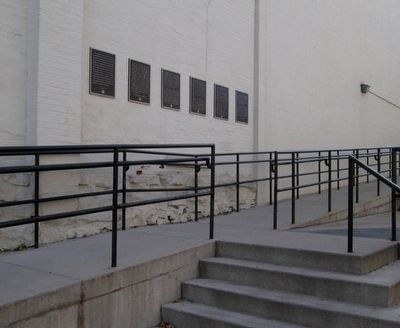
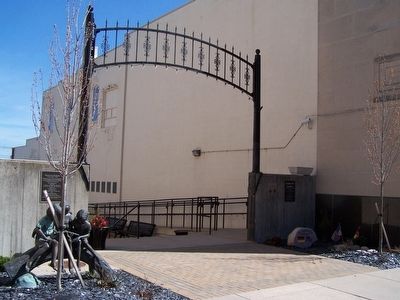
Location. 40° 34.251′ N, 84° 11.621′ W. Marker is in Wapakoneta, Ohio, in Auglaize County. It is on Auglaize Street (Ohio Route 501) when traveling west. Markers are on the west wall of the Chase Bank building, which forms one side of the pedestrian walkway between Auglaize Street and the river front. Touch for map. Marker is at or near this postal address: 16 E Auglaize St, Wapakoneta OH 45895, United States of America. Touch for directions.
Regionally, this marker is in Ohio’s Till Plains. It is also in the American Midwest and in the Corn Belt. Globally, it is in North America, the Western Hemisphere, the Western World, and the Anglosphere. Historically, it finds itself in what was once the Haudenosaunee (Iroquois) Confederacy, the territory of the Mississippian Culture, and the Northwest Territory.
Other nearby markers. At least 8 other markers are
Photographed by Rev. Ronald Irick, October 21, 2013
Additional keywords. Catahecassa Blackhoof Tecumseh Blue Jacket Anthony Wayne
Photographed by Rev. Ronald Irick, October 21, 2013
3. Wapakoneta Heritage Parkway Marker
close up, showing text Plaque #3
Photographed by Rev. Ronald Irick, October 21, 2013
4. Wapakoneta Heritage Parkway Marker
close up, showing text of Plaque #4
Photographed by Rev. Ronald Irick, October 21, 2013
5. Wapakoneta Heritage Parkway Marker
close up, showing text of Plaque #5
Photographed by Rev. Ronald Irick, October 21, 2013
6. Wapakoneta Heritage Parkway Marker
close up, showing text of Plaque #6
Photographed by Rev. Ronald Irick, October 21, 2013
7. Wapakoneta Heritage Parkway Marker
full view of marker
Photographed by Rev. Ronald Irick, April 28, 2015
8. Wapakoneta Heritage Parkway Marker
view looking north from Auglaize street
Photographed by Rev. Ronald Irick, October 21, 2013
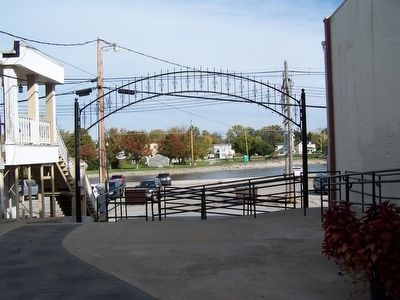
9. Wapakoneta Heritage Parkway Marker
from the Plaza in front of the Six Plaques, looking north towards the Auglaize River
Credits. This page was last revised on June 16, 2016. It was originally submitted on July 31, 2015, by Rev. Ronald Irick of West Liberty, Ohio. This page has been viewed 1,307 times since then and 55 times this year. Photos:1, 2, 3, 4, 5, 6, 7, 8, 9. submitted on July 31, 2015, by Rev. Ronald Irick of West Liberty, Ohio. • Bill Pfingsten was the editor who published this page.