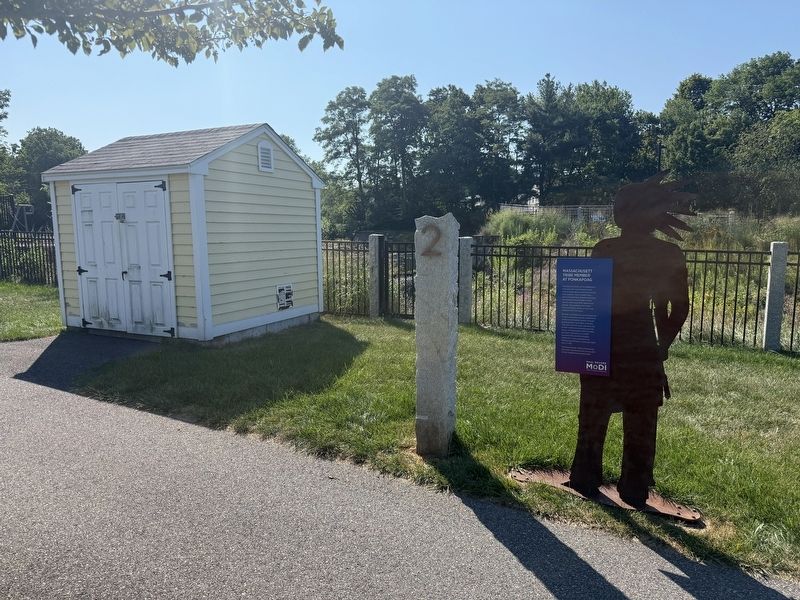
The Neponset band of the Indigenous
Massachusett Confederation lived
here for generations before the arrival
of Europeans. They hunted in the
surrounding forests, fished in the rivers
and raised extensive fields of corn,
squash, beans and . . . — — Map (db m308564) HM
The north line of Ponkapoag Plantation second of the Apostle Eliot's Praying Indian towns, set apart by the Dorchester Proprietors in 1657. — — Map (db m308384) HM
Churchill's Lane. When the Indians sold their land near the mouth of the Neponset River they removed to the territory south of the Blue Hills, which they called Ponkapoag, sweet water. — — Map (db m308385) HM
Before colonial times, Native Americans would have seen creeks and wetlands here in Quincy Bay, which provided them with abundant sources of food: shellfish, fish, waterfowl, and migratory birds — even whales. They lived here during spring and . . . — — Map (db m308383) HM
Algonquin speaking hunter-gatherers arrived in southeast New England thousands of years ago. The Massachusett tribe inhabited the land along the Mystic, Charles, Nesponset, Montiquot, and North Rivers, and much of the interior territory. Their . . . — — Map (db m308386) HM
Josiah Wompatuck was born in 1627. He was the son of Chief Chikataubut of the Massachusetts tribe. In 1633, Chief Chikataubut died of smallpox and Wompatuck was taken in and raised by his uncle, a member of the Wampanoag tribe. Wompatuck became . . . — — Map (db m308387) HM