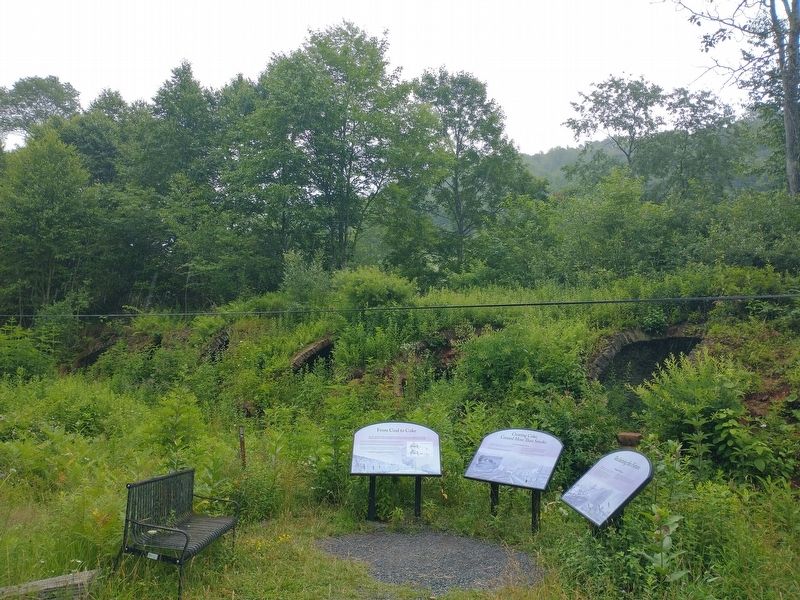
The soft, crumbly, low-sulfur coal extracted from this valley was ideal for processing into a charcoal-like substance called coke. Coke was and remains an essential fuel for blast furnaces in the nation's steel mills.
To turn coal into . . . — — Map (db m210124) HM
Open-shafted and surface coal mines, massive ovens, scattered coal and coking debris, smoke-belching steam engines, and construction and industrial activities all had environmental impacts. Smoke wasn’t the only consequence.
When workers . . . — — Map (db m210126) HM
The last underground coal mine closed in the early 1950s, leaving a legacy of acid mine drainage, abandoned industrial structures, coke ovens, and debris.
A major reclamation effort was conducted by the West Virginia Department of . . . — — Map (db m210127) HM