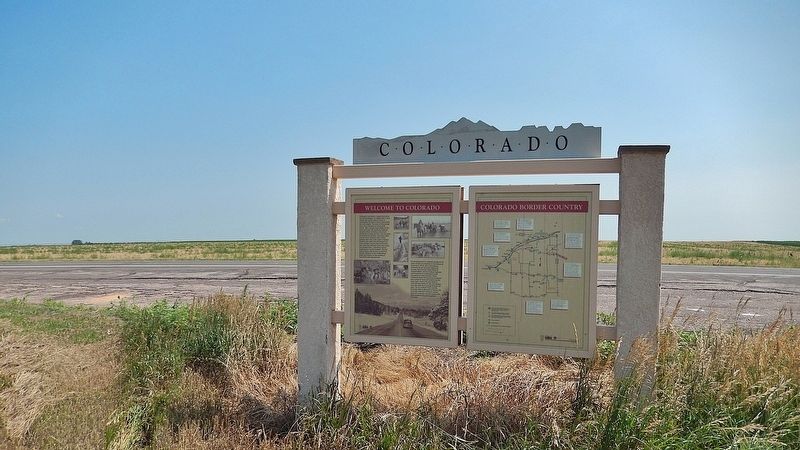
The last major Indian-white conflict on Colorado’s eastern plains took place on July 11, 1869, at Summit Springs Battlefield, south of Sterling. The U.S. Fifth Cavalry defeated Chief Tall Bull’s Cheyenne Dog Soldiers, killing Tall Bull and . . . — — Map (db m289498) HM
Yuma of the 1870's had limited marketplaces. Goods were brought in by steamships or many days' journey through hostile country. Calamities along the journey claimed belongings and supplies more than once. The government compensated by stocking as . . . — — Map (db m158298) HM
We honor our ancestors who died violent deaths at the hands of their captors and at this concentration camp. We greet the spirits of our ancestors and embrace their strength and above all else, their will to survive this holocaust: the Hualapai . . . — — Map (db m36012) HM
Yuma takes its name from a teamster who died while working on the Chicago, Burlington & Quincy Railroad and was buried beside the tracks. He never saw the town, which rose in 1886 as a cattle and shipping center. But homesteaders started fencing . . . — — Map (db m201050) HM
Thin black lines indicate changes in relevance. Between each pair of lines entries are ordered geographically but all have the same relevance.
* Inflectional forms of words are their plurals, singulars, and possessives as well as gramatical tenses and similar variations.