Near Elkton in St. Johns County, Florida — The American South (South Atlantic)
St. Ambrose Parish
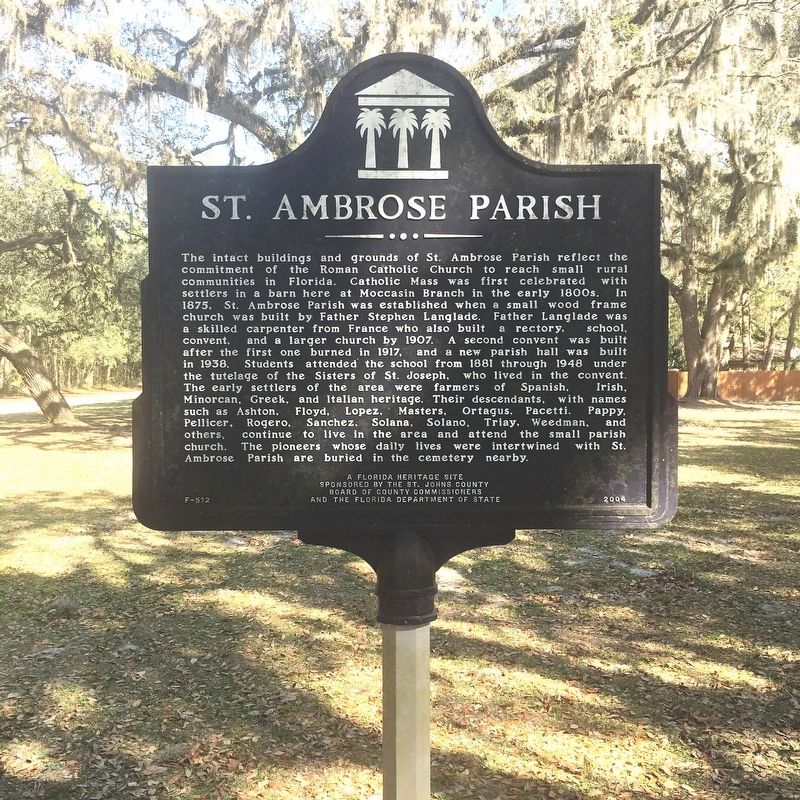
Photographed by Theresa E. Cross, February 26, 2017
1. St. Ambrose Parish Marker
this page online
Erected 2004 by The St. Johns County Board of Supervisors and The Florida Department of State. (Marker Number F-512.)
Topics. This historical marker is listed in these topic lists: Agriculture • Cemeteries & Burial Sites • Religion & Religious Structures • Settlements & Settlers. A significant historical year for this entry is 1875.
Location. 29° 46.667′ N, 81° 28.304′ W. Marker is near Elkton, Florida, in St. Johns County. It is on Church Road 0.3 miles east of Winfred Masters Road, on the right when traveling east. Touch for map. Marker is at or near this postal address: 6070 Church Rd, Elkton FL 32033, United States of America. Touch for directions.

Regionally, this marker is in First Coast and in Greater Jacksonville. It is also in the American South and on the Eastern Seaboard. Globally, it is in the North Atlantic Region, North America, a Gulf of Mexico state, the Western Hemisphere, the Western World, and the Anglosphere. Historically, it finds itself in what was once New Spain, the territory of the Mississippian Culture, one of the Confederate States of America, and the
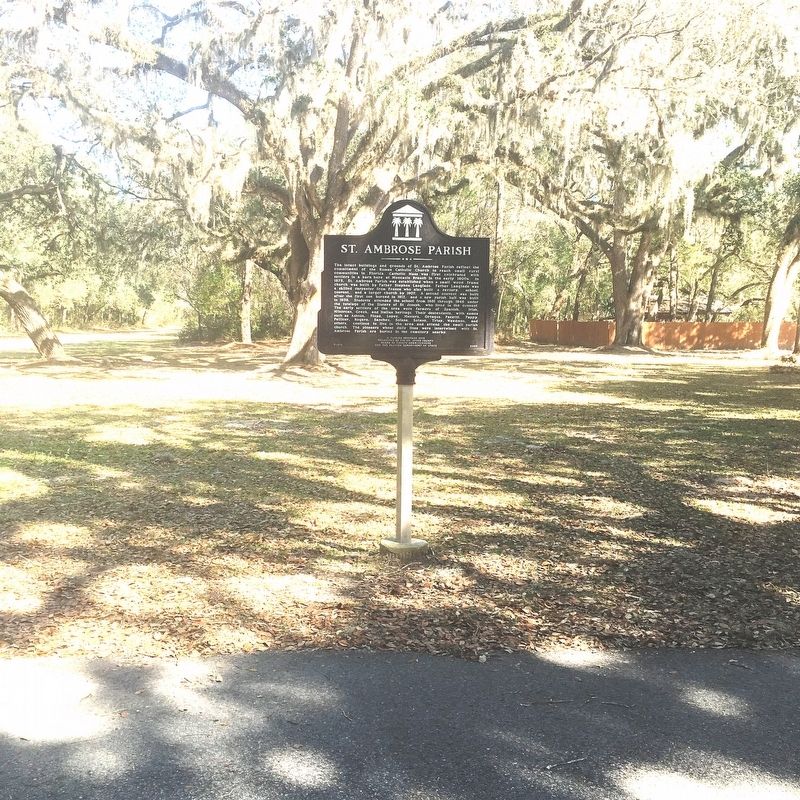
Photographed by Theresa E. Cross, February 26, 2017
2. St. Ambrose Parish Marker
Other nearby markers. At least 8 other markers are within 6 miles of this marker, measured as the crow flies: History of McCullough Creek (approx. 2.7 miles away); a different marker also named History of McCullough Creek (approx. 4.1 miles away); John Henry “Pop” Lloyd (approx. 5 miles away); Derrick Ramsey (approx. 5 miles away); Hastings Railroad (approx. 5 miles away); Hastings (approx. 5.1 miles away); a different marker also named Hastings Railroad (approx. 5.1 miles away); The Wetumpka Fruit Company (approx. 6.1 miles away). Touch for a list and map of all markers in Elkton.
Also see . . . St. Ambrose Catholic Church. (Submitted on February 28, 2017.)
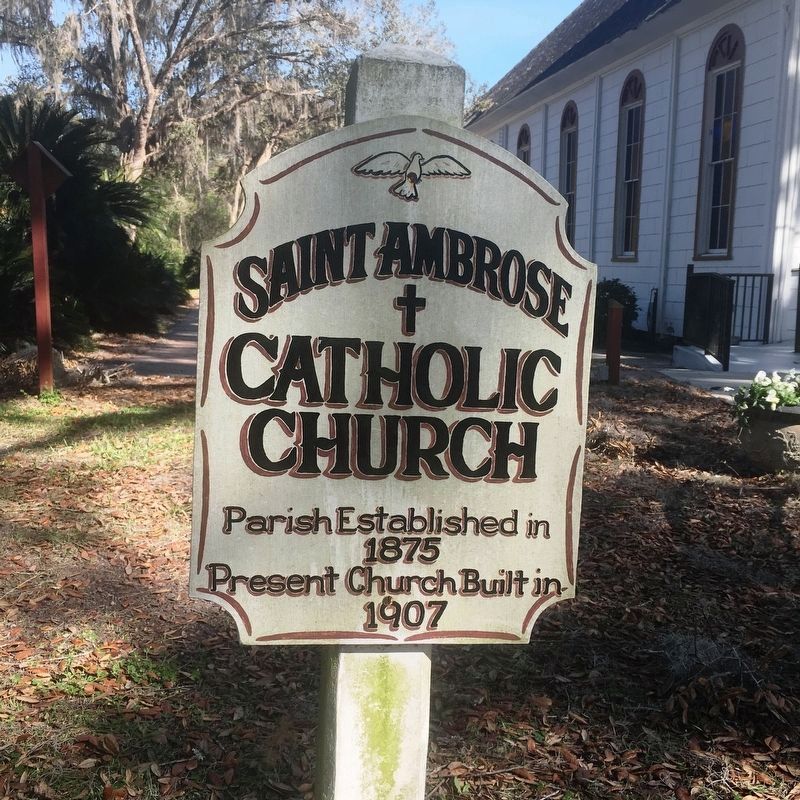
Photographed by Theresa E. Cross, February 26, 2017
3. St. Ambrose Catholic Church Marker
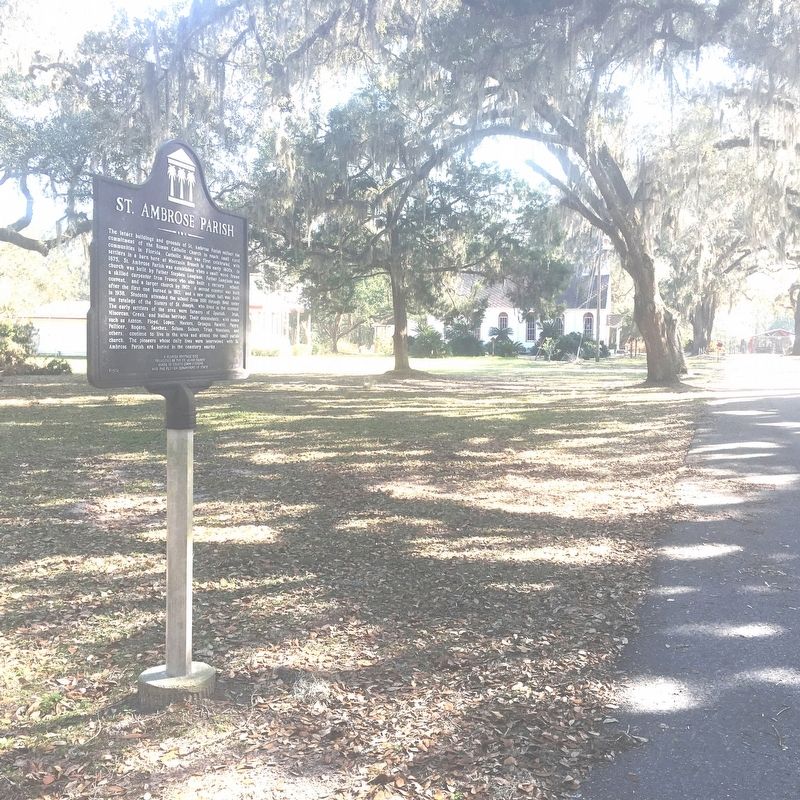
Photographed by Theresa E. Cross, February 26, 2017
4. St. Ambrose Parish Marker
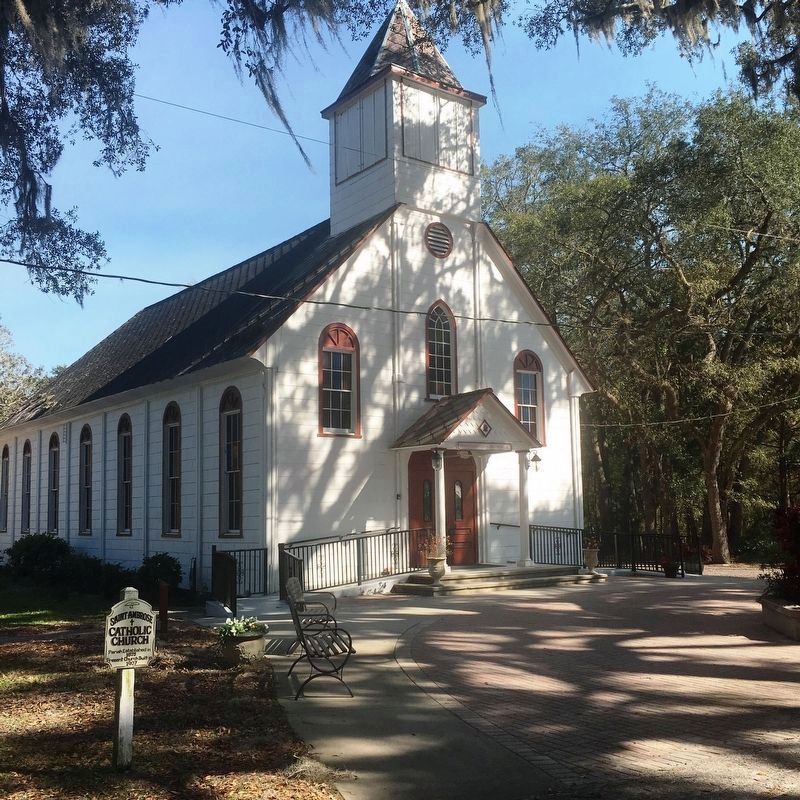
Photographed by Theresa E. Cross, February 26, 2017
5. St. Ambrose Catholic Church
Credits. This page was last revised on January 2, 2019. It was originally submitted on February 27, 2017, by Brandon D Cross of Flagler Beach, Florida. This page has been viewed 992 times since then and 35 times this year. Photos: 1, 2, 3, 4, 5. submitted on February 27, 2017, by Brandon D Cross of Flagler Beach, Florida. • Bernard Fisher was the editor who published this page.
