Old City in Philadelphia in Philadelphia County, Pennsylvania — The American Northeast (Mid-Atlantic)
Arrival and Reception
Photographed by William Fischer, Jr., March 22, 2017
1. Arrival and Reception Marker
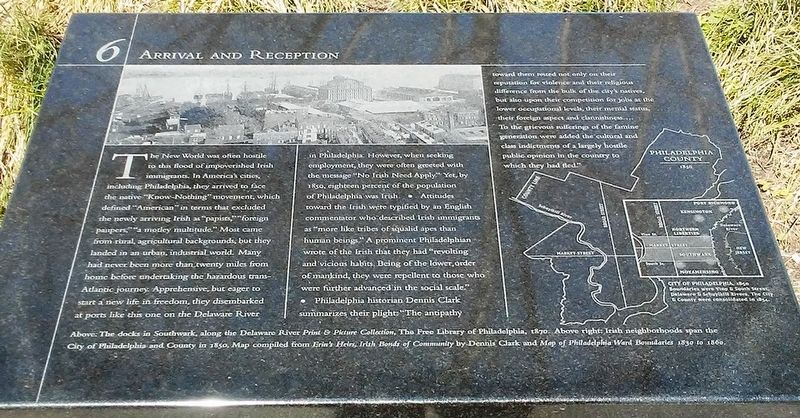
The New World was often hostile to this flood of impoverished Irish immigrants. In America's cities, including Philadelphia, they arrived to face the native "Know-Nothing" movement, which defined "American" in terms that excluded the newly arriving Irish as "papists," "foreign paupers," "a motley multitude." Most came from rural, agricultural backgrounds, but they landed in an urban, industrial world. Many had never been more than twenty miles from home before undertaking the hazardous trans-Atlantic journey. Apprehensive, but eager to start a new life in freedom, they disembarked at ports like this one on the Delaware River in Philadelphia. However, when seeking employment, they were often greeted with the message "No Irish Need Apply." Yet, by 1850, eighteen percent of the population of Philadelphia was Irish.
• Attitudes toward the Irish were typified by an English commentator who described Irish immigrants as "more like tribes of squalid apes than human beings." A prominent Philadelphian wrote of the Irish that they had "revolting and vicious habits. Being of the lower order of mankind, they were repellent to those
this page online
• Philadelphia historian Dennis Clark summarizes their plight: "The antipathy toward them rested not only on their reputation for violence and their religious difference from the bulk of the city's natives, but also upon their competition for jobs at the lower occupational levels, their menial status, their foreign aspect and clannishness.... To the grievous sufferings of the famine generation were added the cultural and class indictments of a largely hostile public opinion in the country to which they had fled."
[Illustration captions read]
Above: The docks in Southwark, along the Delaware River. Print & Picture Collection, The Free Library of Philadelphia, 1870.
Above right: Irish neighborhoods span the City of Philadelphia and County in 1850. Map compiled from Erin's Heirs, Irish Bonds of Community by Dennis Clark and Map of Philadelphia Ward Boundaries 1830 to 1860.
Erected 2003 by Concerned Citizens and Organizations. (Marker Number 6.)
Topics. This historical marker is listed in these topic lists: Civil Rights • Government & Politics • Immigration •

Photographed by Devry Becker Jones (CC0), November 26, 2025
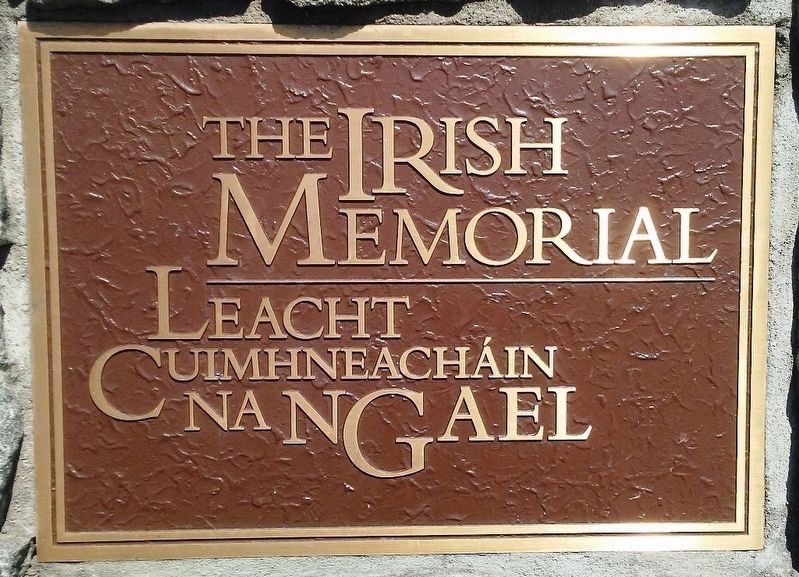
2. Interpretive markers for The Irish Memorial / Leacht Cuimhneacháin na nGael
Location. 39° 56.677′ N, 75° 8.625′ W. Marker is in Philadelphia, Pennsylvania, in Philadelphia County. It is in Old City. It is on Chestnut Street east of Front Street, on the right when traveling east. Touch for map. Marker is at or near this postal address: 100 Chestnut St, Philadelphia PA 19106, United States of America. Touch for directions.

Regionally, this marker is in Southeast Pennsylvania. It is also in the American Northeast and in the Mid-Atlantic. Globally, it is in North America, the Western Hemisphere, the Western World, and the Anglosphere. Historically, it finds itself in what was once the Haudenosaunee (Iroquois) Confederacy, New Netherland, and one of the original Thirteen Colonies.
Other nearby markers. At least 8 other markers are within walking distance of this marker: The Lessons of The Great Hunger (here, next to this marker); Passage and Emigration (here, next to this marker); An Gorta Mór - Ireland's Great Hunger (here, next to this marker); The Irish in America (here, next to this marker); Starvation (here, next to this marker);
Photographed by William Fischer, Jr.
3. The Irish Memorial / Leacht Cuimhneacháin na nGael
More about this marker. Marker is part of The Irish Memorial.
Also see . . .
1. The Irish Memorial [Philadelphia]. (Submitted on March 30, 2017, by William Fischer, Jr. of Reynoldsburg, Ohio.)
2. Passage to the Americas. (Submitted on March 30, 2017, by William Fischer, Jr. of Reynoldsburg, Ohio.)
3. Effects of the Famine: Emigration. (Submitted on March 30, 2017, by William Fischer, Jr. of Reynoldsburg, Ohio.)
4. Leaving the Emerald Isle: Irish Immigration to Philadelphia. (Submitted on March 30, 2017, by William Fischer, Jr. of Reynoldsburg, Ohio.)
5. Commodore John Barry Arts and Cultural Center (The Irish Center). (Submitted on March 30, 2017, by William Fischer, Jr. of Reynoldsburg, Ohio.)
6. History of the Irish Americans in Philadelphia (Wikipedia). (Submitted on March 30, 2017, by William Fischer, Jr. of Reynoldsburg, Ohio.)
Photographed by William Fischer, Jr.
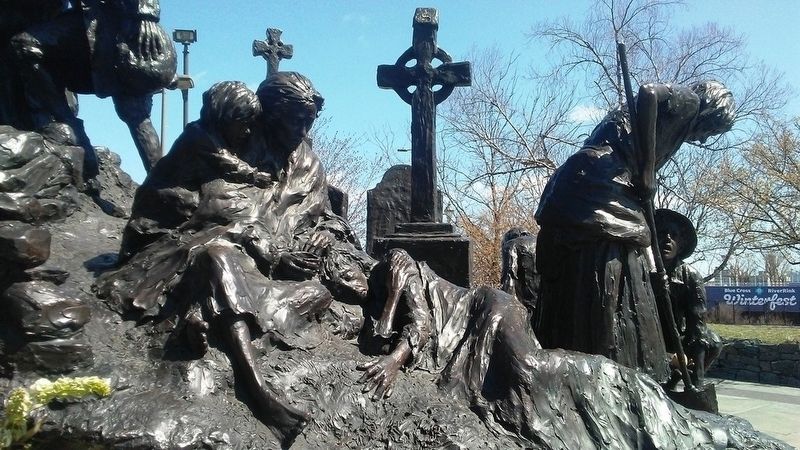
4. Famine Detail on The Irish Memorial Sculpture
Photographed by William Fischer, Jr.
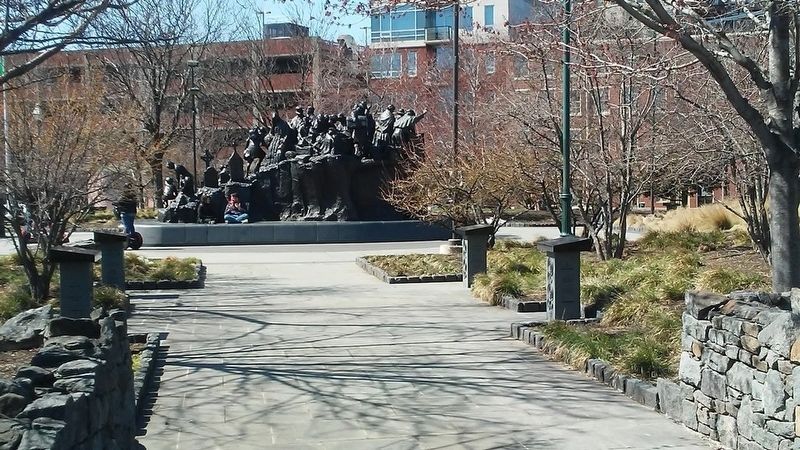
5. The Irish Memorial and Markers 5 through 8
This is a photo of the interpretive markers in their former location, looking WSW from near Chestnut Street and Christopher Columbus Boulevard.
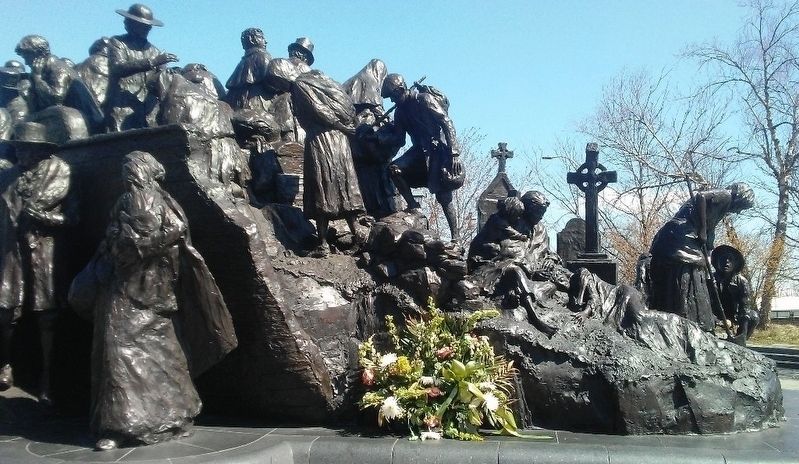
Photographed by William Fischer, Jr.
6. Starvation or Emigration Detail on The Irish Memorial Sculpture
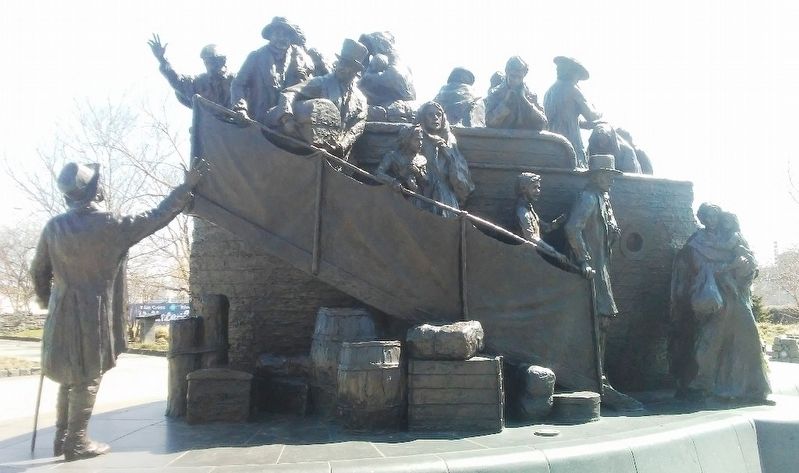
Photographed by William Fischer, Jr.
7. Arrival in a New World Detail on the Irish Memorial
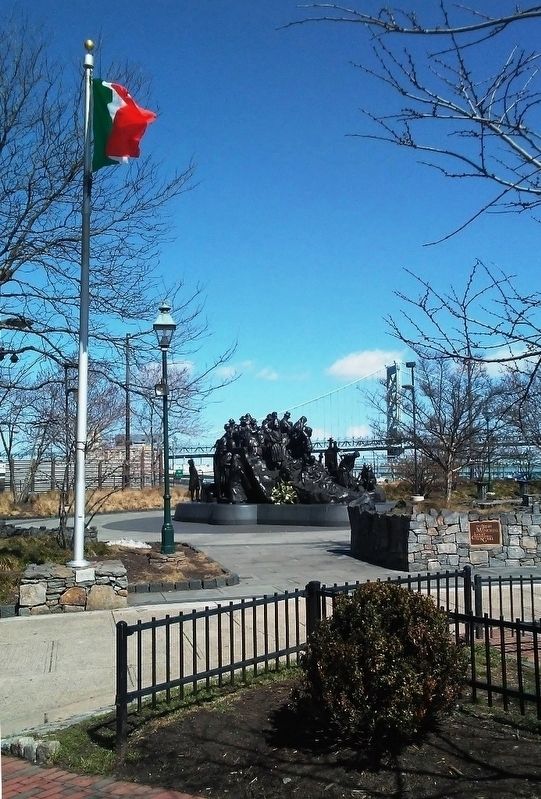
Photographed by William Fischer, Jr.
8. The Irish Memorial / Leacht Cuimhneacháin na nGael
Credits. This page was last revised on November 28, 2025. It was originally submitted on March 30, 2017, by William Fischer, Jr. of Reynoldsburg, Ohio. This page has been viewed 445 times since then and 24 times this year. Photos: 1. submitted on March 30, 2017, by William Fischer, Jr. of Reynoldsburg, Ohio. 2. submitted on November 28, 2025, by Devry Becker Jones of Washington, District of Columbia. 3, 4. submitted on March 28, 2017, by William Fischer, Jr. of Reynoldsburg, Ohio. 5. submitted on March 29, 2017, by William Fischer, Jr. of Reynoldsburg, Ohio. 6, 7, 8. submitted on March 28, 2017, by William Fischer, Jr. of Reynoldsburg, Ohio.
