Fells Point in Baltimore, Maryland — The American Northeast (Mid-Atlantic)
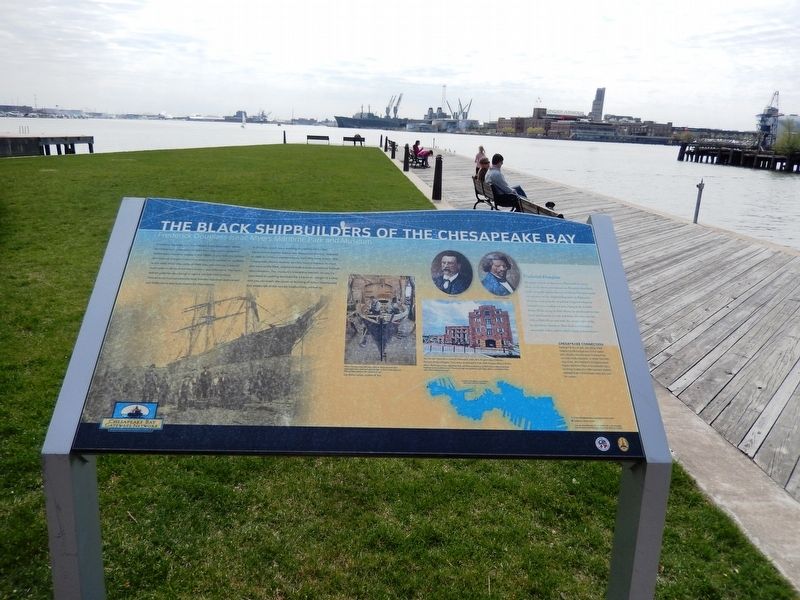
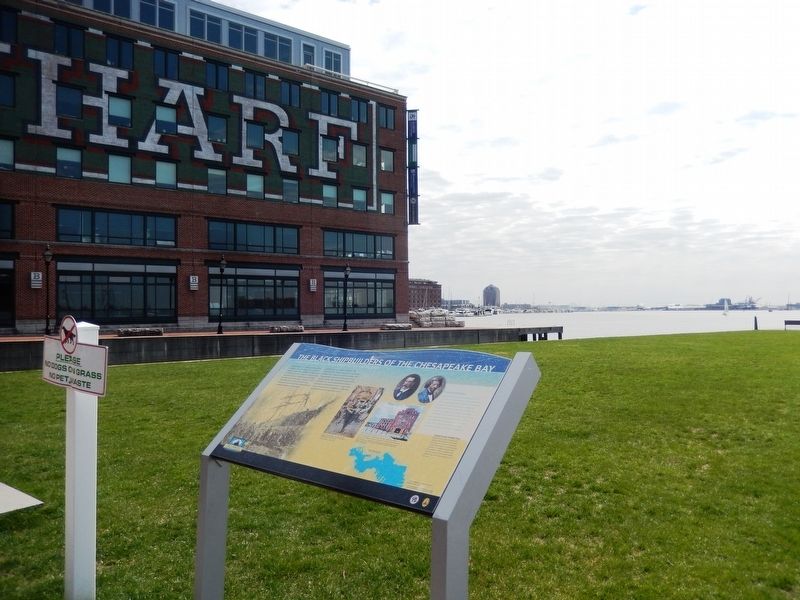
The Black Shipbuilders of the Chesapeake Bay
Frederick Douglass-Isaac Myers Maritime Park and Museum
Photographed by Don Morfe, April 14, 2017
1. The Black Shipbuilders of the Chesapeake Bay Marker
A national heritage site, the Frederick Douglass-Isaac Myers Maritime Park celebrates African-American who worked on Baltimore’s maritime trades in the 1800s. It also tells the stories of Frederick Douglass and Isaac Myers, who worked as chandlers in the Fell’s Point shipyards of their city, and who each gained fame later in life as prominent leaders and reformers. The Park’s indoor galleries also bring to light a vibrant 19th century African-American community that banded together and carved out institutions and businesses for themselves in the park, you’ll see a working re-creation of the first black-owned marine railway and shipyard in the U.S. founded in 1868 by 15-black entrepreneurs, including Isaac Myers. The Chesapeake Marine Railway and Dry Dock Company, located just west of the Park, employed both blacks and whites without discrimination. The museum’s interactive exhibits let you try your hand at caulking and hoisting a barrel or designing a ship, and you can watch the repair or building of an actual Chesapeake Bay watercraft at the nearby boatbuilding workshop.
[Captions:]
Above: For more than 200 years, African American and whites shipwrights have built and repaired ships in Fell’s Point shipyards. Witness them working on this specialized craft.
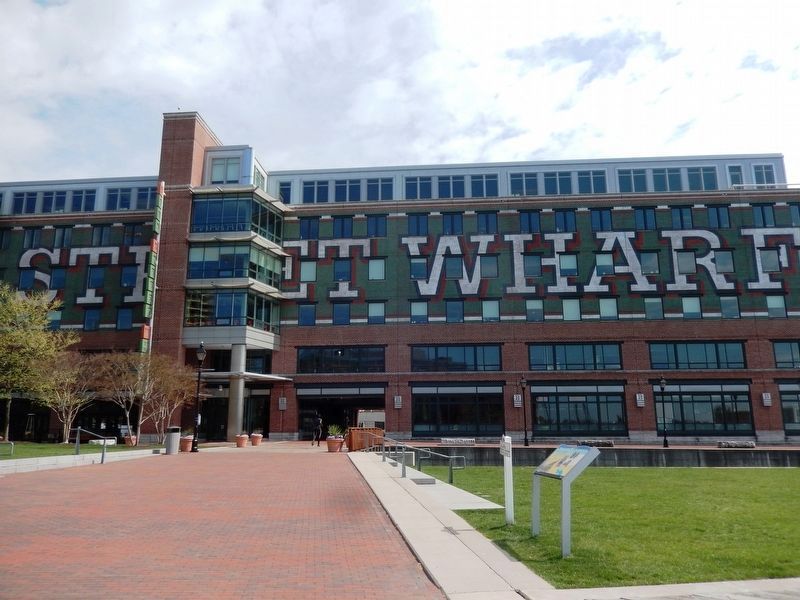
Above; The Douglass-Myers Maritime Park and Museum boast one of Fell’s Point’s oldest industrial buildings and one the largest. These buildings house galleries, a gift shop, offices, a waterfront bistro, and a ship building workshop.
Frederick Douglass
Along his path from slavery on Maryland’s Eastern Shore, to his time in prominence as America’s first black leader to speak against slavery, Frederick Douglass, spent several years in the shipbuilding trade in Baltimore. Here he worked at the Asa Price shipyard where he learned to be a caulker on ships being built in Fell’s Point. While living in Fell’s Point, he purchased his first book and learned to read and write. He also met his wife in Fell’s Point and with the community’s help, escaped from slavery to New York and became a renowned orator, author, abolitionist, and statesman.
Chesapeake Connection
During the era of sail, all sailing ships needed to be hauled out of the water periodically onto dry dock to have their wooden hulls repaired. To show how this was done, the Frederick Douglass-Isaac Myers Maritime Park, and Museum has a working model on a 19th century marine railroad that carried boats onto dry land for repairs.
Topics.
this page online
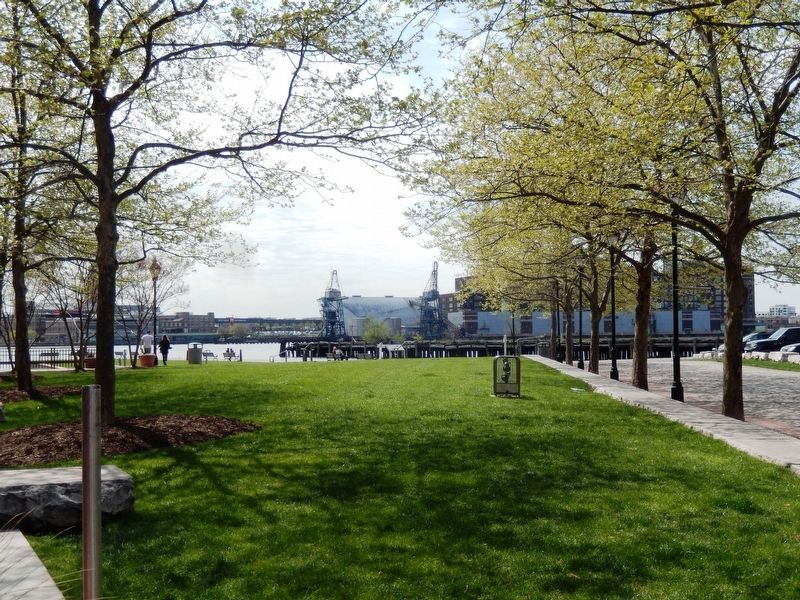
Location. This marker has been replaced by another marker nearby. It was located near 39° 16.811′ N, 76° 35.682′ W. Marker was in Baltimore, Maryland. It was in Fells Point. It was at the intersection of South Bond Street and Thames Street on South Bond Street. The marker is located in Fells Point at the Bond Street Wharf in the Frederick Douglass-Isaac Myers Maritime Park. Touch for map. Marker was in this post office area: Baltimore MD 21231, United States of America. Touch for directions.

Regionally, this marker was in Central Maryland. It was also in the American Mid-Atlantic, in the Chesapeake Bay Region, and on the Eastern Seaboard. Globally, it was in the North Atlantic Region, North America, the Western Hemisphere, the Western World, and the Anglosphere. Historically, it found itself in what was once one of the original Thirteen Colonies and also the Antebellum South.
Other nearby markers. At least 8 other
Photographed by Don Morfe, April 14, 2017
2. The Black Shipbuilders of the Chesapeake Bay Marker
Other markers no longer nearby. Loring Cornish / How Great Thou Art (was about 500 feet away but has been permanently removed); National Bohemian Beer (was about 500 feet away but has been permanently removed); Welcome to the Frederick Douglas-Isaac Myers Maritime Park and Museum (was about 500 feet away but has been replaced with another marker now near it); Archaeological Remains (was
Photographed by Don Morfe, April 14, 2017
3. Bonds Street Wharf and building
More about this marker. The Douglass-Isaac Myers Maritime Museum is located at 1417 Thames Street.
Related marker. Click here for another marker that is related to this marker. This marker has been replaced with the linked marker.
Photographed by Don Morfe, April 14, 2017
4. Bond Street Landing-full view
Credits. This page was last revised on April 12, 2025. It was originally submitted on April 21, 2017, by Don Morfe of Baltimore, Maryland. This page has been viewed 2,221 times since then and 103 times this year. Photos: 1, 2, 3, 4. submitted on April 21, 2017, by Don Morfe of Baltimore, Maryland. • Bill Pfingsten was the editor who published this page.
