
Downtown in Frederick in Frederick County, Maryland — The American Northeast (Mid-Atlantic)
No to the Stamp!
Photographed by Allen C. Browne, May 21, 2017
1. No to the Stamp! Marker
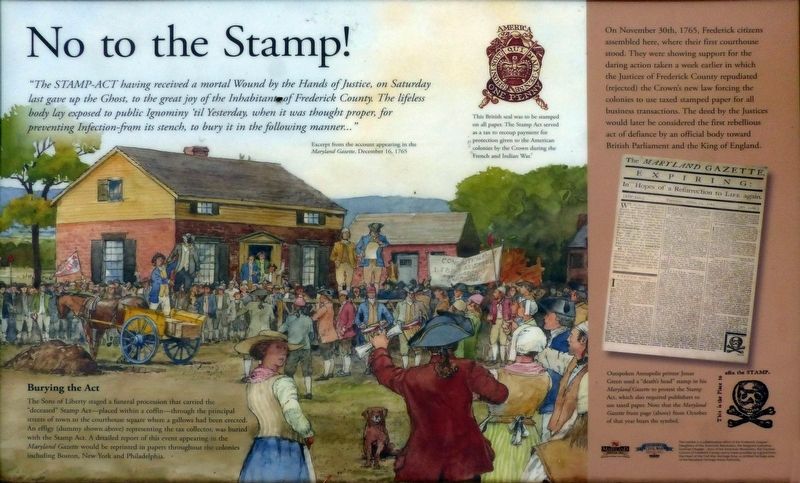
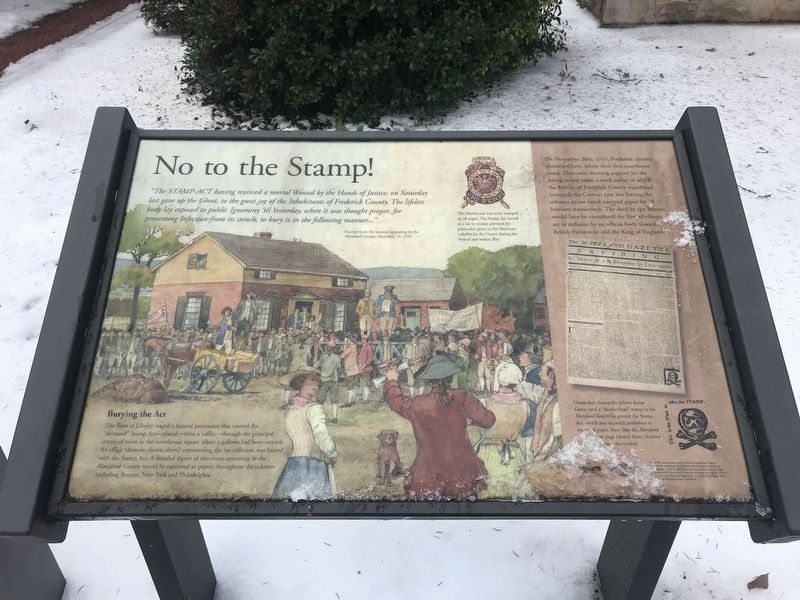
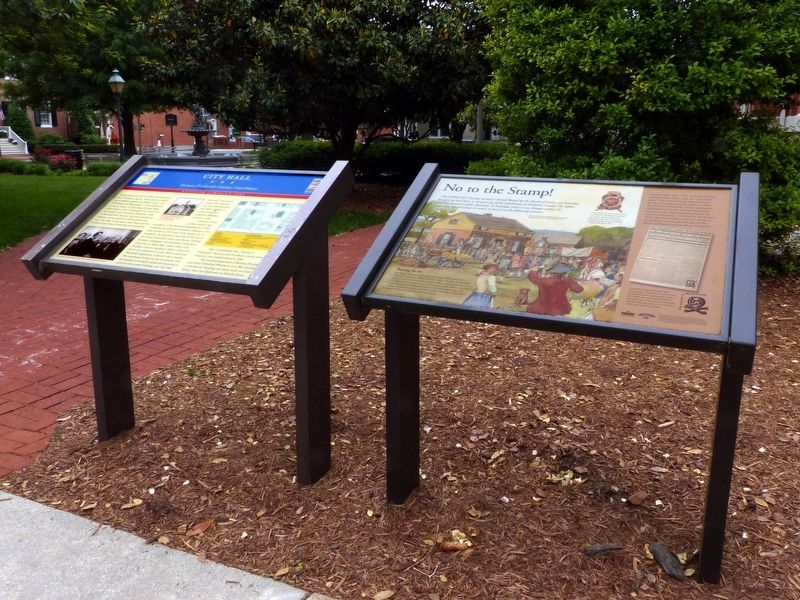
On November 30th, 1765, Frederick County citizens assembled here, where their first courthouse stood. They were showing support for the daring action taken a week earlier in which Justices of Frederick County repudiated (rejected) the Crown's new law forcing the colonies to use taxed stamped paper for all business transactions. The deed by the Justices would later be considered the first rebellious act of defiance by an official body toward British Parliament and the King of England.
Topics. This historical marker is listed in these topic lists: Colonial Era • Government & Politics. A significant historical date for this entry is November 30, 1765.
Location. 39° 24.96′ N, 77° 24.757′ W. Marker is in Frederick,
this page online

Regionally, this marker is in the Washington Metropolitan Area and in Central Maryland. It is also in the American Mid-Atlantic. Globally, it is in North America, the Western Hemisphere, the Western World, and the Anglosphere. Historically, it finds itself in what was once one of the original Thirteen Colonies and also the Antebellum South.
Other nearby markers. At least 8 other markers are within walking distance of this marker: Long Road to Emancipation (here, next to this marker); The Ross Home (a few steps from this marker); Ross House (a few steps from this marker); Birthplace of William Tyler Page (within shouting distance of this marker); Unanimous Resolution (within shouting distance of this marker); “South Magnetic” (within shouting distance of this marker); Frederick’s Poet Lawyer (within shouting distance of this marker); Ramsey House (within shouting distance
Photographed by Adam Margolis, January 17, 2022
2. No to the Stamp! Marker
Other markers no longer nearby. City Hall (was here, next to this marker but has been replaced with another marker now near it); a different marker also named City Hall (was here, next to this marker but has been replaced with another marker now near it); Roger Brooke Taney (was a few steps from this marker but has been confirmed missing); The Dred Scott Decision (was within shouting distance of this marker but has been confirmed missing); Thomas Johnson (was within shouting distance of this marker but has been confirmed missing).
Photographed by Allen C. Browne, May 21, 2017
3. No to the Stamp! Marker
Photographed by Adam Margolis, January 17, 2022
4. No to the Stamp! Marker
The marker can be seen on the right.
Photographed by Allen C. Browne, May 21, 2017
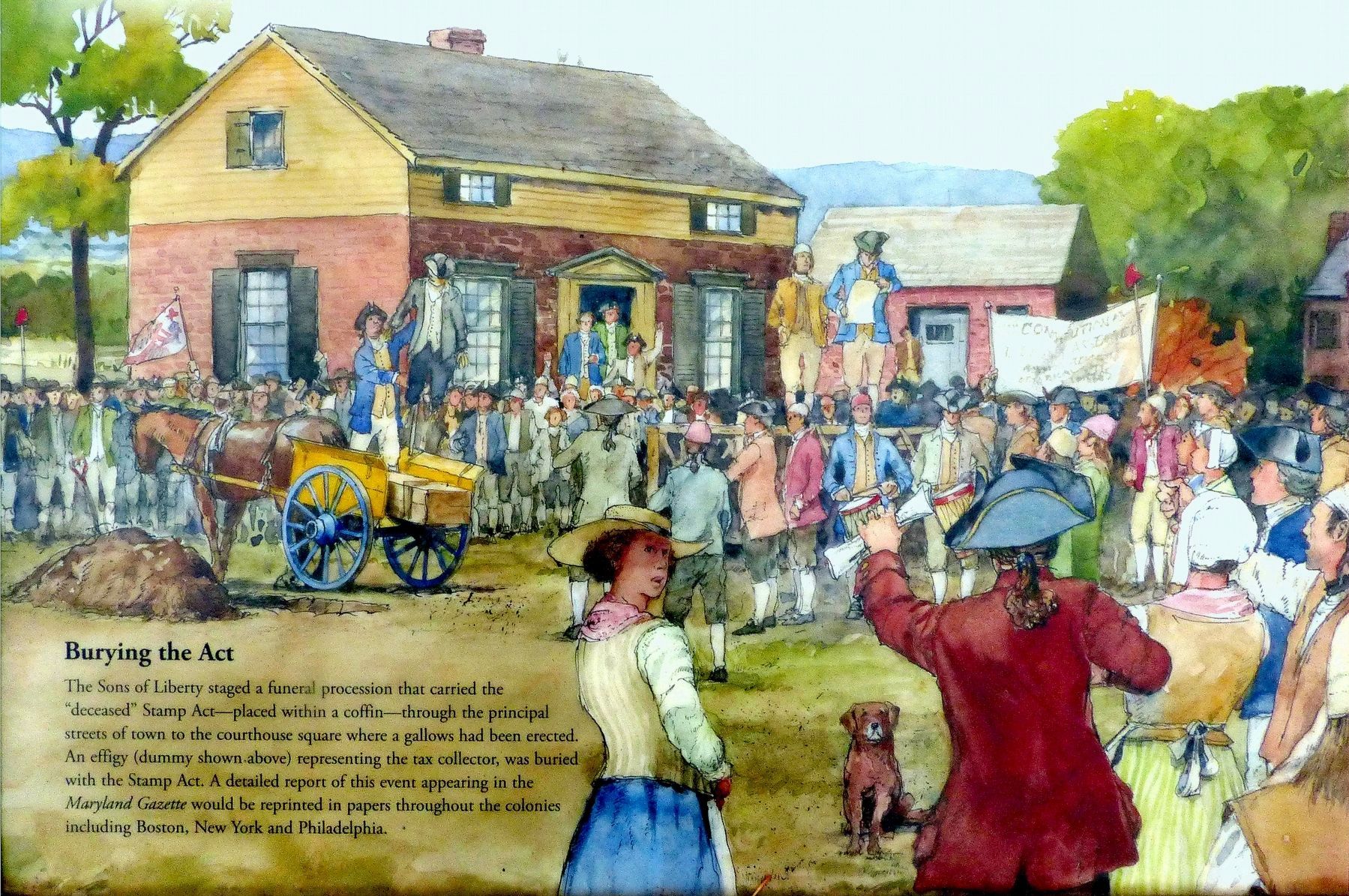
5. Burying the Act
The Sons of Liberty staged a funeral procession that carried the “deceased” Stamp Act —placed in a coffin— through the principal streets of town to the courthouse square where a gallows had been erected. An effigy (dummy shown above) representing the tax collector, was buried with the Stamp Act. A detailed report of this event appearing in the Maryland Gazette would be reprinted in papers throughout the colonies including Boston, New York and Philadelphia.Close-up of image on marker
Photographed by Allen C. Browne, May 21, 2017
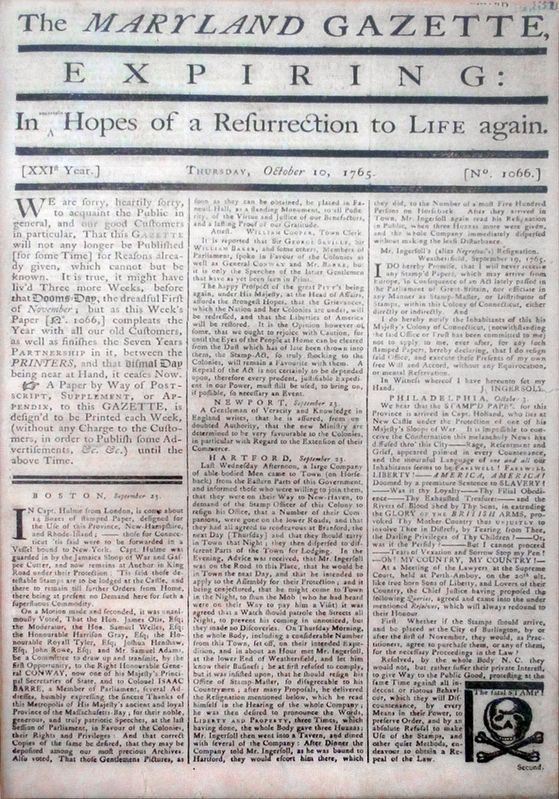
6. Maryland Gazette Expiring, In Hopes of a Resurrection to Life again... Tuesday Oct. 10, 1765
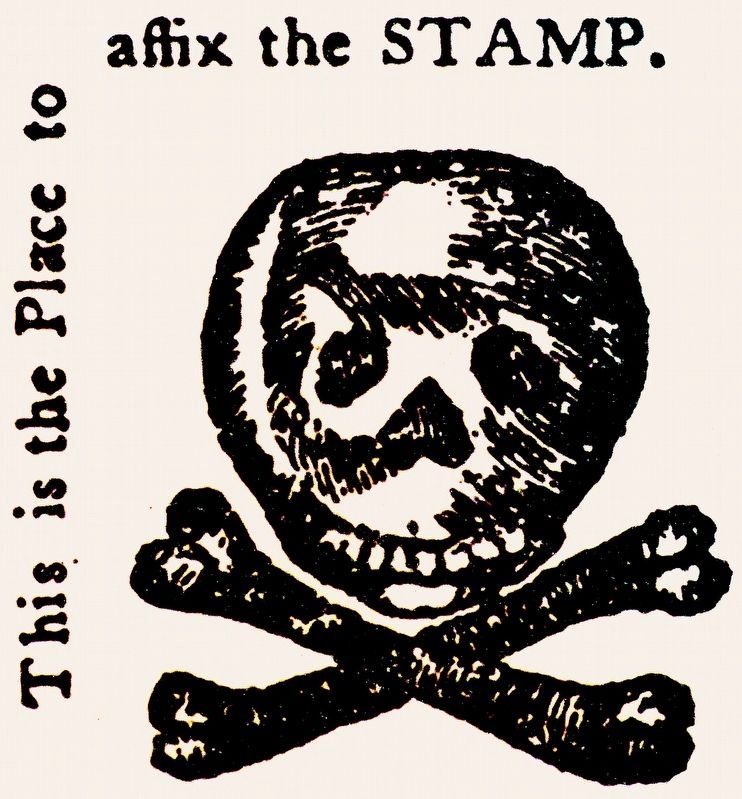
Outspoken Annapolis printer Jonas Green used a “death's head” stamp in his Maryland Gazette to protest the Stamp Act, which also required publishers to use taxed paper. Note that the Maryland Gazette front page (above) from October of that year bears the symbol.Close-up of image on marker
Photographed by Allen C. Browne, May 21, 2017
7. The Fatal Stamp
Photographed by Allen C. Browne, May 21, 2017
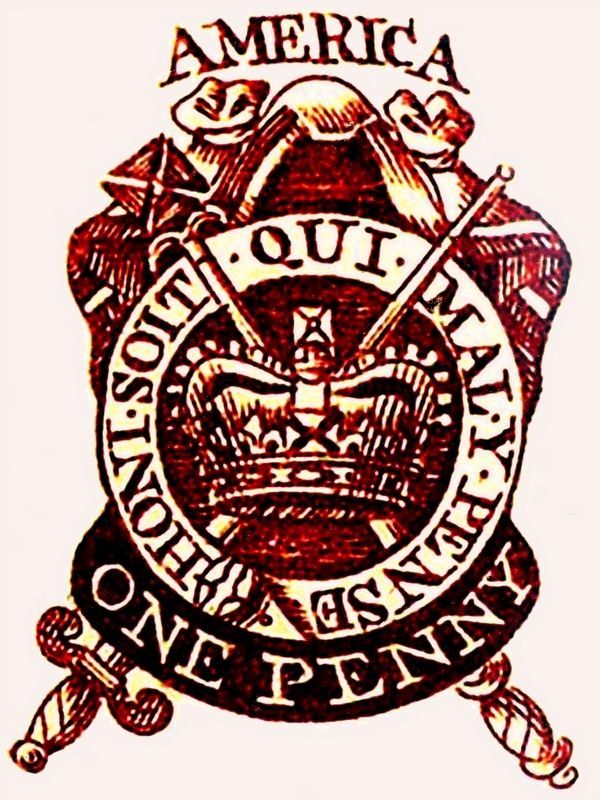
8. The British Seal
This British seal was to be stamped on all paper. The Stamp Act served as tax to recoup payment for the protection given to the American colonies by the Crown during the French and Indian War.Close-up of image on marker
Credits. This page was last revised on March 17, 2022. It was originally submitted on May 29, 2017, by Allen C. Browne of Silver Spring, Maryland. This page has been viewed 1,147 times since then and 60 times this year. Photos: 1. submitted on May 29, 2017, by Allen C. Browne of Silver Spring, Maryland. 2. submitted on March 14, 2022, by Adam Margolis of Mission Viejo, California. 3. submitted on May 29, 2017, by Allen C. Browne of Silver Spring, Maryland. 4. submitted on March 14, 2022, by Adam Margolis of Mission Viejo, California. 5, 6, 7, 8. submitted on May 29, 2017, by Allen C. Browne of Silver Spring, Maryland. • Bill Pfingsten was the editor who published this page.
