Veracruz, Mexico — The Gulf Coast (North America)
Fort San Juan de Ulúa
Photographed by J. Makali Bruton, March 23, 2017
1. Fort San Juan de Ulúa Marker
500 años de historia
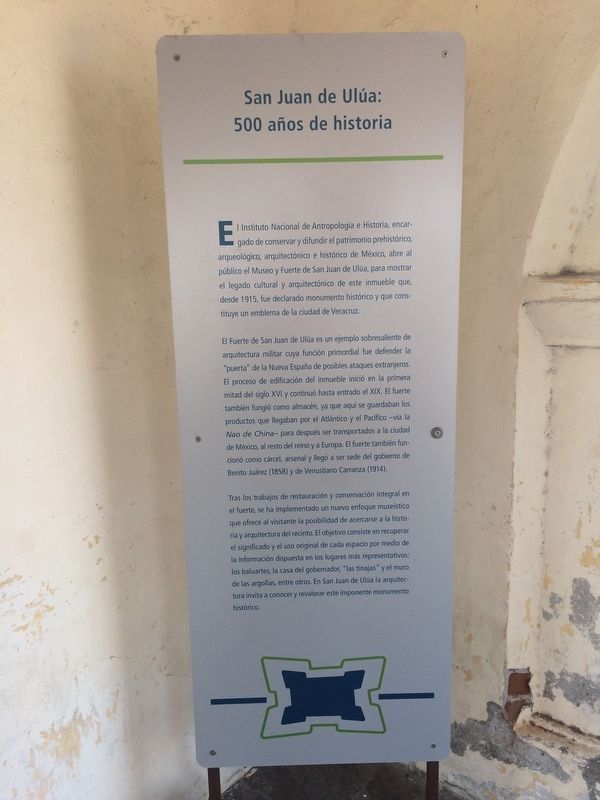
El Fuerte de San Juan de Ulúa es un ejemplo sobresaliente de arquitectura militar cuya función primordial fue defender la “puerta” de la Nueva España de posibles ataques extranjeros. El proceso de edificación del inmueble inició en la primera mitad del siglo XVI y continuó hasta entrado el XIX. El fuerte también fungió como almacén, ya que aquí se guardaban los productos que llegaban por el Atlántico y el Pacífico - via la Nao de China - para después ser transportados a la ciudad de México, al resto del reino y a Europa. El fuerte también funcionó como cárcel, arsenal y llegó a ser sede del gobierno de Benito Juárez (1858) y de Venustiano Carranza (1914).
Tras los trabajos de restauración y
this page online
English translation:
500 Years of History
The Fort of San Juan de Ulúa is an outstanding example of military architecture whose primary function was to defend the "front door" of New
Photographed by J. Makali Bruton, March 23, 2017
2. Fort San Juan de Ulúa
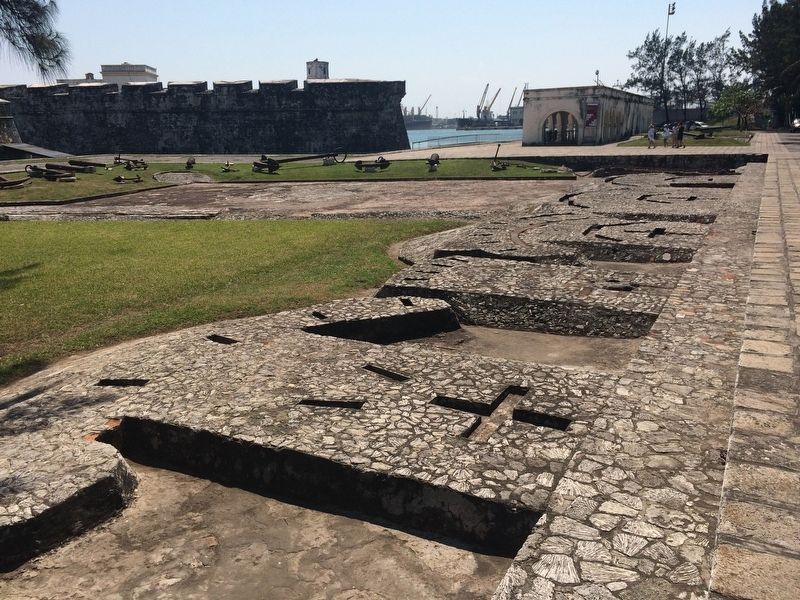
The marker is just to the left when entering the white arched building on the right, which is the ticket booth and visitors center at the fort. One of the bastions of the fort can be seen to the left. In the foreground are the foundations of artillery previously placed here.
After restoration work and integral conservation of the fort, a new museum approach has been implemented that offers the visitor the possibility of approaching the history and architecture of the site. The objective is to recover the meaning and original use of each space by means of the information provided in the most representative places: the bastions, the Governor's House, "las tinajas" (prison cells) and the Wall of Rings, among others. In San Juan de Ulúa the architecture invites the visitor to know and to give new value to this imposing historical monument.
Topics. This historical marker is
Photographed by J. Makali Bruton, March 23, 2017
3. Fort San Juan de Ulúa marker
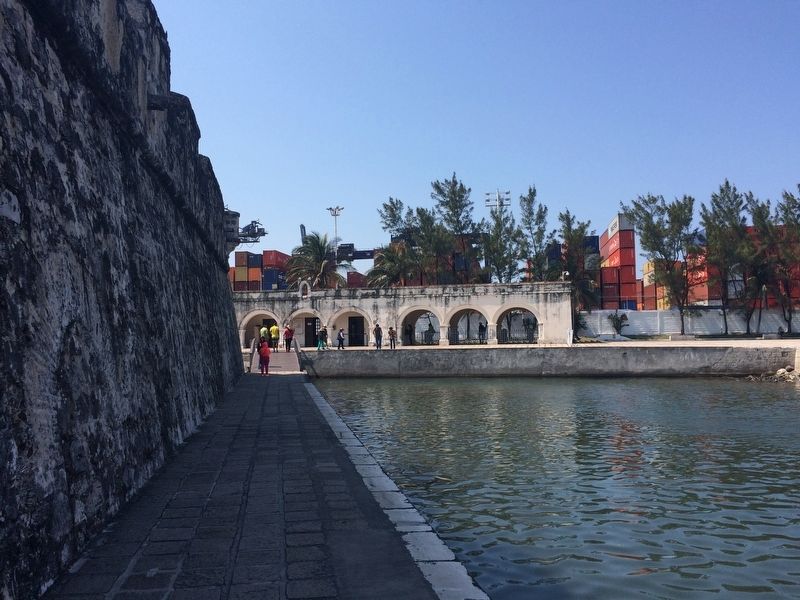
In this view of the visitors center towards the north, the marker is just inside the right side of the building. The fort is surrounded by the modern day port of Veracruz. Note the stacked shipping containers in the background.
Location. 19° 12.643′ N, 96° 7.907′ W. Marker is in Veracruz. It can be reached from Camino Escénico a San Juan de Ulúa. The marker is at the historical monument of Fort San Juan de Ulúa. It is on the left while walking towards the ticket booth and visitor center, before crossing over to the fort. Touch for map. Marker is in this post office area: Veracruz 91700, Mexico. Touch for directions.

Regionally, this marker is in the Gulf Coast and in the Sierra Madre. Globally, it is in North America, specifically in Mesoamerica, in a Gulf of Mexico state, on the Ring of Fire, and in the Western Hemisphere. Historically, it finds itself in what was once New Spain, a Spanish colony, and the Aztec Empire.
Other nearby markers. At least 8 other markers are within walking distance of this marker: Captain Pedro Sainz de Baranda y Borreiro (about 120 meters away, measured in a direct line); The Prison of San Juan de Ulúa (about 120 meters away); Benito Juárez in Prison in San Juan de Ulúa
Photographed by J. Makali Bruton, March 23, 2017
4. Fort San Juan de Ulúa Marker
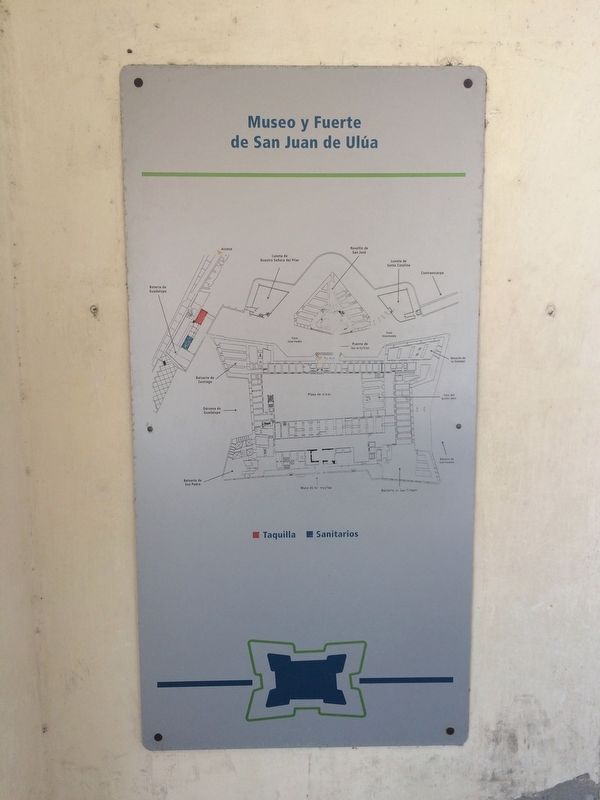
Photographed by J. Makali Bruton, March 23, 2017
5. Fort San Juan de Ulúa map
This map is also in the ticket booth and visitors center for the fort.
Credits. This page was last revised on June 10, 2017. It was originally submitted on June 9, 2017, by J. Makali Bruton of Washington, District of Columbia. This page has been viewed 265 times since then and 22 times this year. Photos: 1, 2, 3. submitted on June 9, 2017, by J. Makali Bruton of Washington, District of Columbia. 4. submitted on June 10, 2017, by J. Makali Bruton of Washington, District of Columbia. 5. submitted on June 9, 2017, by J. Makali Bruton of Washington, District of Columbia.
