Veracruz, Mexico — The Gulf Coast (North America)
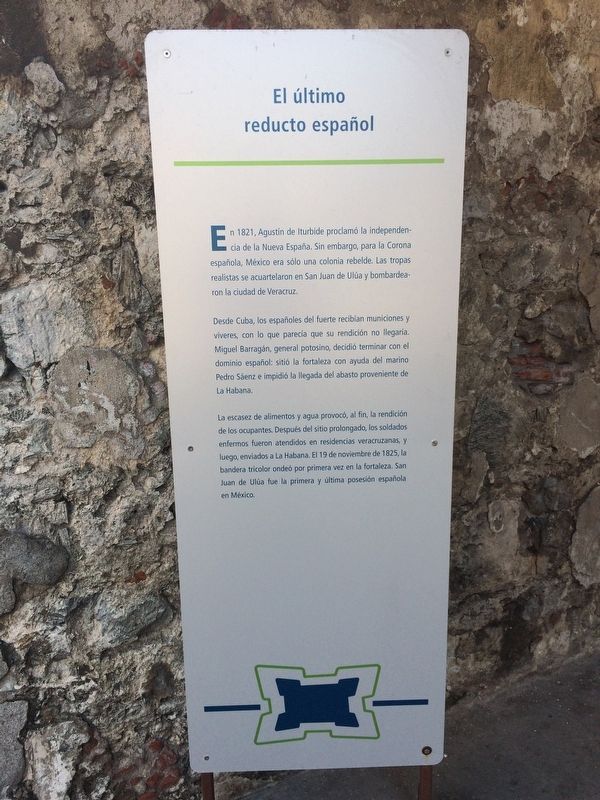
The Last Stronghold of the Spanish in Mexico
Photographed by J. Makali Bruton, March 23, 2017
1. The Last Stronghold of the Spanish in Mexico Marker
Desde Cuba, los españoles del fuerte recibían municiones y víveres, con lo que parecía que su rendición no llegaría. Miguel Barragán, general potosino, decidió terminar con el dominio español: sitió la fortaleza con ayuda del marino Pedro Sáenz e impidió la llegada del abasto proveniente de La Habana.
La escasez de alimentos y agua provocó, al fin, la rendición de los ocupantes. Después del sitio prolongado, los soldados enfermos fueron atendidos en residencias veracruzanas, y luego, enviados a La Habana. El 19 de noviembre de 1825, la bandera tricolor ondeó por primera vez en la fortaleza. San Juan de Ulúa fue la primera y última posesión española en México.
English translation:
this page online
The shortage of food and water finally caused the surrender of the occupants. After the prolonged siege, the sick soldiers were taken care of in private residences in Veracruz, and then sent to Havana. On November 19, 1825, the tricolor flag of Mexico waved for the first time over the fortress. San Juan de Ulúa was the first and last Spanish possession in Mexico.
Topics. This historical marker is listed in these topic lists: Colonial Era • Forts and Castles • Wars, Non-US. A significant historical date for this entry is November 19, 1825.
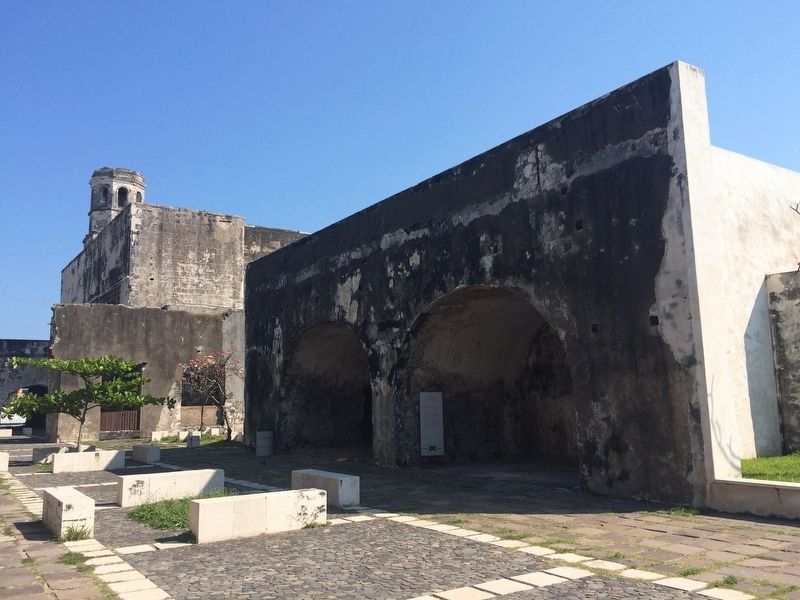
Location. 19° 12.544′ N, 96° 7.892′ W. Marker is in Veracruz. It can be reached from Camino Escénico a San Juan de Ulúa. The marker is located in the middle southern part of the Fort of San Juan
Photographed by J. Makali Bruton, March 23, 2017
2. The Last Stronghold of the Spanish in Mexico Marker

Regionally, this marker is in the Gulf Coast and in the Sierra Madre. Globally, it is in North America, specifically in Mesoamerica, in a Gulf of Mexico state, on the Ring of Fire, and in the Western Hemisphere. Historically, it finds itself in what was once New Spain, a Spanish colony, and the Aztec Empire.
Other nearby markers. At least 8 other markers are within walking distance of this marker: The Wall of the Rings (within shouting distance of this marker); The “Curtain” of San Fernando (within shouting distance of this marker); The Bastion of San Crispin (within shouting distance of this marker); Patio of the Curtain or Dry Moat (within shouting distance of this marker); The Governor's House (within shouting distance of this marker); The Bastion of San Pedro (within shouting distance of this marker); General Miguel Barragán (about 90 meters away, measured in a direct line); Benito Juárez in Prison in San Juan de Ulúa (about 120 meters away). Touch for a list and map of all markers in Veracruz.
Credits. This page was last revised on June 19, 2023. It was originally submitted on June 9, 2017, by J. Makali Bruton of Washington, District of Columbia. This page has been viewed 310 times since then and 34 times this year. Photos: 1, 2. submitted on June 9, 2017, by J. Makali Bruton of Washington, District of Columbia.
