North Virginia Beach , Virginia — The American South (Mid-Atlantic)
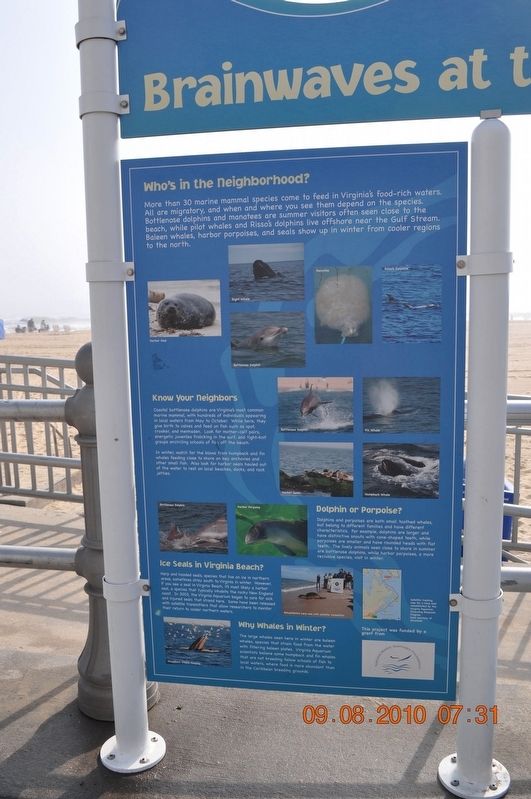
Who's in the neighborhood?
Brainwaves at the Beach
| — | Marine Mammals | — |
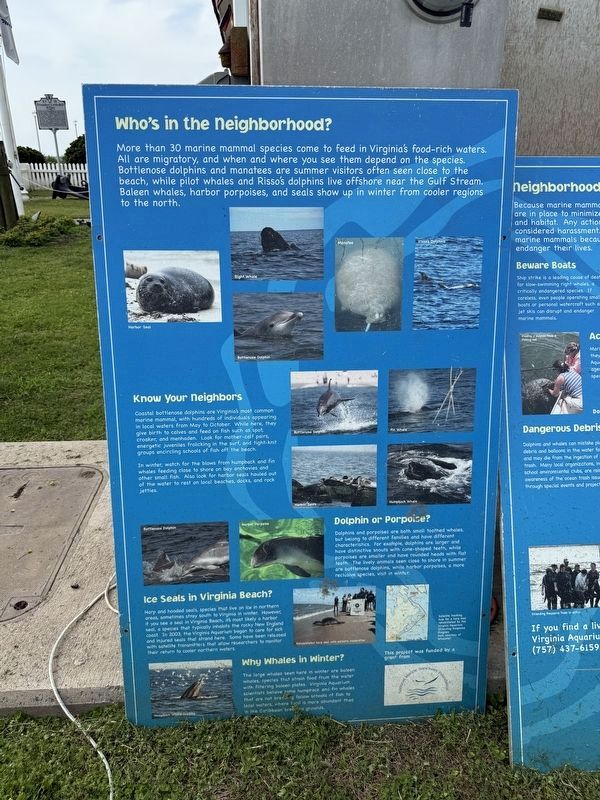
More than 30 marine mammal species come to feed in Virginia's food-rich waters. All are migratory, and when and where you see them depend on the species. Bottlenose dolphins and manatees are summer visitors often seen close to the beach while pilot whales and Risso's dolphins live offshore near the Gulf Stream. Baleen whales, harbor porpoises, and seals show up in winter from cooler regions to the north.
Know your neighbors
Coastal bottlenose dolphins are Virginia's most common marine mammal, with hundreds of individuals appearing in local waters from May to October. While here, they give birth to calves and feed on fish such as spot, croaker, and menhaden. Look for mother-calf pairs, energetic, juveniles frocking in the surf, and tight-knit groups encircling schools of fish off the beach.
In winter, watch for the blows from humpback and fin whales feeding close to shore on bay anchovies and other small fish. Also look for harbor seals hauled out of the water to rest on local beaches, docks, and rock jetties.
Dolphin or Porpoise?
Dolphins and porpoises are both small toothed whales, but belong to different
this page online
Ice Seals in Virginia Beach?
Harp and hooded seals, species that live on ice in northern areas, sometimes stray south to Virginia in winter. However, if you see a seal in Virginia Beach it’s most likely a harbor seal, a species that typically inhabits the rocky New England coast. In 2003, the Virginia Aquarium began to care for sick and injures seals that strand here. Some have been released with satellite transmitters that allow researchers to monitor their return to cooler northern waters.
Why Whales in Winter?
The large whales seen here in winter are baleen whales, species that strain food from the water with filtering baleen plates. Virginia Aquarium scientists believe some humpback and fin whales that are not breeding follow schools of fish to local waters, where food is more abundant than
Photographed by Sandra Hughes, August 9, 2010
2. Who's in the neighborhood? Marker
This is a photo of the marker when it was on display at the beach.
[Caption:]
Harbor Seal • Right Whale • Bottlenose Dolphin • Manatee • Risso’s Dolphin • Bottlenose Dolphin • Fin Whale • Harbor Seals • Humpback Whale
Bottlenose Dolphin • Harbor Porpoise
Rehabilitated harp seal with stylite transmitter
Humpback Whale feeding
Satellite tracking map for harp seal rehabilitated by the Virginia Aquarium Stranding Response Program Data courtesy of WhaleNet.
Erected by This project was funded by a grant from National Marine Sanctuary Foundation.
Topics. This historical marker is listed in these topic lists: Animals • Environment • Waterways & Vessels.
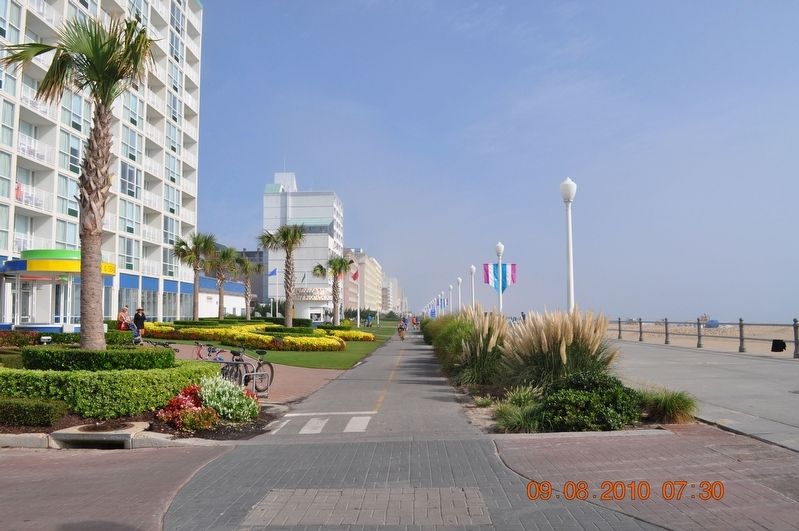
Location. 36° 51.141′ N, 75° 58.537′ W. Marker is in Virginia Beach, Virginia. It is in North Virginia Beach. It can be reached from the intersection of Atlantic Avenue and 16th Street, on the right when traveling north. Marker is located along the Virginia Beach Boardwalk. Touch for map. Marker is at or near this postal address: 1503 Atlantic Ave, Virginia Beach VA 23451, United States of America. Touch for directions.

Regionally, this marker is
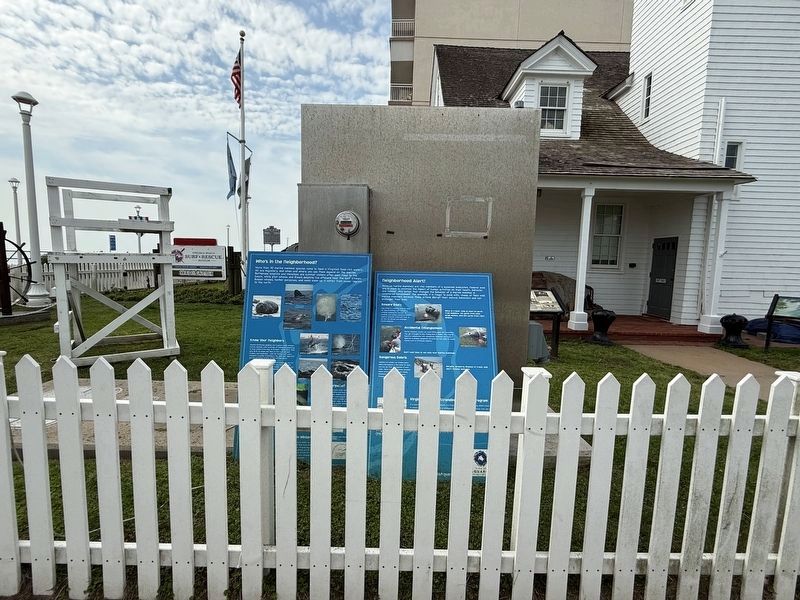
Other nearby markers. At least 8 other markers are within walking distance of this marker: Neighborhood Alert! (here, next to this marker); U-boats Off the Mid-Atlantic Coast (here, next to this marker); 24th Street Park (here, next to this marker); The United States Life-Saving Service Stations & Crews (a few steps from this marker); U.S. Coast Guard Virginia Lifeboat Stations (a few steps from this marker); Buoy Lantern (a few steps from this marker); Replica Race Point Surfboat (a few steps from this marker); Ship's Wheel / Stockless Anchor (a few steps from this marker).
Photographed by Sandra Hughes, August 9, 2010
4. Who's in the neighborhood? Marker
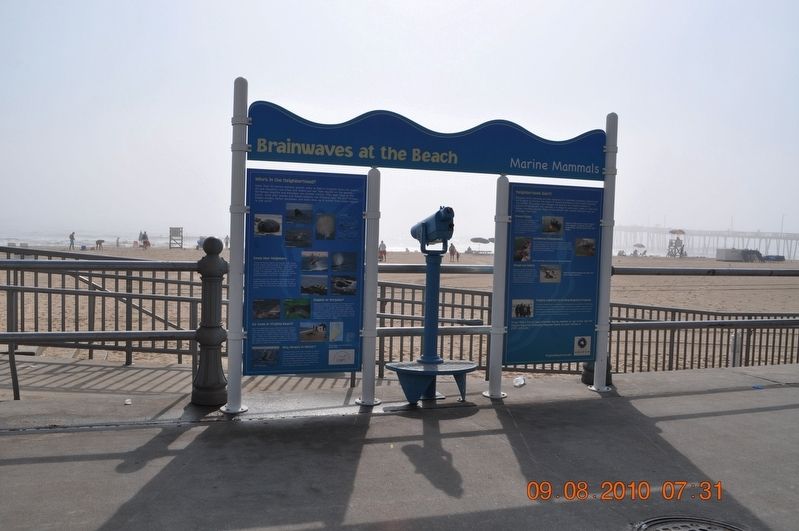
This is a photo of the marker in its former location.
Another marker is no longer nearby. Stern piece of a ship (was a few steps from this marker but has been permanently removed).
Additional commentary.
1. About the sign
At the time that this profile was first published, markers exclusively interpreting nature or natural history were included in the Database. This is no longer the case.
— Submitted June 20, 2025, by Devry Becker Jones of Washington, District of Columbia.
Photographed by Sandra Hughes, August 9, 2010
5. The Virginia Beach Boardwalk
Credits. This page was last revised on June 21, 2025. It was originally submitted on August 17, 2017, by Sandra Hughes Tidwell of Killen, Alabama, USA. This page has been viewed 365 times since then and 30 times this year. Photos: 1. submitted on June 20, 2025, by Devry Becker Jones of Washington, District of Columbia. 2. submitted on August 17, 2017, by Sandra Hughes Tidwell of Killen, Alabama, USA. 3. submitted on June 20, 2025, by Devry Becker Jones of Washington, District of Columbia. 4, 5. submitted on August 17, 2017, by Sandra Hughes Tidwell of Killen, Alabama, USA. • Bernard Fisher was the editor who published this page.
