
College Hill in Providence in Providence County, Rhode Island — The American Northeast (New England)
Brown University Slave Trade Memorial
Photographed by Cosmos Mariner, June 18, 2017
1. Slave Trade Memorial Marker
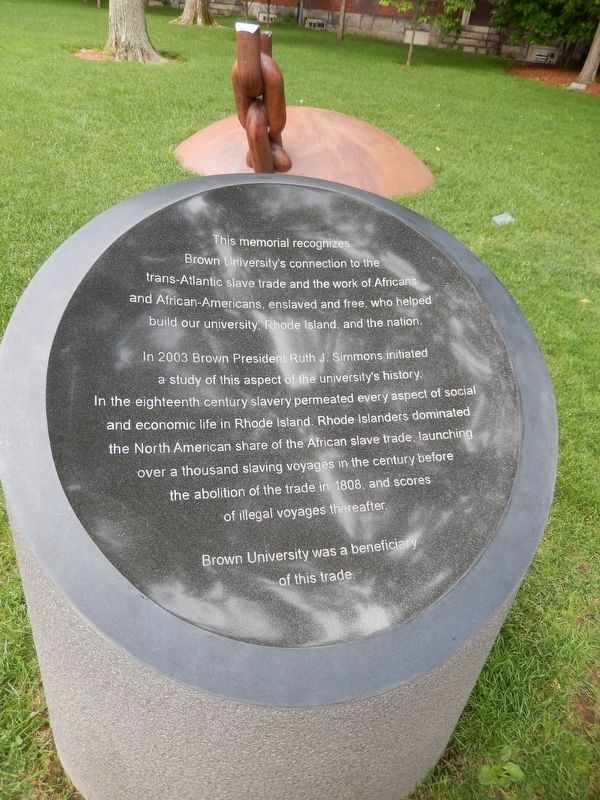
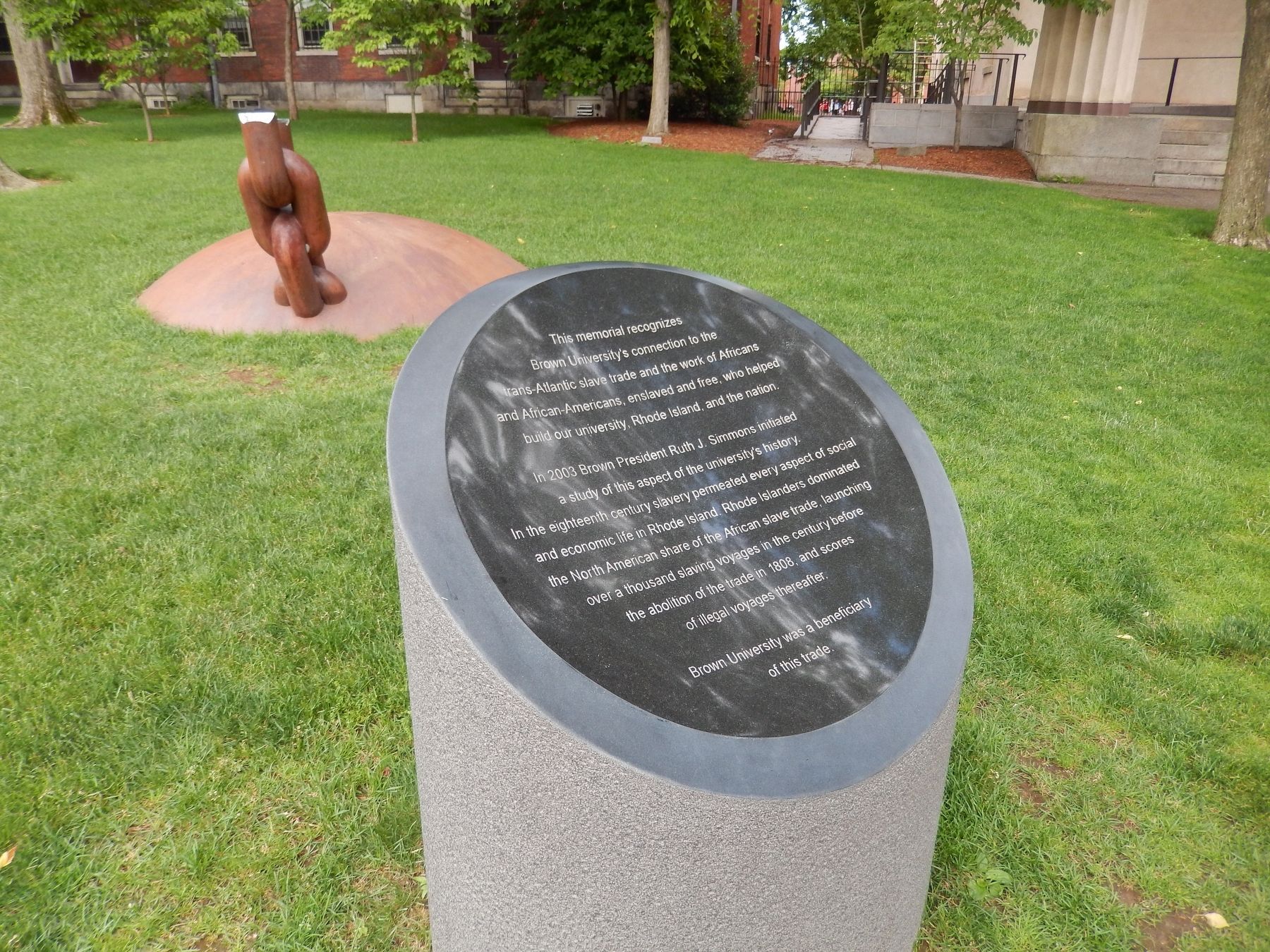
This memorial recognizes Brown University’s connection to the trans-Atlantic slave trade and the work of Africans and African-Americans, enslaved and free, who helped build our university, Rhode island, and the nation.
In 2003 Brown President Ruth J. Simmons initiated a study of this aspect of the university’s history.
In the eighteenth century slavery permeated every aspect of social and economic life in Rhode Island. Rhode Islanders dominated the North American share of the African slave trade, launching over a thousand slaving voyages in the century before the abolition of the trade in 1808, and scores of illegal voyages thereafter.
Brown University was a beneficiary of this trade.
Erected 2014 by Brown University.
Topics. This historical marker and memorial is listed in these topic lists: Abolition & Underground RR • African Americans • Colonial Era.
Location. 41° 49.595′ N, 71° 24.255′ W. Marker is in Providence, Rhode Island, in Providence County. It is in College Hill. It can be reached from Prospect Street. Memorial and marker are located
this page online

Regionally, this marker and memorial is on Rhode Island’s Narragansett Bay. It is also in the American Northeast, in New England, and on the Eastern Seaboard. Globally, it is in the North Atlantic Region, North America, the Western Hemisphere, the Western World, and the Anglosphere. Historically, it finds itself in what was once one of the original Thirteen Colonies.
Other nearby markers. At least 8 other markers are within walking distance of this marker: The First Official Residence of the President of Brown University (within shouting distance of this marker); Hope College (within shouting distance of this marker); University Hall (within shouting distance of this marker); The Brown Bear (about 400 feet away, measured in a direct line); Horace Mann (about 500 feet away); Stephen Hopkins (about 800 feet away); Congdon Street Baptist Church
Photographed by Cosmos Mariner, June 18, 2017
2. Slave Trade Memorial Marker (wide view)
Also see . . .
1. Brown University Dedicates its Slavery Memorial.
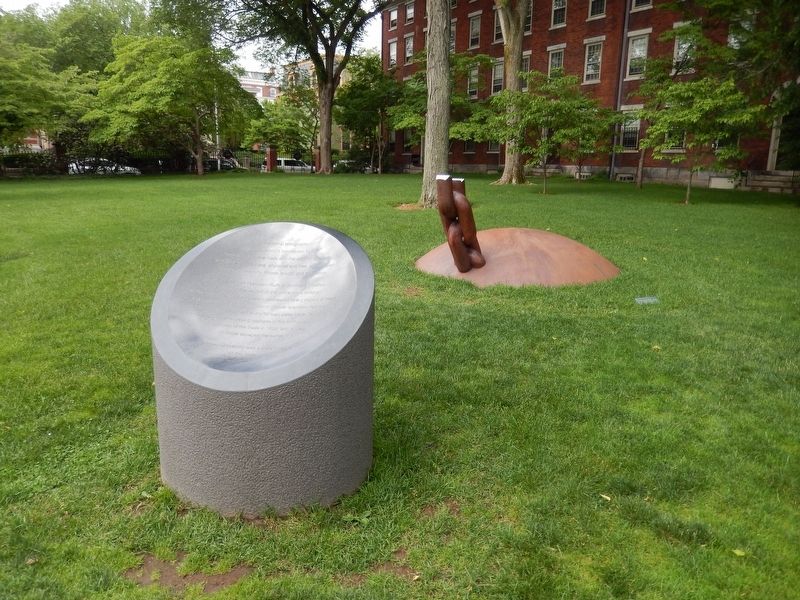
On Saturday afternoon, Sept. 27, 2014, more than 300 University guests assembled on the Front Green for the dedication of the Slavery Memorial, a work by the American sculptor Martin Puryear. Puryear’s memorial evokes a ball and broken chain, fashioned of cast iron, sinking into the Earth. The ends of the broken link are finished to a mirror-like surface, reflecting sky, sun, trees, life.(Submitted on August 25, 2017, by Cosmos Mariner of Cape Canaveral, Florida.)
2. Brown University’s Debt to Slavery.
The Committee on Slavery and Justice, composed of faculty, students and administrators, found that some 30 members of Brown’s governing board owned or captained slave ships, and donors sometimes contributed slave labor to help in construction. The Brown family-owned slaves and engaged in the slave trade, although one family member became a leading abolitionist and had his own brother prosecuted for illegal(Submitted on August 25, 2017, by Cosmos Mariner of Cape Canaveral, Florida.)slave trading. The college did not own or trade slaves.Photographed by Cosmos Mariner, June 18, 20173. Slave Trade Memorial Marker(symbolic broken ball and chain in background)
Photographed by Cosmos Mariner, June 18, 2017
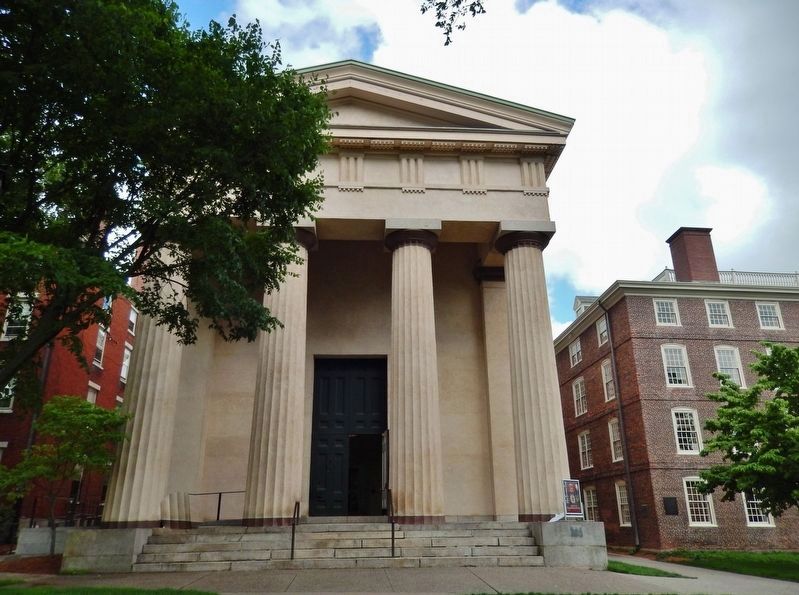
4. Haffenreffer Museum of Anthropology
Credits. This page was last revised on February 8, 2023. It was originally submitted on August 25, 2017, by Cosmos Mariner of Cape Canaveral, Florida. This page has been viewed 935 times since then and 53 times this year. Photos: 1, 2, 3, 4. submitted on August 25, 2017, by Cosmos Mariner of Cape Canaveral, Florida. • Bill Pfingsten was the editor who published this page.
