Rockville in Montgomery County, Maryland — The American Northeast (Mid-Atlantic)
Typhoid in Rockville
Photographed by Allen C. Browne, September 12, 2017
1. Typhoid in Rockville Marker
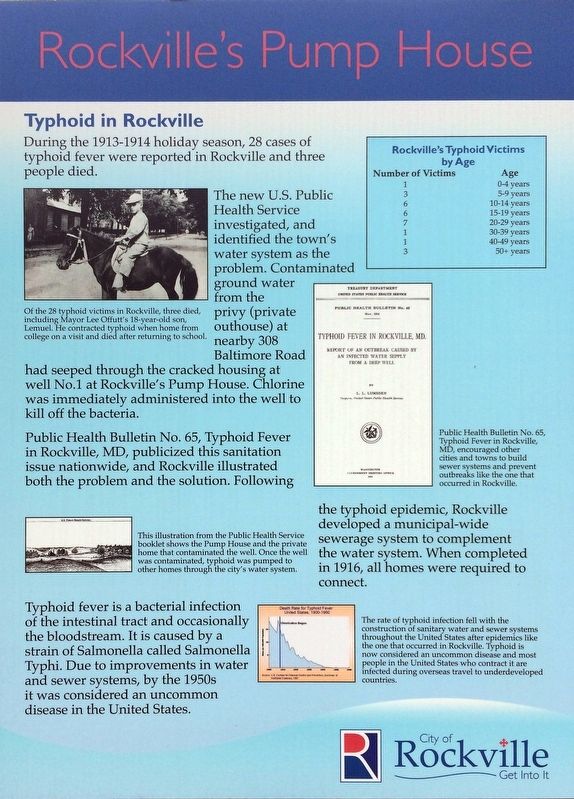
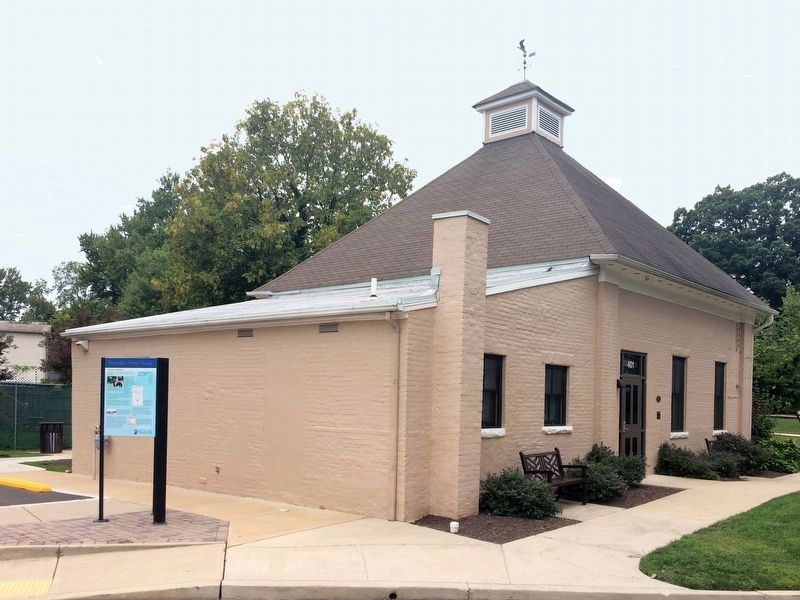
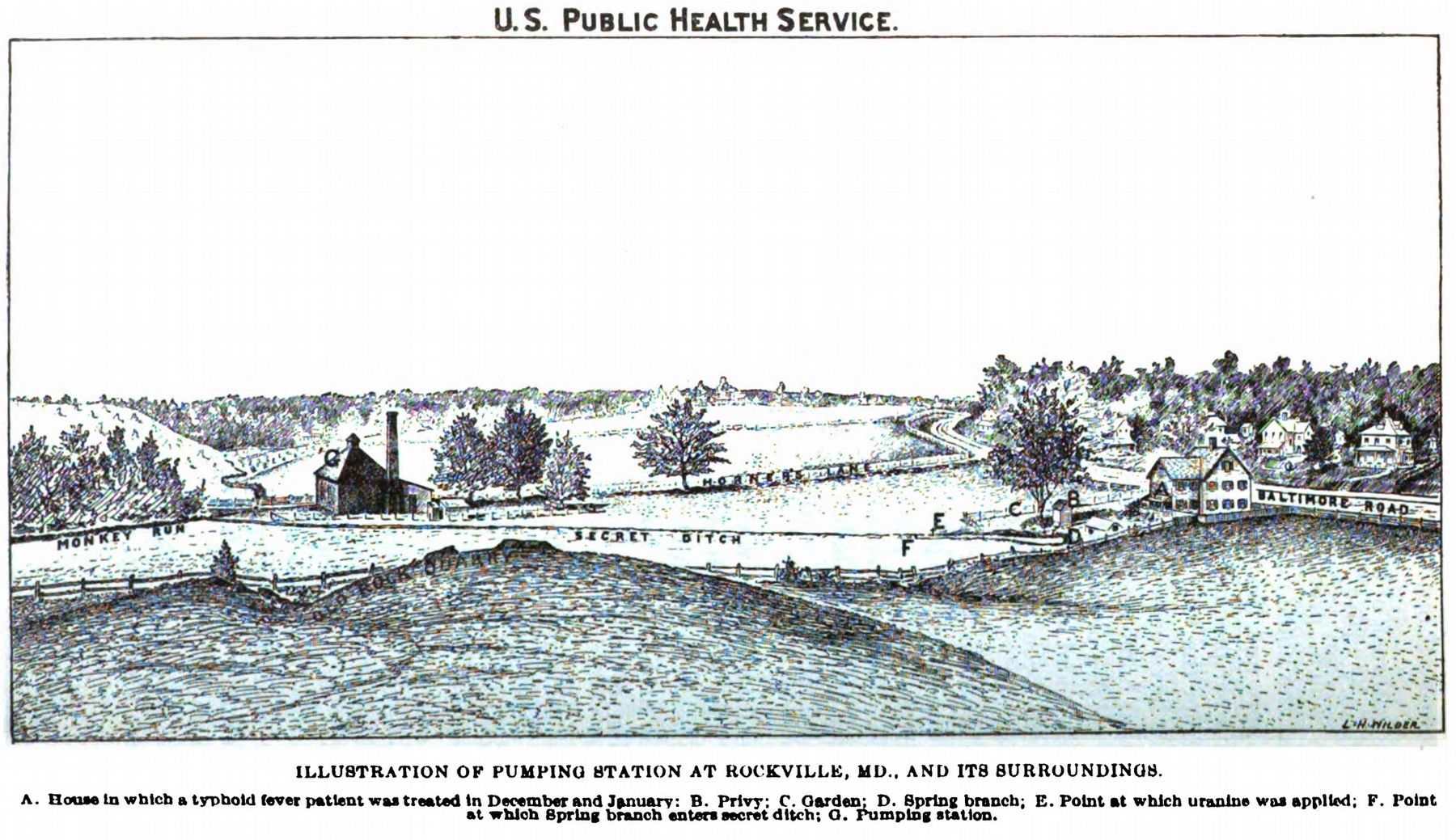
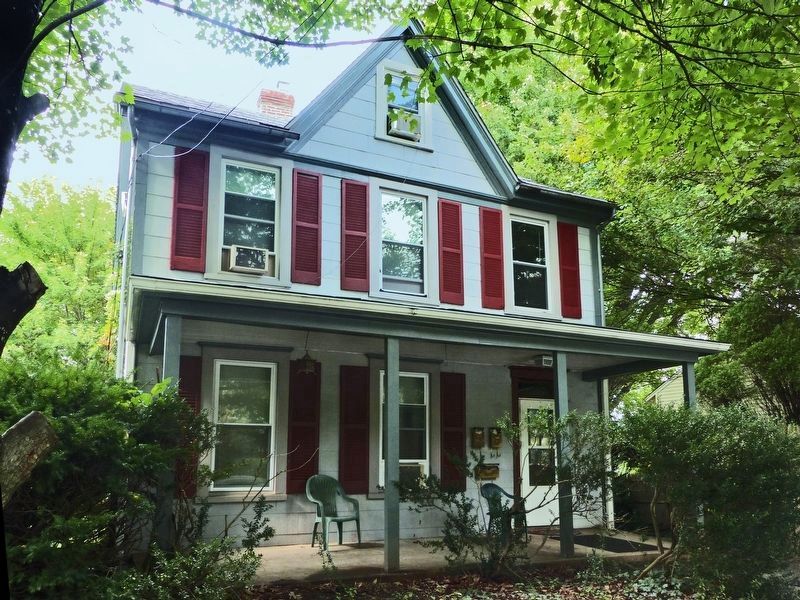
The new U.S. Public Health Service investigated, and identified the town's water system as the problem. Contaminated ground water from the privy (private outhouse) at nearby 308 Baltimore Road had seeped through the cracked housing at well No.1 at Rockville's Pump House. Chlorine was immediately administered into the well to kill off the bacteria.
Public Health Bulletin No. 65, Typhoid Fever in Rockville, MD, publicized this sanitation issue nationwide, and Rockville illustrated both the problem and the solution. Following the typhoid epidemic, Rockville developed a municipal-wide sewerage system to complement the water system. When completed in 1916, all homes were required to connect.
Typhoid fever is a bacterial infection of the intestinal tract and occasionally the bloodstream. It is caused by a strain of Salmonella called Salmonella typhi. Due to improvements in water and sewer systems, by the 1950s it was considered an uncommon disease in the United States.
Topics. This historical marker
this page online
Location. 39° 5.111′ N, 77° 8.457′ W. Marker is in Rockville, Maryland, in Montgomery County. It is on South Horners Lane. Touch for map. Marker is at or near this postal address: 401 South Horners Lane, Rockville MD 20850, United States of America. Touch for directions.

Regionally, this marker is in the Washington Metropolitan Area. It is also in the American Mid-Atlantic. Globally, it is in North America, the Western Hemisphere, the Western World, and the Anglosphere. Historically, it finds itself in what was once one of the original Thirteen Colonies and also the Antebellum South.
Other nearby markers. At least 8 other markers are within walking distance of this marker: Rockville's Pump House (here, next to this marker); Preserving a Community Resource (here, next to this marker); Rockville Station (approx. ¼ mile away); Saint Mary's Catholic Church (approx. 0.3 miles away); Saint Mary's Church (approx. 0.3 miles away); Baseball Field (approx. half a mile away); Rockville Town Square (approx. half a mile away); Witness to History
Photographed by Allen C. Browne, September 12, 2017
2. Typhoid in Rockville Marker
Other markers no longer nearby. Saint Mary’s Church (was approx. 0.3 miles away but has been replaced with another marker now near it); Court House Square (was approx. 0.6 miles away but has been replaced with another marker now near it).
Also see . . .
1. Typhoid Fever in Rockville, MD. by L.L. Lumsden, 1914. (Submitted on September 13, 2017, by Allen C. Browne of Silver Spring, Maryland.)
2. M:26/13/5 Reading/Typhoid House, 308 Baltimore Road. Maryland Historic Sites Inventory Form. (Submitted on September 13, 2017, by Allen C. Browne of Silver Spring, Maryland.)
Photographed by Allen C. Browne, September 12, 2017
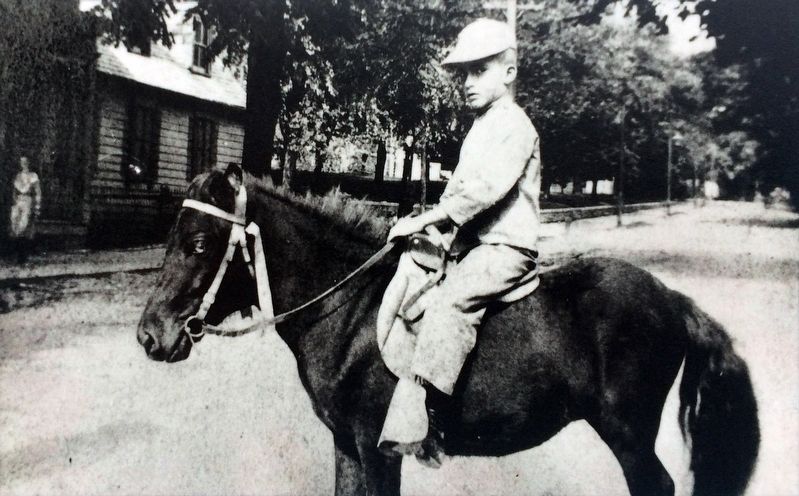
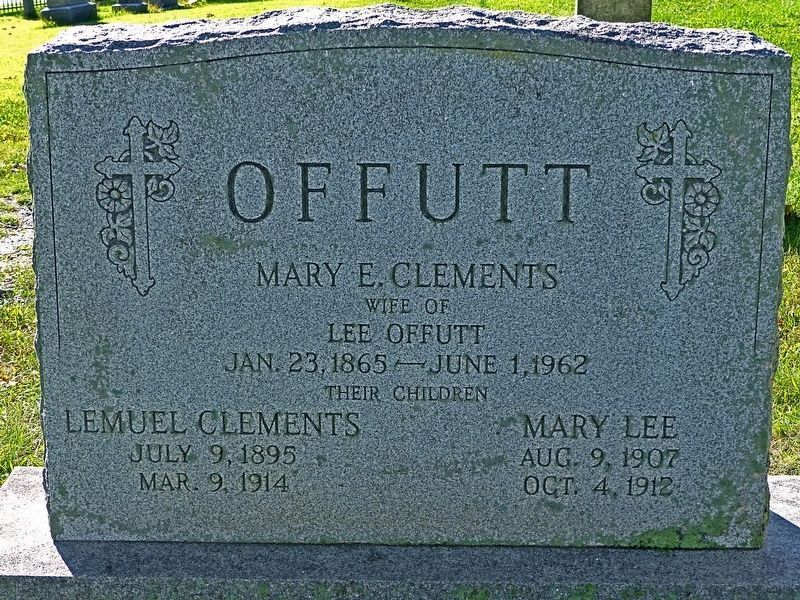
3. Lemuel Offutt
Of the 28 typhoid victims in Rockville, three died, including Mayor Lee Offutt's 18-year-old son, Lemuel. He contracted typhoid when home from college on a visit and died after returning to school.Close-up of photo on marker
Photographed by Allen C. Browne, September 12, 2017
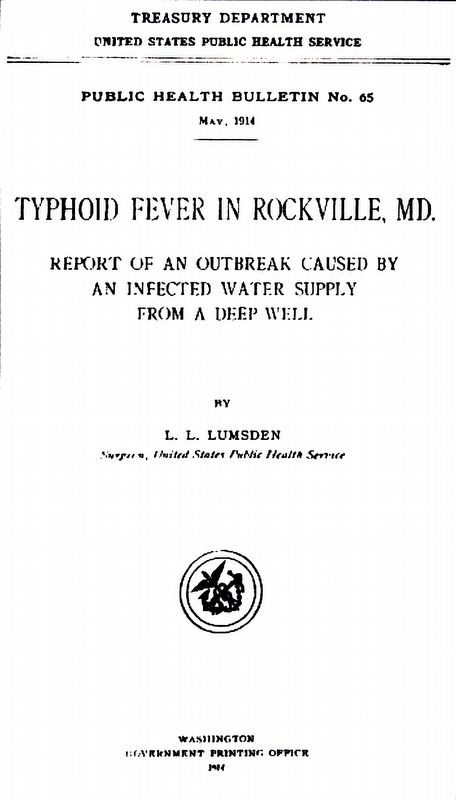
4. Public Health Bulletin No. 65
Typhoid Fever in Rockville, MD, encouraged other cities and towns to build sewer systems and prevent outbreaks like the one that occurred in Rockville.Close-up of image on marke
Photographed by Public Health Service, Lunden, 1914
5. Illustration of Pumping Station at Rockville, MD and Its Surroundings
(Lumsden, 1914)
(Lumsden, 1914)
This illustration from the Public Health Service booklet shows the Pump House and the private home that contaminated the well. Once the well was contaminated, typhoid was pumped to other homes through the city's water system.
Photographed by Allen C. Browne, September 12, 2017
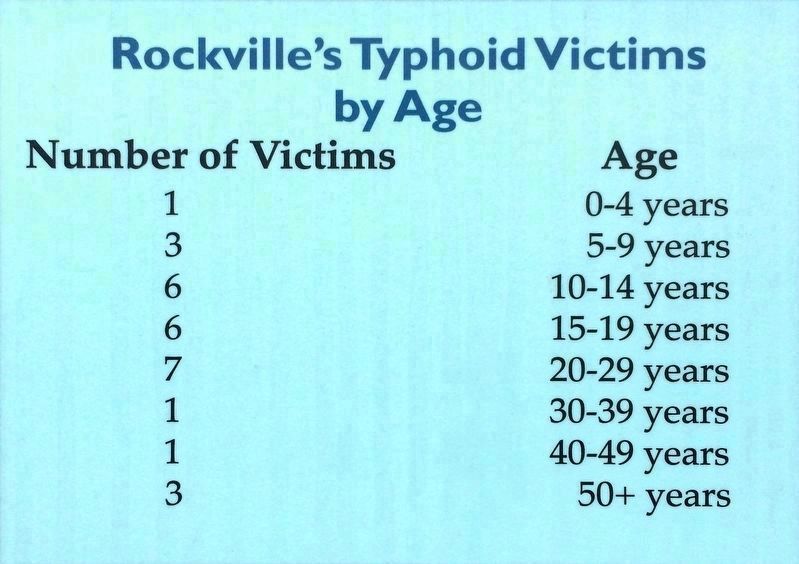
6. Rockville's Typhoid Victims
By Age
By Age
Number
of
Victims.....Age
1...............0-4 years
3...............5-9 years
6...............10-14 years
6...............15-19 years
7...............20-29 years
1...............30-39 years
1...............40-49 years
3...............50+ yearsClose-up of table on marker
of
Victims.....Age
1...............0-4 years
3...............5-9 years
6...............10-14 years
6...............15-19 years
7...............20-29 years
1...............30-39 years
1...............40-49 years
3...............50+ years
Photographed by Allen C. Browne, September 13, 2017
7. “Typhoid House”
308 Baltimore Road. Contamination from the privy at this house was found to have caused the 1913 typhoid outbreak in Rockville.
Photographed by Allen C. Browne, September 12, 2017
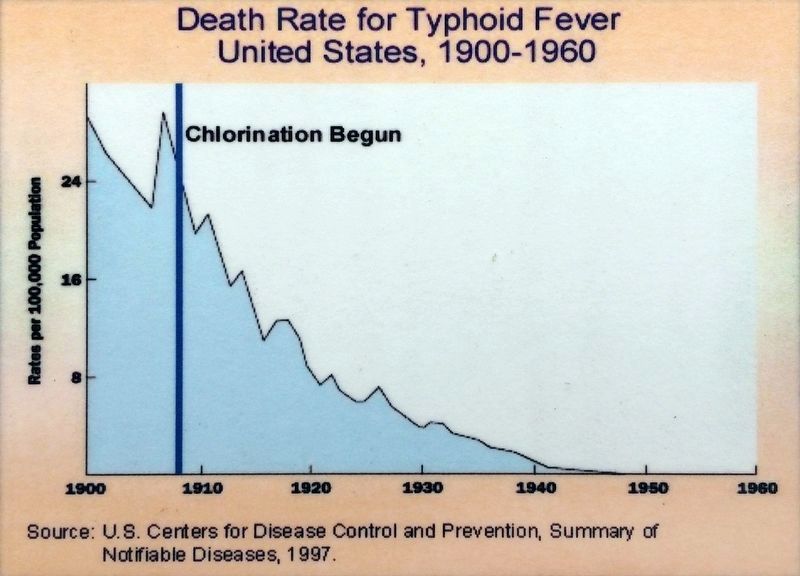
8. Death Rate for Typhoid Fever
United States,
1900-1960
United States,
1900-1960
The rate of typhoid infection fell with the construction of sanitary water and sewer systems throughout the United States after epidemics like the one that occurred in Rockville. Typhoid is now considered an uncommon disease and most people in the United States who contract it are infected during overseas travel to underdeveloped countries.Close-up of chart on marker
Photographed by Allen C. Browne, September 13, 2017
9. Lemuel Offutt
Lemuel Offutt (July 9, 1895 - July 9, 1914) is buried with his mother and sister in Saint Mary's Cemetery in Rockville.
Credits. This page was last revised on September 21, 2017. It was originally submitted on September 13, 2017, by Allen C. Browne of Silver Spring, Maryland. This page has been viewed 1,047 times since then and 27 times this year. Photos: 1. submitted on September 13, 2017, by Allen C. Browne of Silver Spring, Maryland. 2. submitted on September 14, 2017, by Allen C. Browne of Silver Spring, Maryland. 3, 4, 5, 6. submitted on September 13, 2017, by Allen C. Browne of Silver Spring, Maryland. 7. submitted on September 14, 2017, by Allen C. Browne of Silver Spring, Maryland. 8. submitted on September 13, 2017, by Allen C. Browne of Silver Spring, Maryland. 9. submitted on September 14, 2017, by Allen C. Browne of Silver Spring, Maryland. • Bill Pfingsten was the editor who published this page.
