Ninety Six in Greenwood County, South Carolina — The American South (South Atlantic)
The Well
Begin June 12, 1781
Photographed by Brian Scott, May 13, 2010
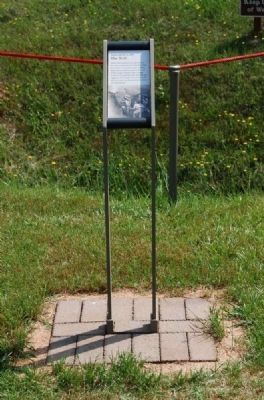
1. Current The Well Marker
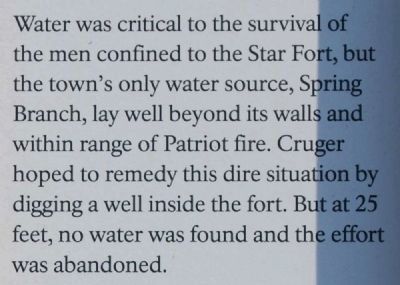
Water was critical to the survival of the men confined to the Star Fort, but the town's only water source, Spring Branch, lay well beyond its walls and within range of Patriot fire. Cruger hoped to remedy this dire situation by digging a well inside the fort. But at 25 feet, no water was found and the effort was abandoned.
Erected 2009 by National Park Service.
Topics. This historical marker is listed in these topic lists: African Americans • Colonial Era • Forts and Castles • Landmarks • Man-Made Features • Settlements & Settlers • War, US Revolutionary.
Location. 34° 8.764′ N, 82° 1.086′ W. Marker is in Ninety Six, South Carolina, in Greenwood County. It can be reached from South Cambridge Street (Route 248). Marker is located within the walls of Star Fort. Touch for map. Marker is in this post office area: Ninety Six SC 29666, United States of America. Touch for directions.

Regionally, this marker is in Upstate. It is also in the American South and specifically in the Deep South. Globally, it is in North America, the Western Hemisphere, the Western World, and the Anglosphere. Historically, it finds itself in what was once the territory of the Mississippian Culture, one of the original Thirteen Colonies, one of the Confederate States of America, and the Antebellum South.
Other nearby markers. At least 10 other markers are within walking distance of this marker: The Star Fort (within shouting distance of this marker); The Forlorn Hope (within shouting distance of this marker); The Attack (within shouting distance of this marker); Covered Way (about 300 feet away, measured in a direct line); The Mine (about 300 feet away); The Rifle Tower (about 300 feet away); Second Approach Trench (about 300 feet away);
this page online
More about this marker. Marker shown in Photo 1 is the current version of the marker.
Also see . . . Ninety Six National Historic Site (U.S. National Park Service). Here settlers struggled against the harsh backcountry to survive, Cherokee Indians hunted and fought to keep their land, two towns and a trading post were formed and abandoned to the elements, and two Revolutionary War battles that claimed over 100 lives took place here. (Submitted on September 9, 2008, by Brian Scott of Anderson, South Carolina.)
Photographed by Brian Scott, May 13, 2010
2. Current The Well Marker
Photographed by Brian Scott, September 5, 2008
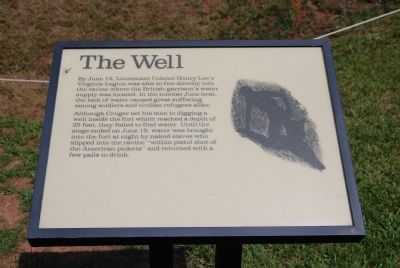
3. Original The Well Marker
By June 12, Lieutenant Colonel Henry Lee's Virginia Legion was able to fire directly into the ravine where the British garrison's water supply was located. In the intense June heat, the lack of water caused great suffering among the soldiers and civilian refugees alike.
Although Cruger set his men to digging a well inside the fort which reached a depth of 25 feet, they failed to find water. Until the siege ended in June 19, water was brought into the fort at night by naked slaves who slipped into the ravine "within pistol shot of the American pickets" and returned with a few pails to drink.
Although Cruger set his men to digging a well inside the fort which reached a depth of 25 feet, they failed to find water. Until the siege ended in June 19, water was brought into the fort at night by naked slaves who slipped into the ravine "within pistol shot of the American pickets" and returned with a few pails to drink.
Photographed by Brian Scott, September 5, 2008
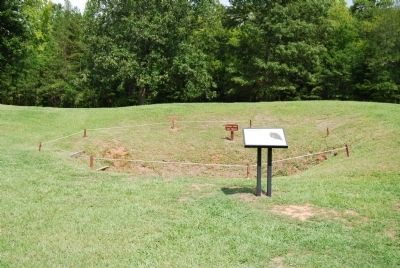
4. Well Outline and Original The Well Marker
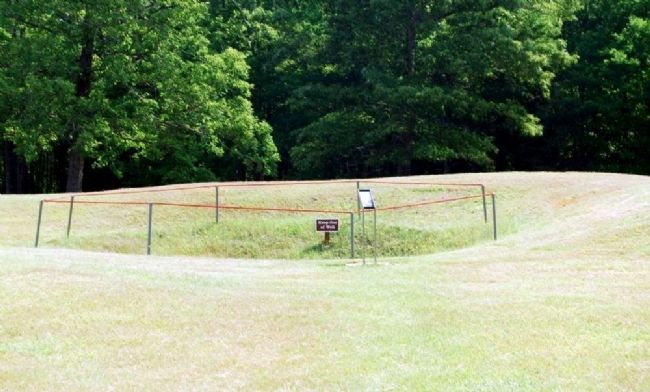
Photographed by Brian Scott, May 13, 2010
5. Well Outline and Current The Well Marker
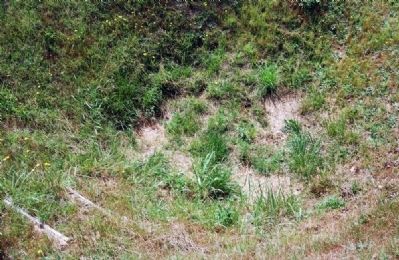
Photographed by Brian Scott, May 13, 2010
6. Interior View of The Well
Credits. This page was last revised on June 16, 2016. It was originally submitted on September 9, 2008, by Brian Scott of Anderson, South Carolina. This page has been viewed 934 times since then and 14 times this year. Photos: 1, 2. submitted on July 15, 2010, by Brian Scott of Anderson, South Carolina. 3, 4. submitted on September 9, 2008, by Brian Scott of Anderson, South Carolina. 5, 6. submitted on July 15, 2010, by Brian Scott of Anderson, South Carolina. • Craig Swain was the editor who published this page.
