The National Mall in Southwest Washington in Washington, District of Columbia — The American Northeast (Mid-Atlantic)
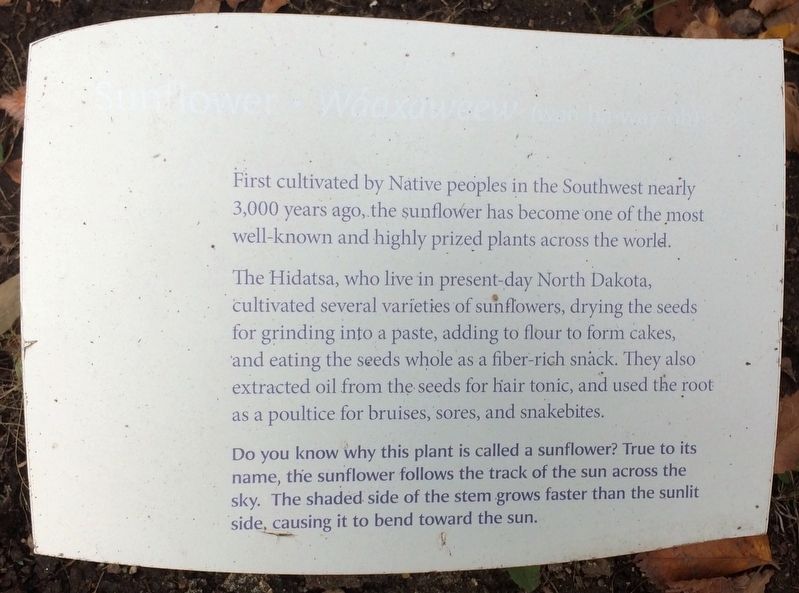
Sunflower • Wádxaweew (wah-ha-way-oh)
Photographed by Devry Becker Jones (CC0), November 14, 2017
1. Sunflower - Wádxaweew (wah-ha-way-oh) Marker
First cultivated by Native peoples in the Southwest nearly 3,000 years ago, the sunflower has become one of the most well-known and highly prized plants across the world.
The Hidatsa, who live in present-day North Dakota, cultivated several varieties of sunflowers, drying the seeds for grinding into a paste, adding to flour to form cakes, and eating the seeds whole as a fiber-rich snack. They also extracted oil from the seeds for hair tonic, and used the root as a poultice for bruises, sores, and snakebites.
Do you know why this plant is called a sunflower? True to its name, the sunflower follows the track of the sun across the sky. The shaded side of the stem grows faster than the sunlit side, causing it to bend toward the sun.
Erected by Smithsonian Institution.
Topics. This historical marker is listed in these topic lists: Agriculture • Indigenous Peoples and Communities.
Location. Marker has been permanently removed. It was located near 38° 53.288′ N, 77° 0.975′ W. Marker was in Southwest Washington in Washington, District of Columbia. It was in The
this page online
We have been informed that this marker is no longer there and will not be replaced. This page is an archival view of what was.
Regionally, this marker was in the Washington Metropolitan Area. It was also in the American Northeast, in the Upper South, in the Mid-Atlantic, in the Tidewater, and in the Chesapeake Bay Region. Globally, it was in North America, the Western Hemisphere, the Western World, and the Anglosphere.

Other nearby markers. At least 4 other markers are within walking distance of this location: Traditional Croplands (a few steps from this marker); Cardinal Direction Marker: South (a few steps from this marker); Nora Naranjo-Morse (within shouting distance of this marker); National Native American Veterans Memorial (within shouting distance of this marker). Touch for a list and map
Photographed by Devry Becker Jones (CC0), November 14, 2017
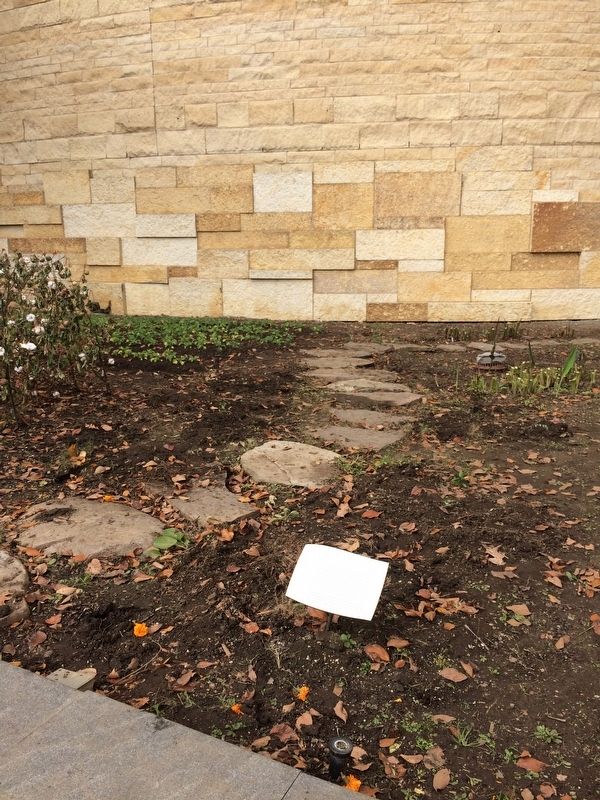
2. Sunflower - Wádxaweew (wah-ha-way-oh) Marker
Other markers no longer nearby. Traditional Croplands (was a few steps from this marker but has been replaced with another marker now near it); a different marker also named Cardinal Direction Marker: South (was within shouting distance of this marker but has been replaced with another marker now near it); Can you find symbols… (was within shouting distance of this marker but has been permanently removed); Swamp Milkweed • Wihsakán (wee-sah-quam) (was within shouting distance of this marker but has been permanently removed); Wingapo (was within shouting distance of this marker but has been replaced with another marker now near it); Wetlands (was within shouting distance of this marker but has been replaced with another marker now near it); Broadleaf Cattail • Káhkáhaskwar (kaw-kaw-has-quar) (was within shouting distance of this marker but has been permanently removed); What is a Grandfather Rock? (was within shouting distance of this marker but has been permanently removed); Bald Cypress • Ártu (ar-too) (was within shouting distance of this marker but has been permanently removed); George Rivera (was within shouting distance of this marker but has been replaced with another marker now near it); a different marker also named Nora Naranjo-Morse (was within shouting distance of this marker but has been replaced with another marker now near it); Cardinal Direction Markers (was within shouting distance of this marker but has been permanently removed).
Credits. This page was last revised on January 30, 2023. It was originally submitted on November 14, 2017, by Devry Becker Jones of Washington, District of Columbia. This page has been viewed 277 times since then and 9 times this year. Last updated on February 10, 2018, by Devry Becker Jones of Washington, District of Columbia. Photos: 1, 2. submitted on November 14, 2017, by Devry Becker Jones of Washington, District of Columbia. • Andrew Ruppenstein was the editor who published this page.
