Bainbridge in Decatur County, Georgia — The American South (South Atlantic)
The First Seminole War in Decatur County
| — | Creek Heritage Trail | — |
Photographed by Mark Hilton, May 5, 2018
1. The First Seminole War in Decatur County Marker
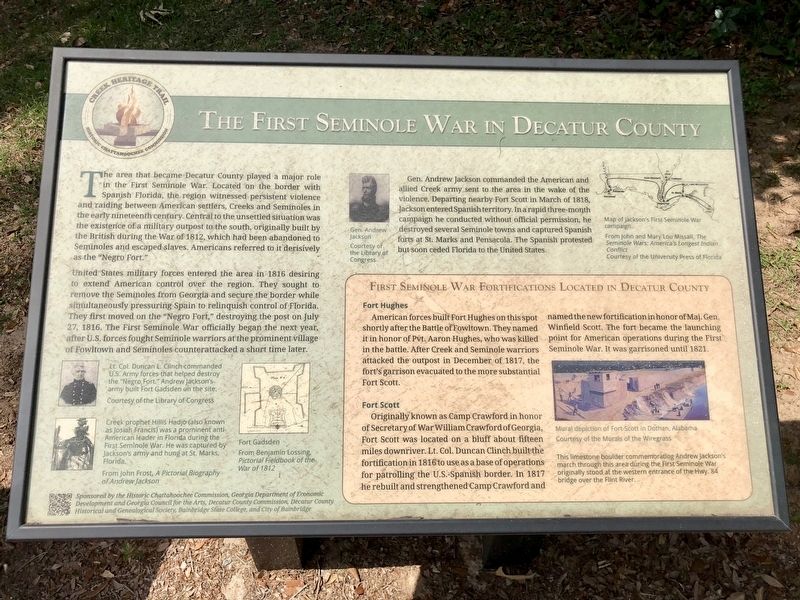
United States military forces entered the area in 1816 desiring to extend American control over the region. They sought to remove the Seminoles from Georgia and secure the border while simultaneously pressuring Spain to relinquish control of Florida. They first moved on the "Negro Fort," destroying the post on July 27, 1816. The First Seminole War officially began the next year, after U.S. forces fought Seminole warriors at the prominent village of Fowltown and Seminoles counterattacked a short time later.
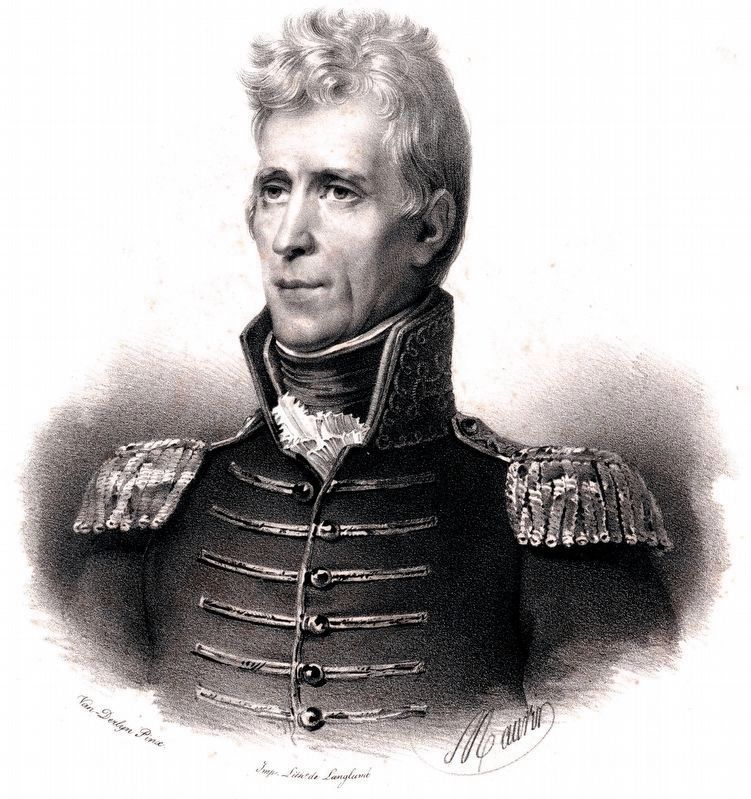
Gen. Andrew Jackson commanded the American and allied Creek army sent to the area in the wake of the
this page online
First Seminole War Fortifications Located in Decatur County
Fort Hughes
American forces built Fort Hughes on this spot shortly after the Battle of Fowltown. They named it in honor of Pvt. Aaron Hughes, who was killed in the battle. After Creek and Seminole warriors attacked the outpost in December of 1817, the fort's garrison evacuated to the more substantial Fort Scott.
Fort Scott
Originally known as Camp Crawford in honor of Secretary of War William Crawford of Georgia, Fort Scott was located on a bluff about fifteen miles downriver. Lt. Col. Duncan Clinch built the fortification in 1816 to use as a base of operations for patrolling the U.S.-Spanish border. In 1817 he rebuilt and strengthened Camp Crawford and named the new fortification in honor of Maj. Gen. Winfield Scott. The fort became the launching
Photographed by Mark Hilton, May 5, 2018
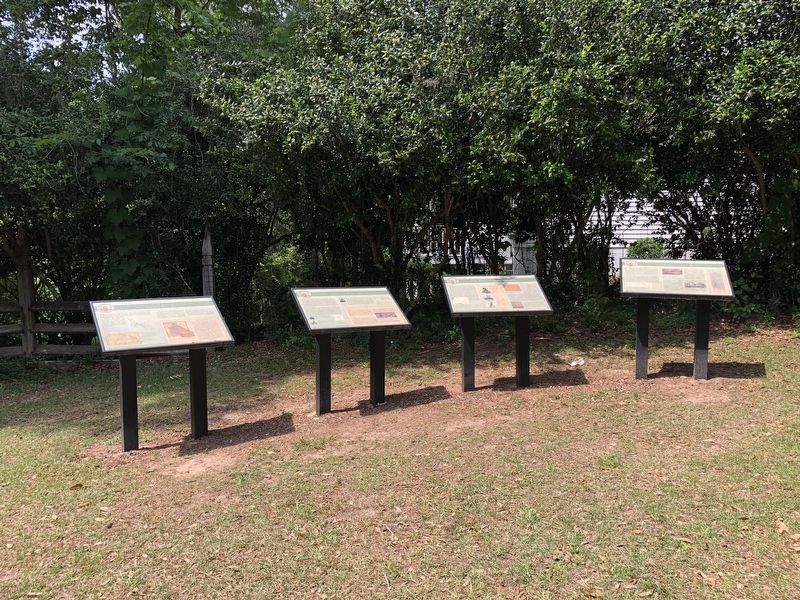
2. The First Seminole War in Decatur County Marker is second from left.
Photo captions
Bottom left: Lt. Col. Duncan L. Clinch commanded U.S. Army forces that helped destroy the "Negro Fort." Andrew Jackson's army built Fort Gadsden on the site.
Creek prophet Hillis Hadjo (also known as Josiah Francis) was a prominent anti-American leader in Florida during the First Seminole War. He was captured by Jackson's army and hung at St. Marks, Florida.
Fort Gadsden
Top right: Map of Jackson's first Seminole War Campaign.
Bottom right: Mural depiction of Fort Scott in Dothan, Alabama
Erected 2014 by Historic Chattahoochee Commission, Georgia Department of Economic Development and Georgia Council for the Arts, Decatur County Commission, Decatur County Historical and Genealogical Society, Bainbridge State College and City of Bainbridge.
Topics. This historical marker is listed in these topic lists: Indigenous Peoples and Communities • Settlements & Settlers • Wars, US Indian. A significant historical month for this entry is March 1818.
Location. 30° 54.493′ N, 84° 34.759′ W. Marker is in Bainbridge, Georgia,
Photographed by Mark Hilton, May 5, 2018
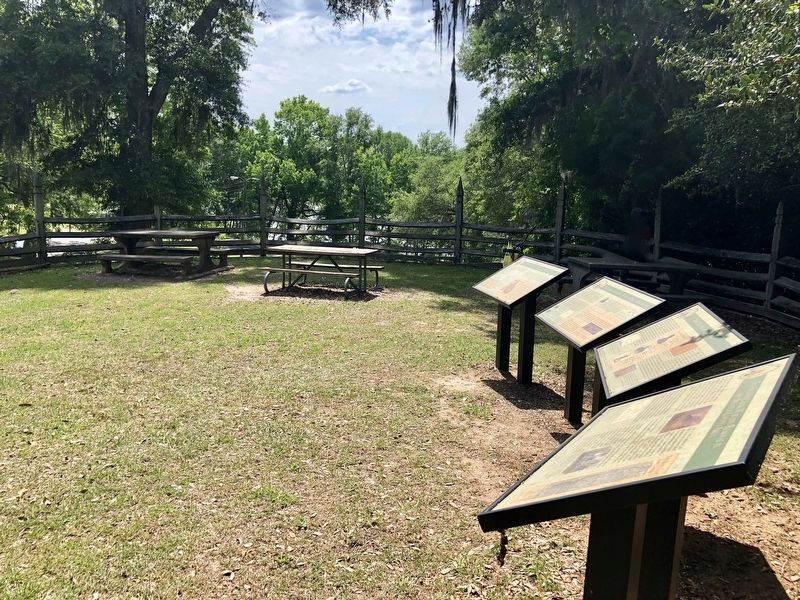
3. Markers on a bluff overlooking the Flint River.

Regionally, this marker is on the Coastal Plain. It is also in the American South and specifically in the Deep South. Globally, it is in North America, the Western Hemisphere, the Western World, and the Anglosphere. Historically, it finds itself in what was once the territory of the Mississippian Culture, one of the original Thirteen Colonies, one of the Confederate States of America, and the Antebellum South.
Other nearby markers. At least 8 other markers are within walking distance of this marker: Decatur County During the Creek and Seminole Wars Era (here, next to this marker); The Battle of Fowltown (here, next to this marker); The Second Creek War and Removal in the Decatur County Area (here, next to this marker); Historic Fort Hughes (here, next to this marker); Fort Hughes (here, next to this marker); Stepping Back in Time
Library of Congress
4. Gen. Andrew Jackson
Gen. Andrew Jackson commanded the American and allied Creek army sent to the area in the wake of the violence. Departing nearby Fort Scott in March of 1818, Jackson entered Spanish territory. In a rapid three-month campaign he conducted without official permission, he destroyed several Seminole towns and captured Spanish forts at St. Marks and Pensacola. The Spanish protested but soon ceded Florida to the United States.
Drawing by John Van-Derlyn
Drawing by John Van-Derlyn
Library of Congress
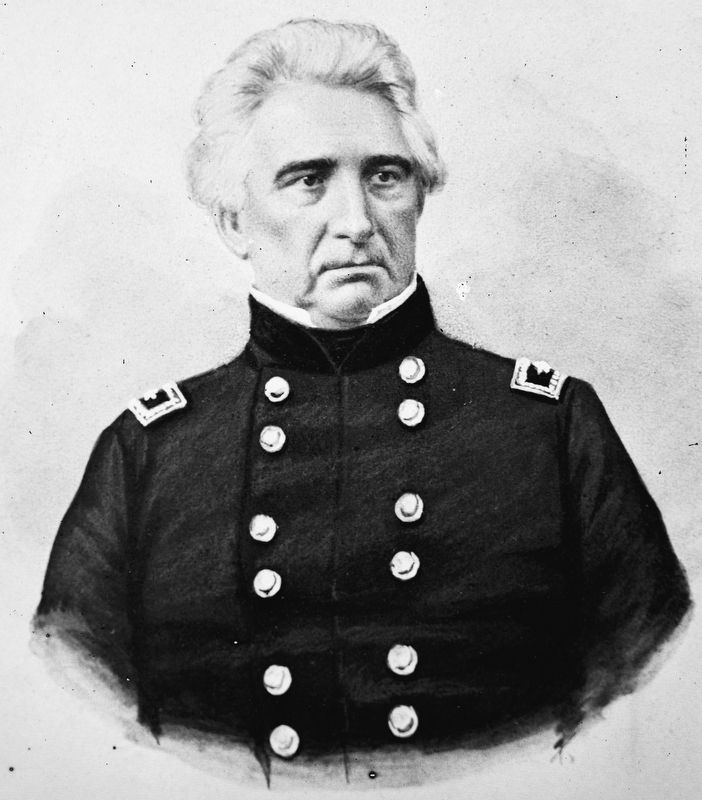
5. Lt. Col. Duncan L. Clinch
Lt. Col. Duncan L. Clinch Commanded U.S. Forces that helped destroy the “Negro Fort.” Andrew Jackson's army built Fort Gladsden on the site.
Photo taken between 1860 and 1870 Civil war photographs, 1861-1865, Library of Congress, Prints and Photographs Division.
Photo taken between 1860 and 1870 Civil war photographs, 1861-1865, Library of Congress, Prints and Photographs Division.
Internet Archive
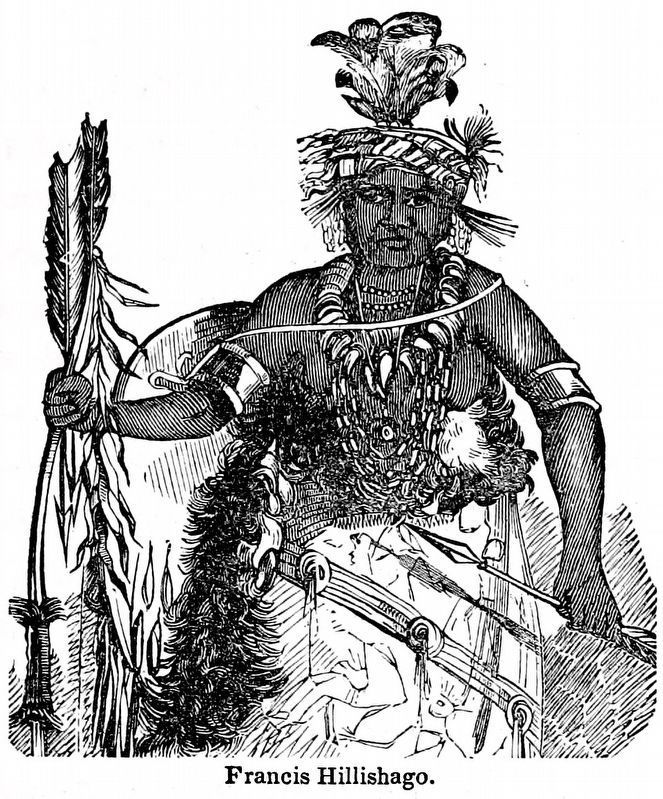
6. Hillis Hadjo
Creek prophet Hillis Hadjo (also known as Josiah Francis) was a prominent anti-American leader in Florida during the First Seminole War. He was captured by Jackson's army and hung at St. Marks, Florida.
Drawing by Devereux from Pictorial Life of Andrew Jackson by John Frost, 1847, page 381.
Drawing by Devereux from Pictorial Life of Andrew Jackson by John Frost, 1847, page 381.
Photographed by Mark Hilton
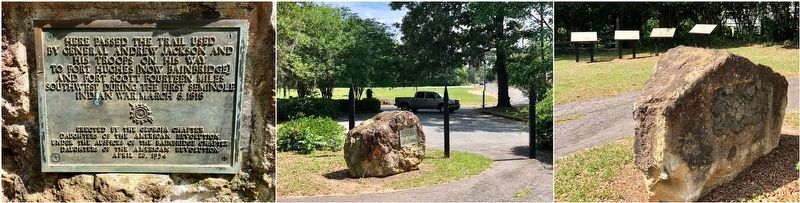
7. Nearby First Seminole War Trail Marker
This limestone boulder commemorating Andrew Jackson's march through this area during the First Seminole War originally stood at the western entrance of the Highway 84 bridge over the Flint River.
Credits. This page was last revised on June 15, 2021. It was originally submitted on May 6, 2018, by Mark Hilton of Montgomery, Alabama. This page has been viewed 1,125 times since then and 143 times this year. Photos: 1, 2, 3. submitted on May 6, 2018, by Mark Hilton of Montgomery, Alabama. 4, 5, 6. submitted on June 13, 2021, by Allen C. Browne of Silver Spring, Maryland. 7. submitted on May 6, 2018, by Mark Hilton of Montgomery, Alabama.
