The Castro in San Francisco City and County, California — The American West (Pacific Coastal)
We'wha
(1849-1896)
| — | Rainbow Honor Walk | — |
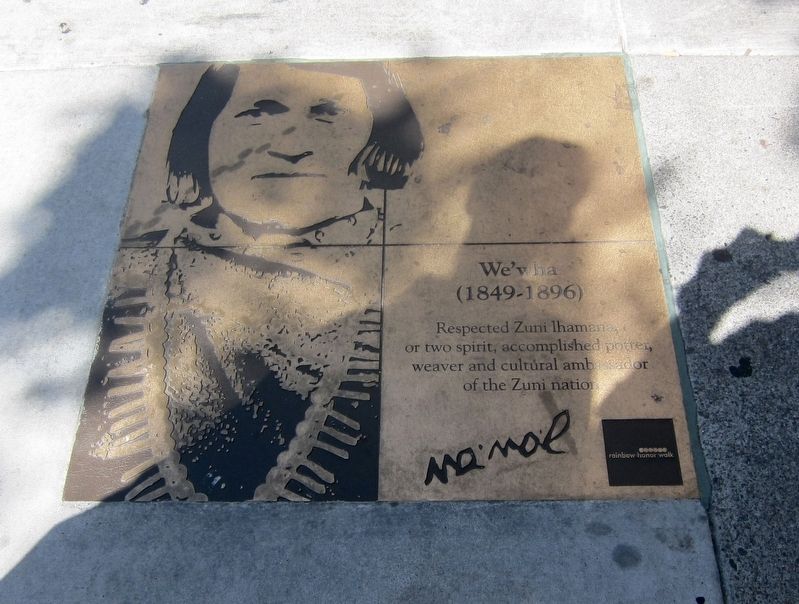
Photographed by Andrew Ruppenstein, July 14, 2018
1. We'wha Marker
Erected 2017 by Rainbow Honor Walk.
Topics and series. This historical marker is listed in these topic lists: Indigenous Peoples and Communities • Women. In addition, it is included in the Rainbow Honor Walk series list.
Location. 37° 45.796′ N, 122° 26.042′ W. Marker is in San Francisco, California, in San Francisco City and County. It is in The Castro. It is on Market Street east of Castro Street, on the right when traveling east. Touch for map. Marker is at or near this postal address: 2349 Market Street, San Francisco CA 94114, United States of America. Touch for directions.

Regionally, this marker is on the Coast Ranges. It is also on the American Pacific Coast. Globally, it is in North America, on the Ring of Fire, on the Pacific Rim, in the Western Hemisphere, in the Western World, and in the Anglosphere. Historically, it finds itself in what was once New Spain and also Mexico’s Alta California.
Other nearby markers. At least 8 other markers are within walking distance of this marker: Gerry Studds (a few steps from this marker); Glenn Burke (a few steps from this marker); Rikki Streicher (within shouting distance of this marker); Kiyoshi Kuromiya
this page online
Also see . . . We'wha (Wikipedia). "We'wha (1849–1896, various spellings) was a Zuni Native American from New Mexico. She was the most famous lhamana, a traditional Zuni gender role, now described as mixed-gender or Two-Spirit. Lhamana were male-bodied but performed primarily feminine tasks, wearing a mixture of women's and men's clothing and doing a great deal of women's work as well as serving as mediators....We'wha is the subject of the book The Zuni Man-Woman by Will Roscoe. The anthropologist Matilda Coxe Stevenson also wrote a great deal about We'wha, and even hosted her on their visit to Washington D.C. in 1886. During that visit, We'wha met President Grover Cleveland and was generally mistaken for a cisgender woman. One of the anthropologists close to her described We'wha as "the strongest character and the most intelligent of the Zuni tribe". She is historically known mainly for transgender identity. In the nineteenth century this status was called berdache, being anatomically one
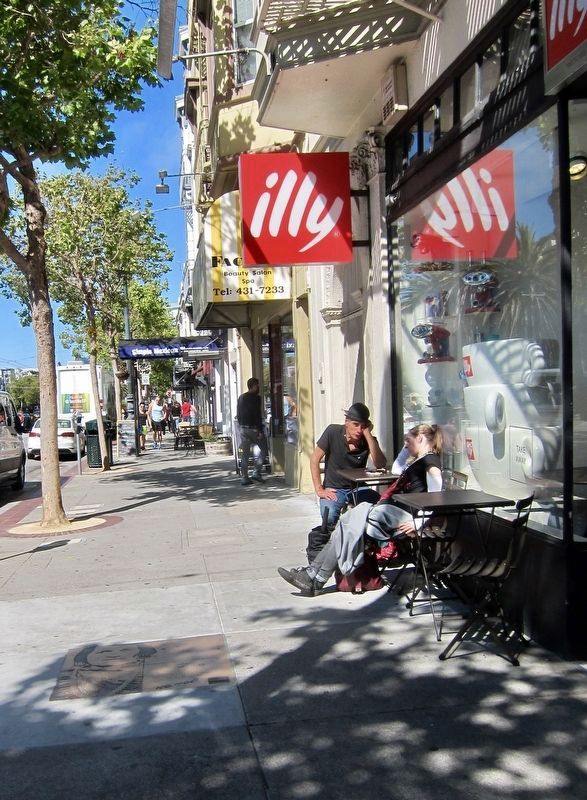
Photographed by Andrew Ruppenstein, July 14, 2018
2. We'wha Marker - wide view
The marker is visible in the foreground, mounted in the sidewalk.
Additional keywords. LGBT LGBTQ
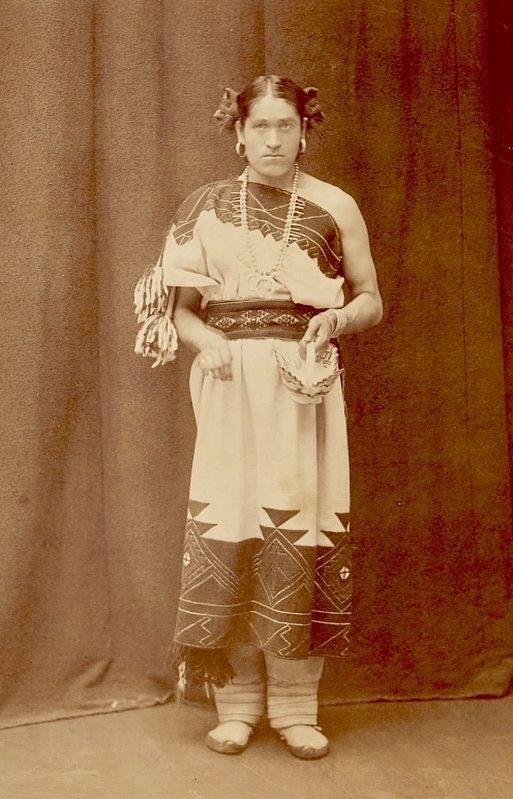
Photo courtesy of National Anthropological Archives, circa 1890
3. Portrait of We'Wha Holding Clay Ceremonial Prayer-Meal Basket
Credits. This page was last revised on February 7, 2023. It was originally submitted on July 19, 2018, by Andrew Ruppenstein of Lamorinda, California. This page has been viewed 1,032 times since then and 84 times this year. Photos: 1, 2, 3. submitted on July 19, 2018, by Andrew Ruppenstein of Lamorinda, California.
