Miracle Mile in Los Angeles in Los Angeles County, California — The American West (Pacific Coastal)
Hancock Park
La Brea Pits
Photographed by Craig Baker
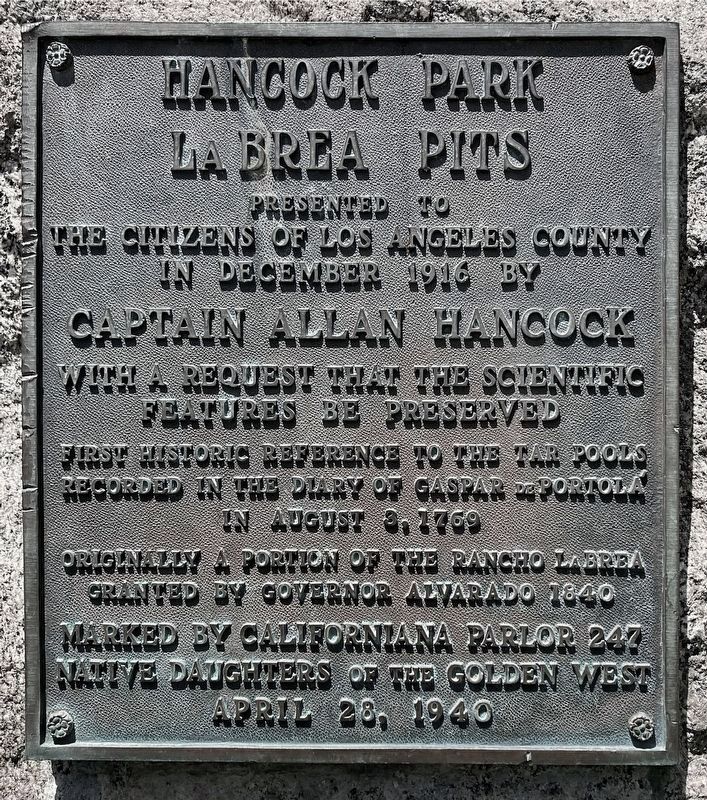
1. Hancock Park Marker
Presented to the citizens of Los Angeles County in December 1916 by Captain Allan Hancock with a request that the scientific features be preserved.
First historic reference to the tar pools recorded in the diary of Gaspar de Portolá on August 3, 1769.
Originally a portion of the Rancho La Brea granted by Governor Alvarado, 1840.
Erected 1940 by Californiana Parlor 247 Native Daughters of the Golden West. (Marker Number 170.)
Topics and series. This historical marker is listed in these topic lists: Natural Features • Natural Resources • Notable Events. In addition, it is included in the California Historical Landmarks, and the Native Sons/Daughters of the Golden West series lists.
Location. 34° 3.79′ N, 118° 21.326′ W. Marker is in Los Angeles, California, in Los Angeles County. It is in Miracle Mile. It is at the intersection of Wilshire Boulevard and Curson Avenue, on the right when traveling west on Wilshire Boulevard. Touch for map. Marker is at or near this postal address: 5801 Wilshire Blvd, Los Angeles CA 90036, United States of America. Touch for directions.

Regionally,
this page online
Other nearby markers. At least 8 other markers are within walking distance of this marker: La Brea Tar Pits (a few steps from this marker); Imagining Ice Age L.A. (a few steps from this marker); When Mammoths Walked on Wilshire (a few steps from this marker); Rancho La Brea (within shouting distance of this marker); Different Types of Fossils (within shouting distance of this marker); Chester Stock Ph.D. (about 400 feet away, measured in a direct line); Pits 3, 4, 61/67 (about 600 feet away); Tar seeps form Ice Age time capsules (about 600 feet away). Touch for a list and map of all markers in Los Angeles.
Regarding Hancock Park. The large “tar pit” was created by mining for asphalt, which was used to pave roads and for roofing. The pit is filled with rain water, not tar. Asphalt is in the ground
Photographed by Craig Baker, May 6, 2024
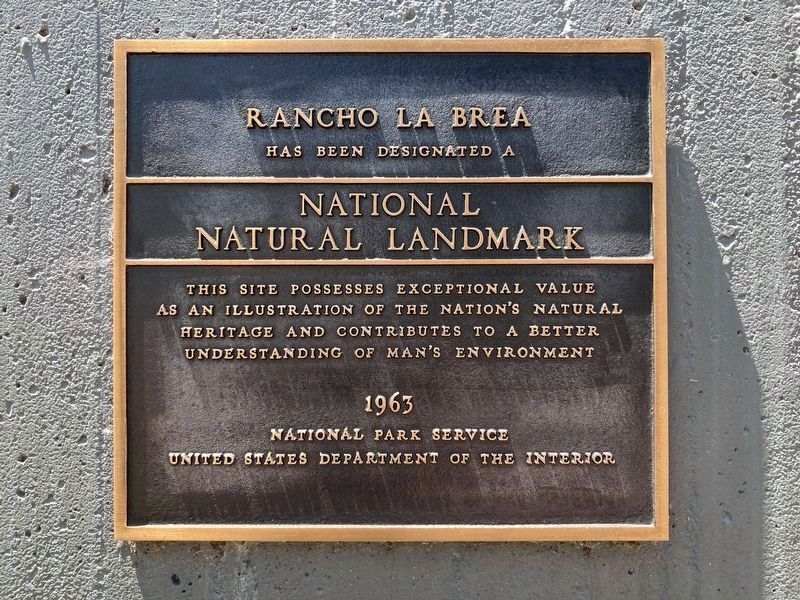
2. National Natural Landmark
This is California Historical Landmark No. 170, HANCOCK PARK LA BREA - The bones of thousands of prehistoric animals that had been entrapped during the Ice Age in pools of tar that bubbled from beneath the ground were exhumed from this site. First historic reference to the pools, part of the 1840 Rancho La Brea land grant, was recorded by Gaspar de Portolá in 1769 - first scientific excavations were made by the University of California in 1906. The site was presented to the County of Los Angeles in 1916 by Captain G. Allan Hancock to be developed as a scientific monument.
Photographed by Denise Boose, September 1, 2012
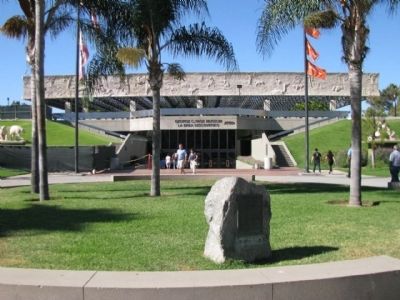
3. Hancock Park Marker

Photographed by Richard E. Miller
4. Captain G. Allan Hancock
Donor of Hancock Park to the people of Los Angeles County, 1916. Placed June 13, 1963.
Photographed by Craig Baker, May 6, 2024
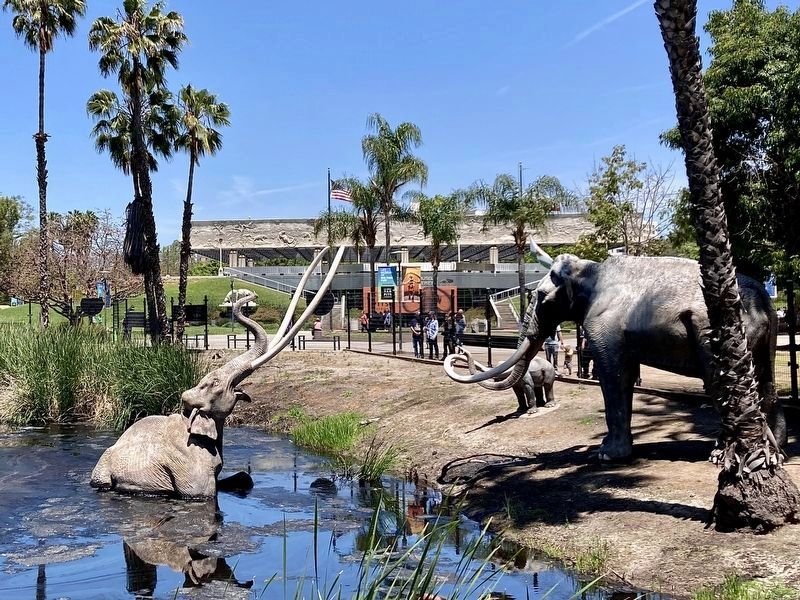
5. La Brea Tar Pits
Photographed by Denise Boose, September 1, 2012
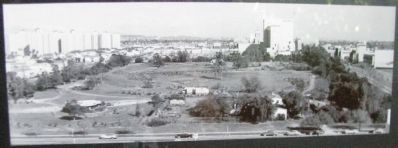
6. Hancock Park 1953
Courtesy of the George C. Page Museum Timeline Wall
Photographed by Denise Boose, September 1, 2012
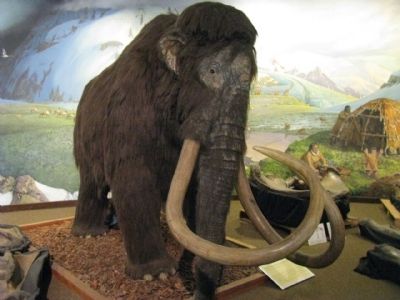
7. Woolly Mammoth
In the George C. Page Museum of La Brea Discoveries.
Photographed by Denise Boose, September 1, 2012
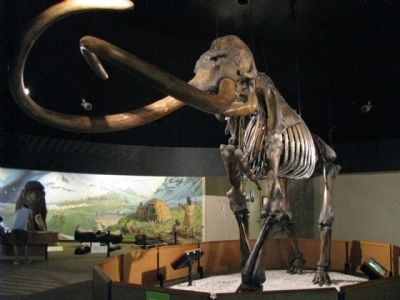
8. Columbian Mammoth
In the George C. Page Museum of La Brea Discoveries.
Credits. This page was last revised on August 26, 2026. It was originally submitted on September 2, 2012, by Denise Boose of Tehachapi, California. This page has been viewed 1,270 times since then and 37 times this year. Last updated on November 28, 2018, by Craig Baker of Sylmar, California. Photos: 1, 2. submitted on May 7, 2024, by Craig Baker of Sylmar, California. 3. submitted on September 2, 2012, by Denise Boose of Tehachapi, California. 4. submitted on January 9, 2012, by Richard E. Miller of Oxon Hill, Maryland. 5. submitted on May 7, 2024, by Craig Baker of Sylmar, California. 6, 7, 8. submitted on September 2, 2012, by Denise Boose of Tehachapi, California. • Andrew Ruppenstein was the editor who published this page.
