
Discovery Bay, St Ann Parish, Jamaica — Caribbean Region of the Americas (Greater Antilles of the West Indies)
Sugar in Jamaica
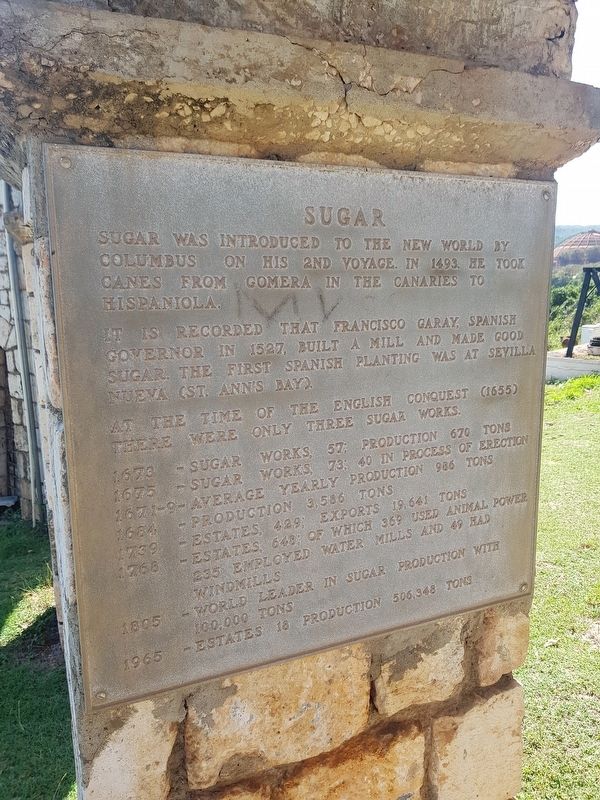
Photographed by J. Makali Bruton, February 8, 2019
1. Sugar in Jamaica Marker
Sugar
Sugar was introduced to the New World by Columbus on his 2nd voyage. In 1493, he took canes from Gomera in the Canaries to Hispaniola.
It is recorded that Francisco Garay, Spanish Governor in 1527, built a mill and made good sugar. The first Spanish planting was at Sevilla Nueva (St. Ann’s Bay).
At the time of the English conquest (1655) there were only three sugar works.
1673 – Sugar works, 57: Production 670 tons
1675 – Sugar works, 73; 40 in process of erection
1671-9 – Average yearly production 986 tons
1684 – Production 3,586 tons
1739 – Estates, 429; Exports 19,461 tons
1768 – Estates, 648; Of which 369 used animal power 235 employed water mills and 49 had windmills
1805 – World leader in sugar production with 100,000 tons
1965 – Estates 18 Production 506,348 tons
Topics and series. This historical marker is listed in these topic lists: Agriculture • Colonial Era • Industry & Commerce. In addition, it is included in the Windmills series list. A significant historical year for this entry is 1493.
Location. 18° 27.963′ N, 77° 24.899′ W. Marker is in Discovery Bay, St Ann Parish. It can be reached from Route A1,
this page online

Regionally, it is one of the Greater Antilles on the Caribbean Sea, on in the Atlantic Ocean, in North America, in the Western Hemisphere, and in the Anglosphere. Historically, it finds itself in what was once a Spanish colony and specifically also a British colony.
Other nearby markers. At least 5 other markers are within walking distance of this marker: Jamaica in 1494 (a few steps from this marker); Planet Locomotive (a few steps from this marker); Logwood Scale (a few steps from this marker); Chattanooga Cane Mill (within shouting distance of this marker); Clan Campbell Coat of Arms (within shouting distance of this marker).
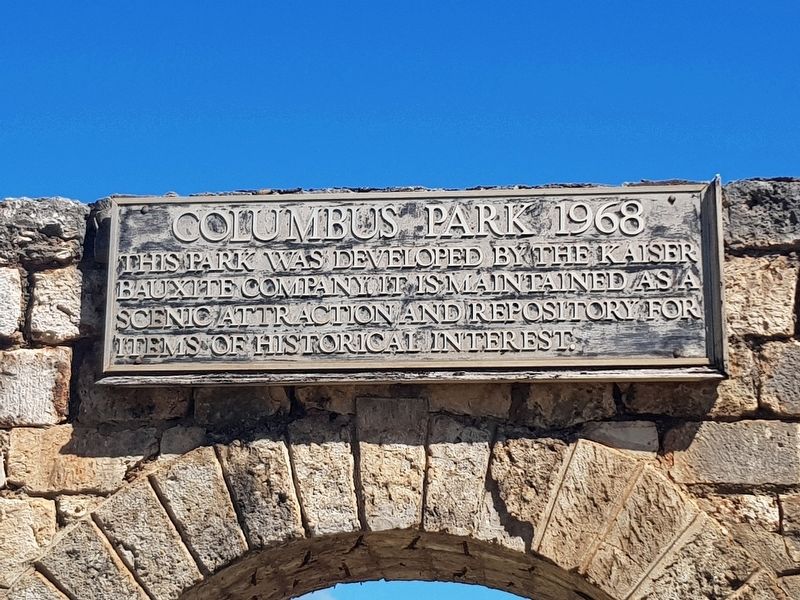
Photographed by J. Makali Bruton, February 8, 2019
2. An additional marker for Columbus Park
Columbus Park 1968
This park was developed by the Kaiser Bauxite Company. It is maintained as a scenic attraction and repository for items of historical interest.
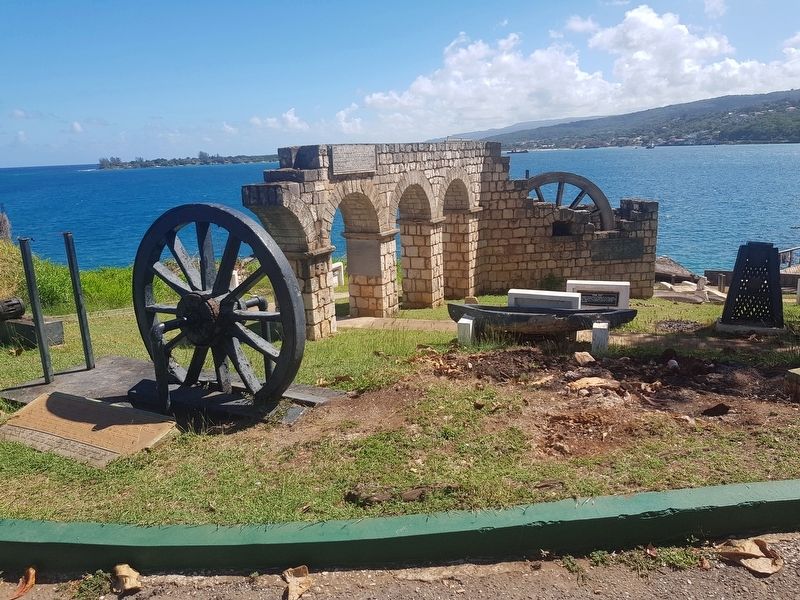
Photographed by J. Makali Bruton, February 8, 2019
3. Sugar in Jamaica Marker
The marker can be seen on the second stone column from the left on the replica aqueduct at Columbus Park. The small park contains many other historical items, many unfortunately no longer well maintained.
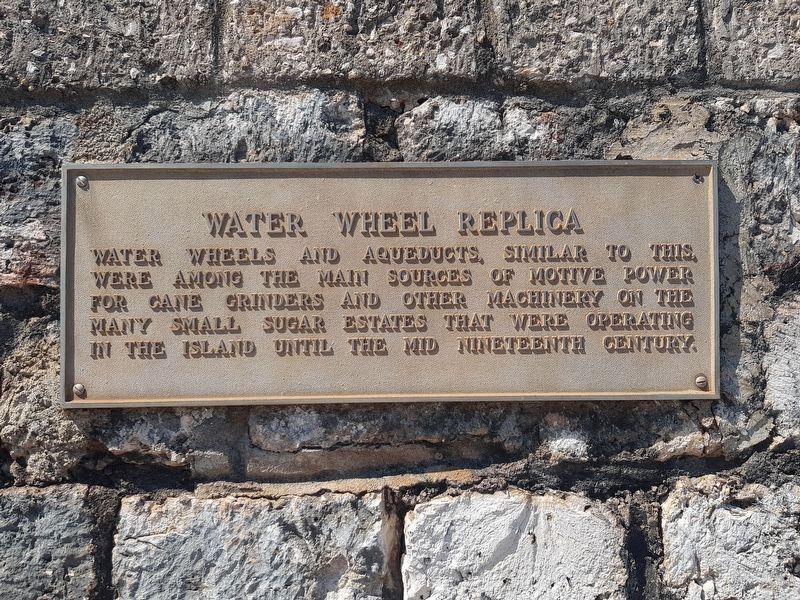
Photographed by J. Makali Bruton, February 8, 2019
4. An additional, nearby marker on water wheels and aqueducts
This additional marker is on the reverse of the replica water wheel. It reads:
Water Wheel Replica
Water wheels and aqueducts, similar to this, were among the main sources of motive power for cane grinders and other machinery on the many small sugar estates that were operating in the island until the mid nineteenth century.
Water Wheel Replica
Water wheels and aqueducts, similar to this, were among the main sources of motive power for cane grinders and other machinery on the many small sugar estates that were operating in the island until the mid nineteenth century.
Credits. This page was last revised on July 7, 2022. It was originally submitted on February 14, 2019, by J. Makali Bruton of Washington, District of Columbia. This page has been viewed 286 times since then and 21 times this year. Photos: 1, 2, 3. submitted on February 14, 2019, by J. Makali Bruton of Washington, District of Columbia. 4. submitted on February 19, 2019, by J. Makali Bruton of Washington, District of Columbia.
