Civic Center in Manhattan in New York County, New York — The American Northeast (Mid-Atlantic)
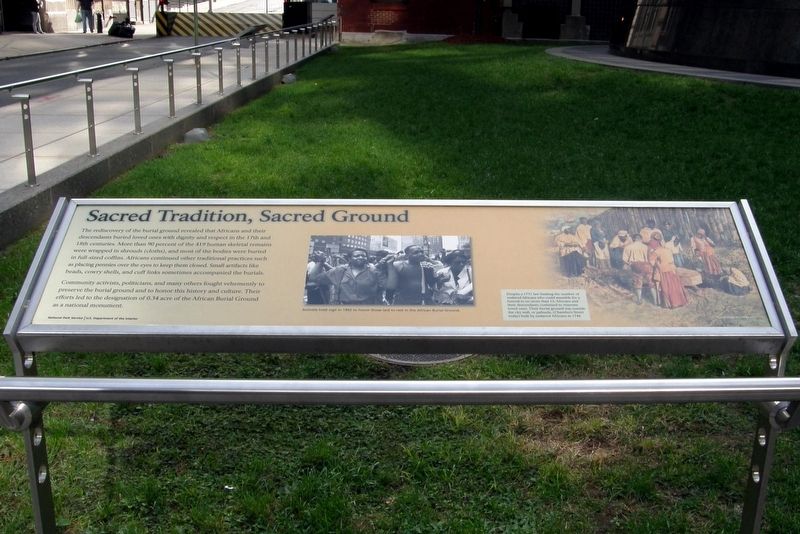
Sacred Tradition, Sacred Ground
Photographed by Larry Gertner, October 10, 2011
1. Sacred Tradition, Sacred Ground Marker
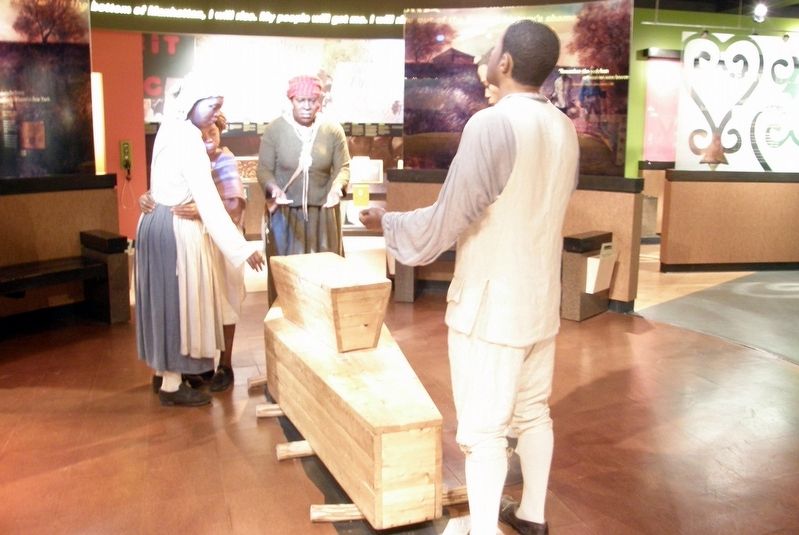
The rediscovery of the burial ground revealed that Africans and their descendants buried loved ones with dignity and respect in the 17th and 18th centuries. More than 90 percent of the 419 human skeletal remains were rapped in shrouds (cloths) and most of the bodies were buried in the full-sized coffins. Africans continued other traditional practices such as placing pennies over the eyes to keep them closed. Small artifacts like beads, cowry shells and cuff links sometimes accompanied the burials.
Community activists, politicians, and many others fought vehemently to preserve the burial ground and to honor this history and culture. Their efforts led to the designation of the 0.34 acre of the African Burial Ground as a national monument.
Erected by National Park Service/U.S. Department of the Interior.
Topics. This historical marker is listed in these topic lists: African Americans • Cemeteries & Burial Sites • Colonial Era.
Location. 40° 42.876′ N, 74° 0.247′ W. Marker is in Manhattan, New York, in New York County. It is in Civic Center. It is on Duane
this page online

Regionally, this marker is in New York City. It is also in the American Northeast, in the Mid-Atlantic, and on the Eastern Seaboard. Globally, it is in the North Atlantic Region, North America, the Western Hemisphere, the Western World, and the Anglosphere. Historically, it finds itself in what was once New Netherland and also one of the original Thirteen Colonies.
Other nearby markers. At least 8 other markers are within walking distance of this marker: African Burial Ground (a few steps from this marker); Africans in Early New York (a few steps from this marker); A Place of Remembrance (a few steps from this marker); Changing Landscape Obscures the Past (within shouting distance of this marker); "Sankofa" (within shouting distance of this marker); Foley Square c. 1730 (within shouting distance of this marker); Judge Walter R. Mansfield Memorial (within shouting distance of this marker); Foley Square c. 1800 (about 300 feet away, measured in a direct
Photographed by Larry Gertner, October 10, 2011
2. Inset
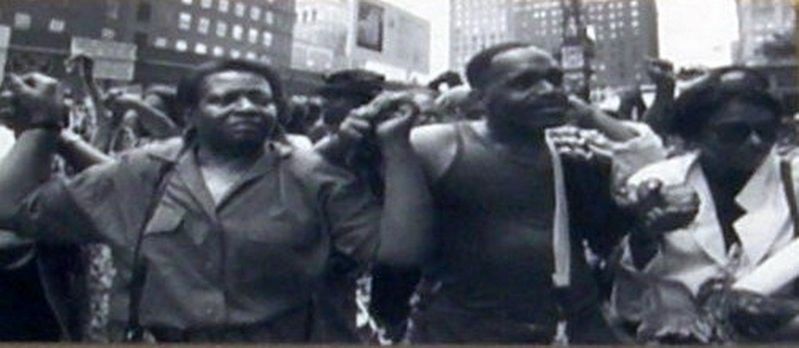
Activists hold vigil in 1992 to honor those laid to rest in the African Burial ground.
More about this marker. Elk Street and this stretch of Duane Street have been closed to automobile through traffic since 9/11.
Regarding Sacred Tradition, Sacred Ground. The monument is listed in the "AIA (American Institute of Architects) Guide to New York City, Fifth Edition".
Photographed by Larry Gertner, October 10, 2011
3. Inset
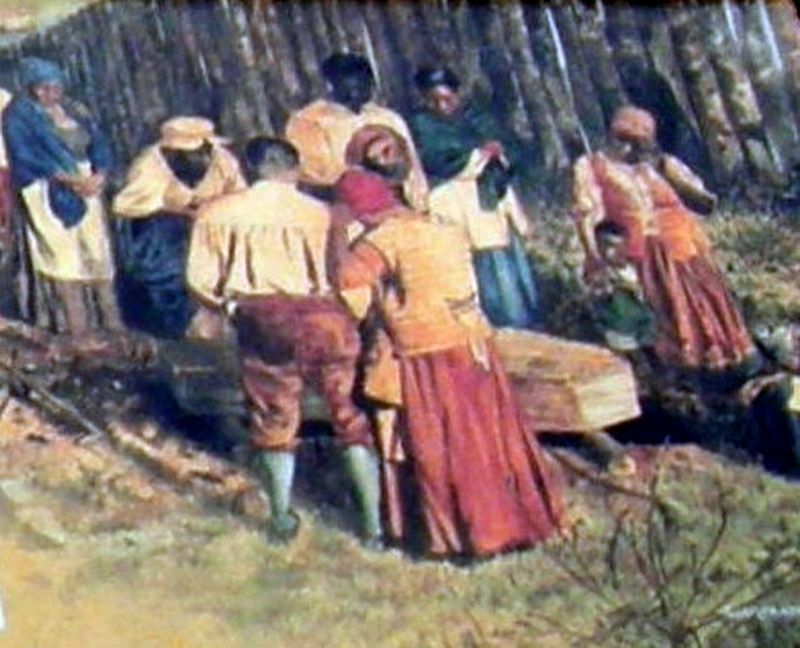
Despite a 1751 law limiting the number of enslaved Africans who could assemble for a funeral to no more than 12, Africans and their descendants continued to venerate loved ones. Their burial ground was outside the city wall, or palisade, (Chambers Street today) built by enslaved Africans in 1746.
Photographed by Larry Gertner, December 20, 2013
4. Diorama at the 290 Broadway building
Photographed by Larry Gertner, 2008
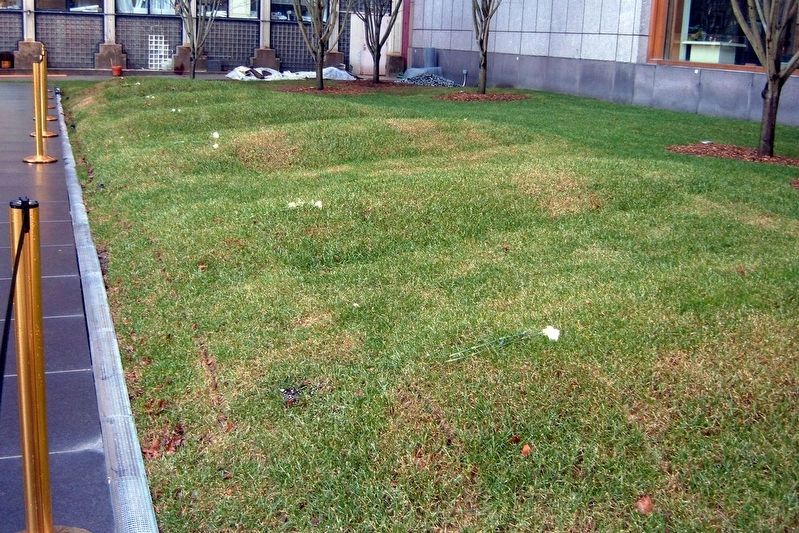
5. Nearby, the reburial mounds
Photographed by Larry Gertner, 2005
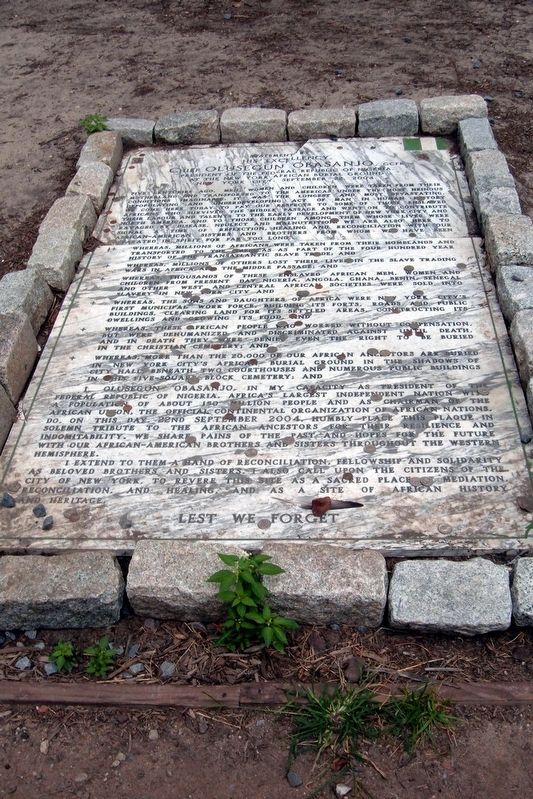
6. President Obasanjo's resolution marker at the gravesite
Photographed by Larry Gertner, February 15, 2019
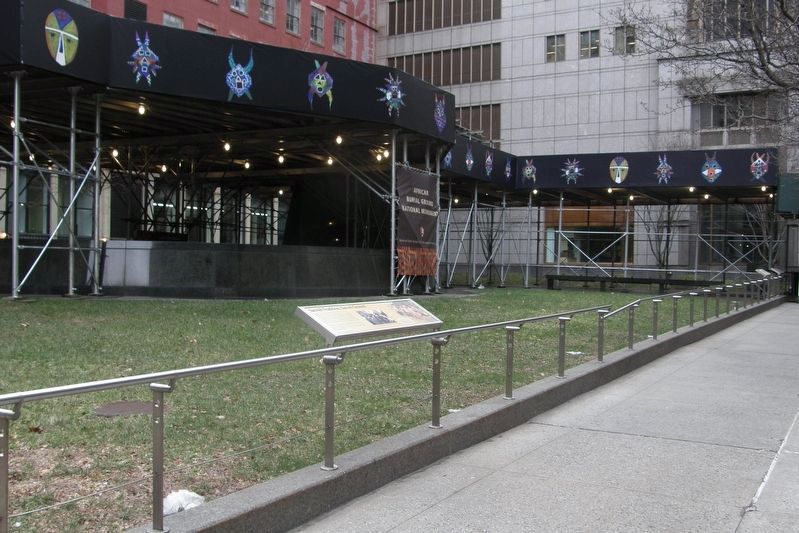
7. Sacred Tradition, Sacred Ground Marker
The marker is on the Duane Street side, closest to the camera.
Credits. This page was last revised on January 31, 2023. It was originally submitted on February 14, 2019, by Larry Gertner of New York, New York. This page has been viewed 406 times since then and 30 times this year. Last updated on February 15, 2019, by Larry Gertner of New York, New York. Photos: 1, 2, 3, 4, 5, 6. submitted on February 14, 2019, by Larry Gertner of New York, New York. 7. submitted on February 15, 2019, by Larry Gertner of New York, New York. • Andrew Ruppenstein was the editor who published this page.
