Near Inverness in Citrus County, Florida — The American South (South Atlantic)
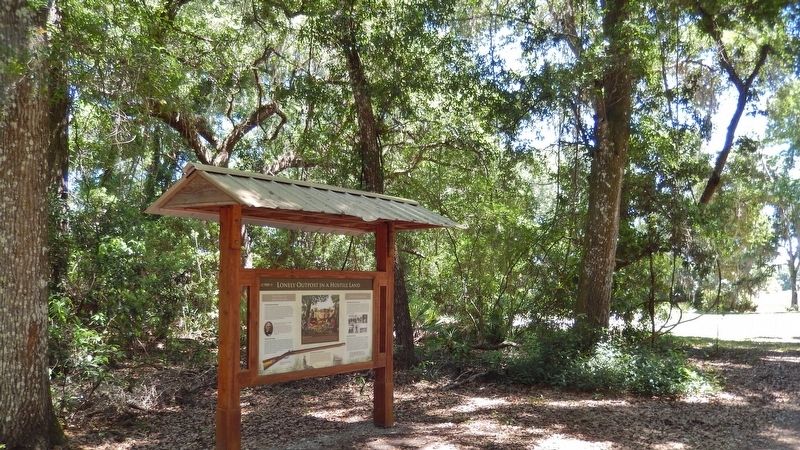
Lonely Outpost in a Hostile Land
Seminole Heritage Trail
Photographed by Cosmos Mariner, April 16, 2019
1. Lonely Outpost in a Hostile Land Marker
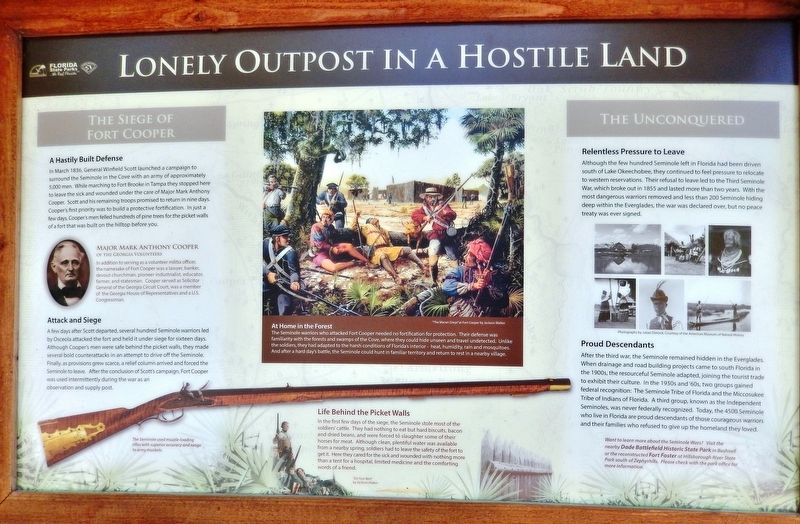
The Siege of Fort CooperA Hastily Built Defense
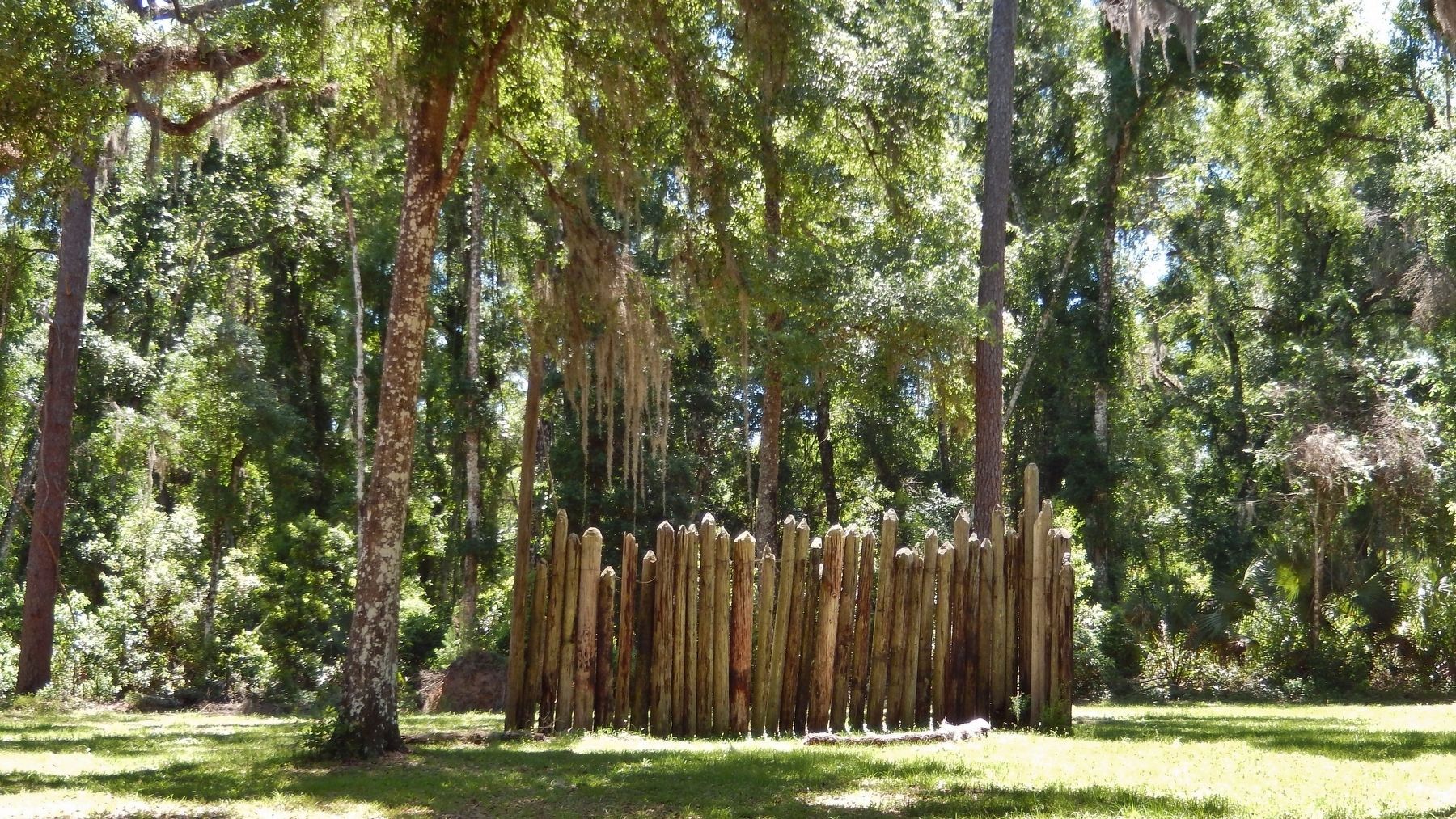
In March 1836, General Winfield Scott launched a campaign to surround the Seminole in the Cove with an army of approximately 5,000 men. While marching to Fort Brooke in Tampa they stopped here to leave the sick and wounded under the care of Major Mark Anthony Cooper. Scott and his remaining troops promised to return in nine days. Cooper's first priority was to build a protective fortification. In just a few days, Cooper's men felled hundreds of pine trees for the picket walls of a fort that was built on the hilltop before you.
Major Mark Anthony Cooper
of the Georgia Volunteers
In addition to serving as a volunteer militia officer, the namesake of Fort Cooper was a lawyer, banker, devout churchman, pioneer industrialist, educator, farmer, and statesman. Cooper served as Solicitor General of the Georgia Circuit Court, was a member of the Georgia House of Representatives and a U.S. Congressman.
Attack and Siege
A few days after Scott departed, several hundred Seminole warriors led by Osceola attacked the fort and held it under siege for sixteen days. Although Cooper's men were
this page online
At Home in the Forest
The Seminole warriors who attacked Fort Cooper needed no fortification for protection. Their defense was familiarity with the forests and swamps of the Cove, where they could hide unseen and travel undetected. Unlike the soldiers, they had adapted to the harsh conditions of Florida's interior - heat, humidity, rain and mosquitoes. And after a hard day's battle, the Seminole could hunt in familiar territory and return to rest in a nearby village.
Life Behind the Picket Walls
In the first few days of the siege, the Seminole stole most of the soldiers' cattle. They had nothing to eat but hard biscuits, bacon and dried beans, and were forced to slaughter some of their horses for meat. Although clean, plentiful water was available from a nearby spring, soldiers had to leave the safety of the
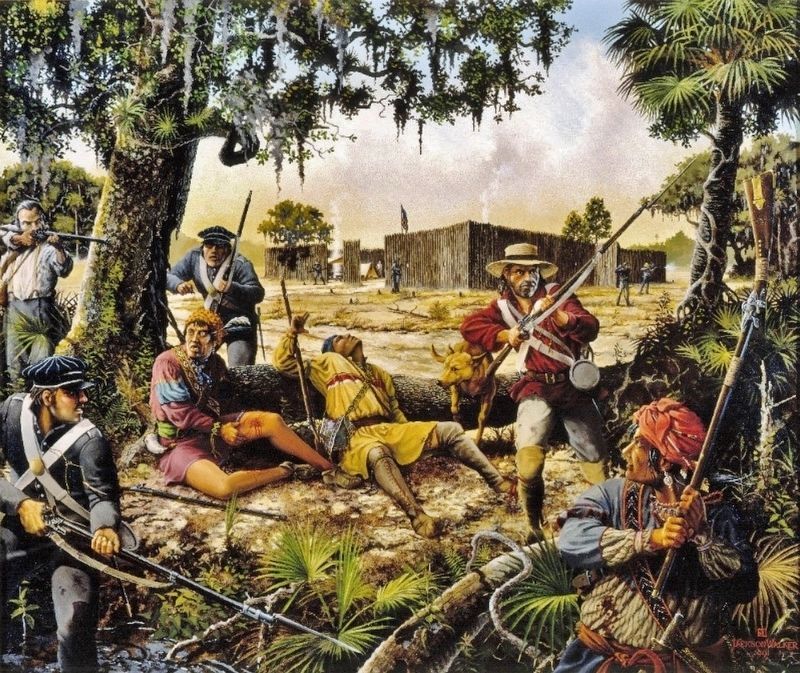
2. Marker detail: "The Macon Greys" at Fort Cooper by Jackson Walker
The UnconqueredRelentless Pressure to Leave
Although the few hundred Seminole left in Florida had been driven south of Lake Okeechobee, they continued to feel pressure to relocate to western reservations. Their refusal to leave led to the Third Seminole War, which broke out in 1855 and lasted more than two years. With the most dangerous warriors removed and less than 200 Seminole hiding deep within the Everglades, the war was declared over, but no peace treaty was ever signed.
Proud Descendants
After the third war, the Seminole remained hidden in the Everglades. When drainage and road building projects came to south Florida in the 1900s, the resourceful Seminole adapted, joining the tourist trade to exhibit their culture. In the 1950s and '60s, two groups gained federal recognition: The Seminole Tribe of Florida and the Miccosukee Tribe of Indians of Florida. A third group, known as the Independent Seminoles, was never federally recognized. Today, the 4500 Seminole who live in
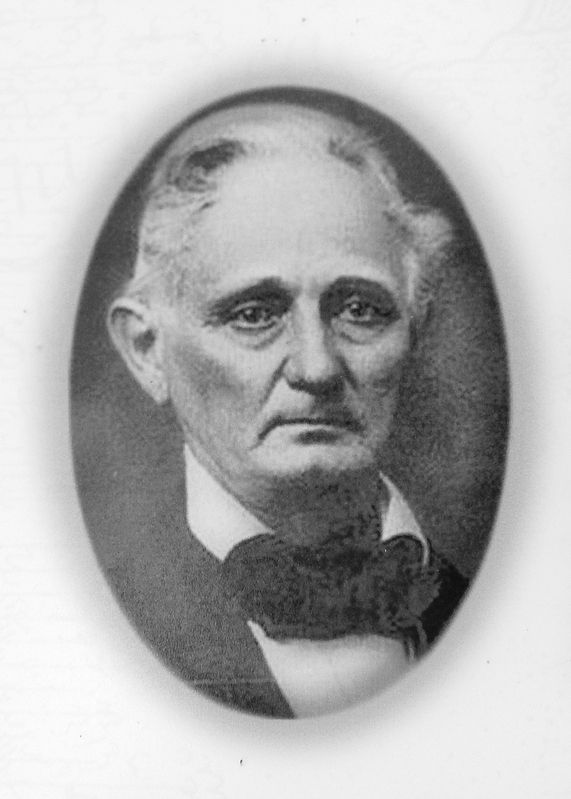
3. Marker detail: Major Mark Anthony Cooper
Want to learn more about the Seminole Wars? Visit the nearby Dade Battlefield Historic State Park in Bushnell or the reconstructed Fort Foster at Hillsborough River State Park south of Zephyrhills. Please check with the park office for more information.
(photo captions)
• The Seminole used muzzle-loading rifles with superior accuracy and range to Army muskets
• "Do Your Best" by Jackson Walker
Topics. This historical marker is listed in these topic lists: Forts and Castles • Indigenous Peoples and Communities • Settlements & Settlers • Wars, US Indian. A significant historical year for this entry is 1836.
Location. 28° 48.238′ N, 82° 18.447′ W. Marker is near Inverness, Florida, in Citrus County. It can be reached from Old Floral City Road 0.2 miles south of Carnegie Drive, on the right when traveling south. Marker is located within Fort Cooper State Park, along the Seminole Heritage Trail, about 1.2 miles inside the park near the former site of Fort Cooper. Touch for map. Marker is at or near
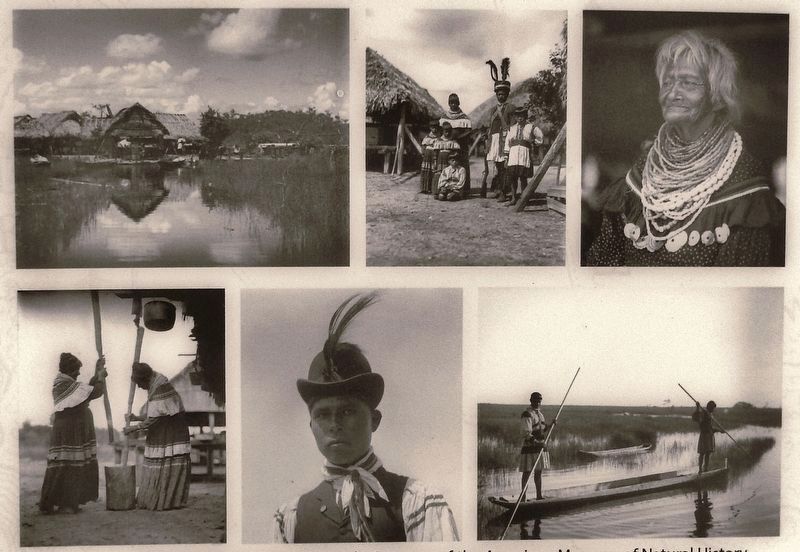
Julian Dimock, Courtesy of the American Museum of Natural History
4. Marker detail: Proud Descendants

Regionally, this marker is on Florida’s Gulf Coast. It is also in the American South and on the Gulf Coast. Globally, it is in the North Atlantic Region, North America, a Gulf of Mexico state, the Western Hemisphere, the Western World, and the Anglosphere. Historically, it finds itself in what was once New Spain, the territory of the Mississippian Culture, one of the Confederate States of America, and the Antebellum South.
Other nearby markers. At least 8 other markers are within walking distance of this marker: War Comes to the Cove (about 700 feet away, measured in a direct line); Old Military Road (about 800 feet away); A Costly Florida War (approx. 0.2 miles away); Life Along the Withlacoochee (approx. ¼ mile away); Fort Cooper (approx. 0.3 miles away); Florida's First People (approx. 0.4 miles away); The Seminole in the Cove of the Withlacoochee (approx. 0.4 miles away); a different marker also named Fort Cooper (approx. 0.9 miles away). Touch for a list and map of all markers in Inverness.
Related markers.
Photographed by Cosmos Mariner, April 16, 2019
5. Lonely Outpost in a Hostile Land Marker Kiosk (Fort Cooper site in background)
Also see . . . The Friends of Fort Cooper. Organization website homepage (Submitted on October 15, 2021, by Larry Gertner of New York, New York.)
Photographed by Cosmos Mariner, April 16, 2019
6. Fort Cooper Stockade Replica (located at Fort Cooper site, near marker)
Credits. This page was last revised on October 15, 2021. It was originally submitted on April 16, 2019, by Cosmos Mariner of Cape Canaveral, Florida. This page has been viewed 694 times since then and 56 times this year. Photos: 1, 2, 3, 4, 5, 6. submitted on April 18, 2019, by Cosmos Mariner of Cape Canaveral, Florida.
