Franklin in Williamson County, Tennessee — The American South (East South Central)
Epicenter of the Battle of Franklin
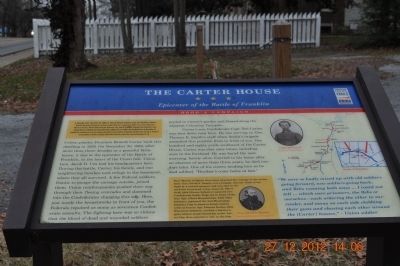
The Carter House
| — | Hood's Campaign | — |
Photographed by Sandra Hughes, December 27, 2012
1. The Carter House Marker
(Preface): In September 1864, after Union Gen. William T. Sherman defeated Confederate Gen. John Bell Hood at Atlanta, Hood led the Army of Tennessee northeast against Sherman's supply lines. Rather than contest Sherman's "March to the Sea," Hood moved north into Tennessee. Gen. John M. Schofield, detached from Sherman's army, delayed Hood at Columbia and Spring Hill before falling back to Franklin. The bloobath here on November 30 crippled the Confederates, but they followed Schofield to the outskirts of Nashville and Union Gen. George H. Thomas's strong defenses. Hood's campaign ended when Thomas crushed his army December 15-16.
Cotton planter Fountain Branch Carter built this dwelling in 1830. On November 30, 1864, after more than three decades as a peaceful farmhouse, it was at the epicenter of the Battle of Franklin, in the heart of the Union line. Union Gen. Jacob D. Cox had his headquarters here. During the battle, Carter, his family, and two neighboring families took refuge in the basement, where they all survived. A few Federal soldiers, frantic to escape the carnage outside, joined them. Union reinforcements
this page online
Carter's son, Confederate Capt. Tod Carter, was shot down near here. He was serving on Gen. Thomas B. Smith's staff when Smith's brigade assaulted this position from in front of you. One hundred and eighty yards southwest of the Carter House, Carter was shot nine times, including once in the forehead. He was found the next morning barely alive. Carried to his home after an absence of more than three years, he died two days later. One of his sisters tending him as he died sobbed, "Brother's come home at last."
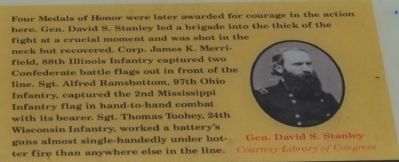
(Sidebar): Four Medals of Honor were later awarded for courage in the action here. Gen. David S. Stanley led a brigade into the thick of the fight at a crucial moment and was shot in the neck but recovered. Corp. James K. Merrifield, 88th Illinois Infantry
Photographed by Sandra Hughes, December 27, 2012
2. The Carter House Marker
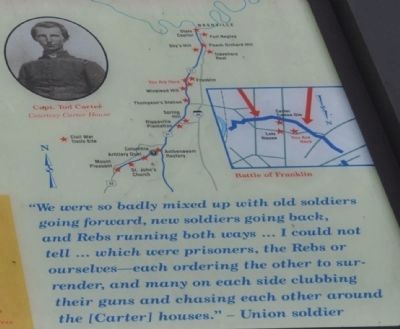
"We were so badly mixed up with old soldiers going forward, new soldiers going back, and Rebs running both ways... I could not tell... which were prisoners, the Rebs or ourselves- each ordering the other to surrender, and many on each side clubbing their guns and chasing each other around the [Carter] houses." - Union Soldier
Erected by Tennessee Civil War Trails.
Topics. This memorial is listed in this topic list: War, US Civil. A significant historical month for this entry is September 1864.
Location. Memorial has been reported permanently removed. It was located near 35° 55.021′ N, 86° 52.402′ W. Memorial was in Franklin, Tennessee, in Williamson County. It could be reached from Columbia Avenue (U.S. 31). This marker has been removed and replaced by a similar marker at the rear of the Carter House. Touch for map. Memorial
Photographed by Sandra Hughes, December 27, 2012
3. Gen. David S. Stanley
courtesy Library of Congress
We have been informed that this memorial is no longer there and will not be replaced. This page is an archival view of what was.
Regionally, this memorial was in Middle Tennessee and in Greater Nashville. It was also in the American South and specifically in the Upper South. Globally, it was in North America, the Western Hemisphere, the Western World, and the Anglosphere. Historically, it found itself in what was once the territory of the Mississippian Culture, one of the Confederate States of America, and the Antebellum South.

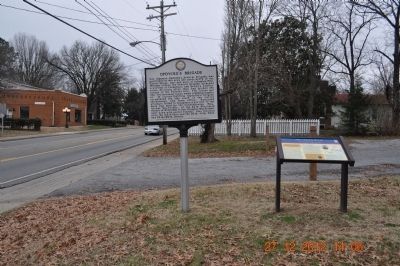
Other nearby markers. At least 8 other markers are within walking distance of this location: Carter House (here, next to this marker); a different marker also named The Carter House (a few steps from this marker); Cleburne’s Division (within shouting distance of this marker); The Carter Farm (within shouting distance of this marker); a different marker also named The Carter Farm (within shouting distance of this marker); a different marker also named The Carter Farm (within shouting distance of this marker); Opdycke's Bridgade
Photographed by Sandra Hughes, December 27, 2012
4. Capt. Todd Carter
Courtesy Library of Congress
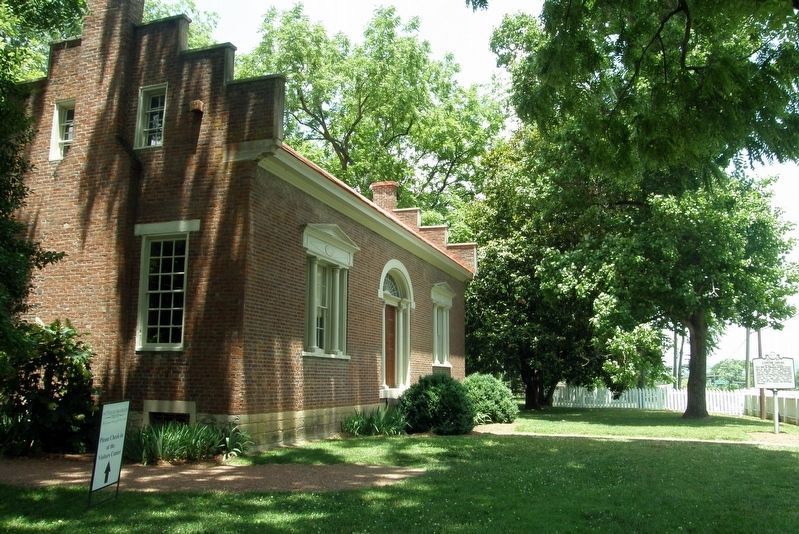
Photographed by Larry Gertner, June 16, 2019
5. Former Epicenter of the Battle of Franklin Marker site
Only the Tennessee Historical Commission marker remains here.
Credits. This page was last revised on July 11, 2019. It was originally submitted on January 3, 2013, by Sandra Hughes Tidwell of Killen, Alabama, USA. This page has been viewed 1,000 times since then and 41 times this year. Last updated on July 9, 2019, by Larry Gertner of New York, New York. Photos: 1, 2, 3, 4. submitted on January 3, 2013, by Sandra Hughes Tidwell of Killen, Alabama, USA. 5. submitted on June 16, 2019, by Larry Gertner of New York, New York. • Andrew Ruppenstein was the editor who published this page.
