Near Phillipsport in Sullivan County, New York — The American Northeast (Mid-Atlantic)
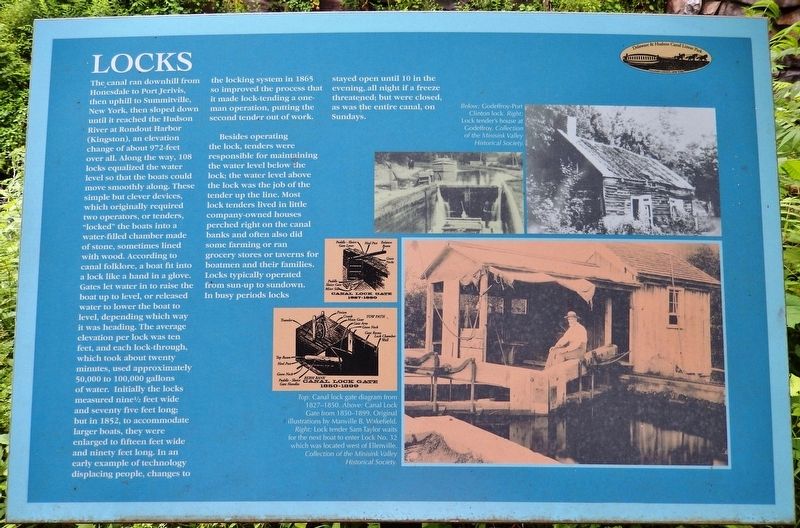
Locks
Delaware & Hudson Canal
Photographed by Cosmos Mariner, June 29, 2019
1. Locks Marker
this page online
Besides operating the lock, tenders were responsible for maintaining the water level below the lock; the water level above the lock was the job of the tender up the line. Most lock tenders lived in little company-owned houses perched right on the canal banks and often also did some farming or ran grocery stores or taverns for boatmen and their families. Locks typically operated from sun-up to sundown. In busy periods locks stayed open until 10 in the evening, all night if a freeze threatened; but were closed, as was the entire canal, on Sundays.
Erected by Delaware & Hudson Canal Linear Park.
Topics. This historical marker is listed in these topic lists: Industry & Commerce • Man-Made Features • Waterways & Vessels. A significant historical year for this entry is 1852.
Location. 41° 37.982′ N, 74° 27.123′ W. Marker is near Phillipsport, New York, in Sullivan County. It can be reached from Bova Road 0.1 miles west of U.S. 209, on the right when traveling west. Marker is located along the canal trail at the Bova Road Interpretive
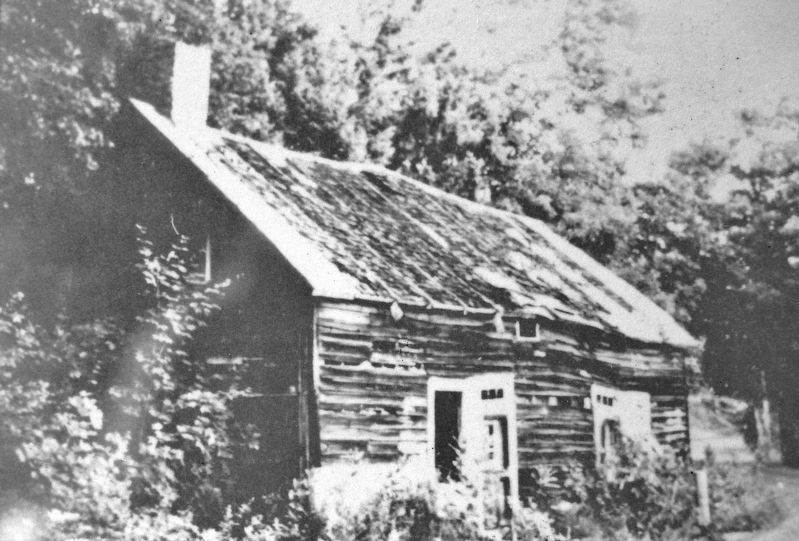
Collection of the Minisink Valley Historical Society
2. Marker detail: Godeffroy Lock Tender’s House

Regionally, this marker is in Upstate New York and in the Hudson Valley. It is also in the American Northeast, in the Mid-Atlantic, in Appalachia, and specifically in Northern Appalachia. Globally, it is in North America, the Western Hemisphere, the Western World, and the Anglosphere. Historically, it finds itself in what was once New Netherland and also one of the original Thirteen Colonies.
Other nearby markers. At least 8 other markers are within walking distance of this marker: Waste Weirs (a few steps from this marker); Canal Basin & Sluiceway (within shouting distance of this marker); Lock No. 50 (within shouting distance of this marker); Ending at Rondout (within shouting distance of this marker); Dry Docks (within shouting distance of this marker); Life on the Canal (within shouting distance of this marker); Demise of the Canal (within shouting distance of this marker); Welcome to Sullivan County's Parks (about 300 feet away, measured in a
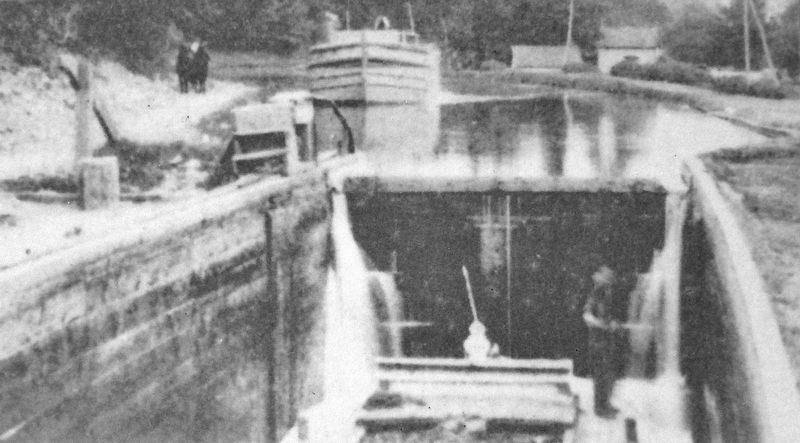
Collection of the Minisink Valley Historical Society
3. Marker detail: Godeffroy-Port Clinton Lock
Related markers. Click here for a list of markers that are related to this marker. Delaware & Hudson Canal
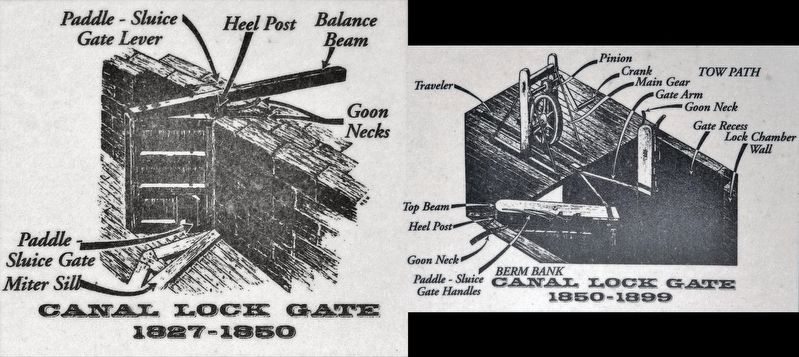
Collection of the Minisink Valley Historical Society
4. Marker detail: Lock Gate Diagrams
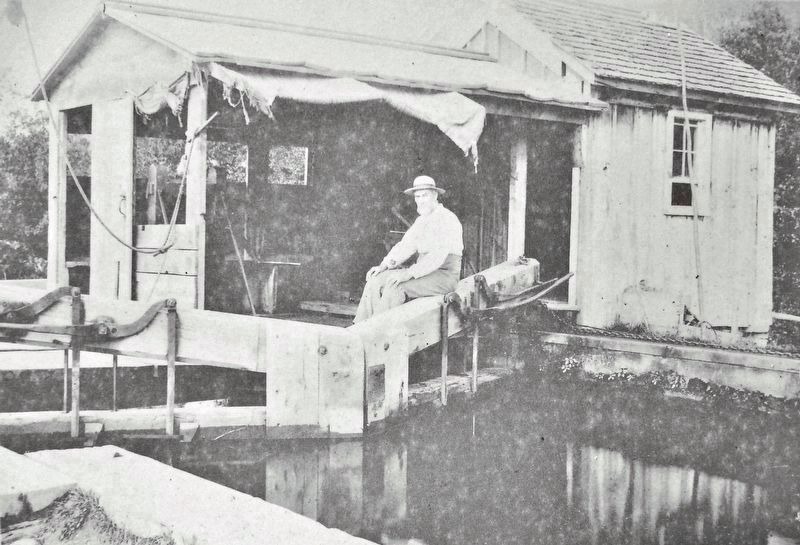
Collection of the Minisink Valley Historical Society
5. Marker detail: Sam Taylor
Lock No. 32 - which was located west of Ellenville.
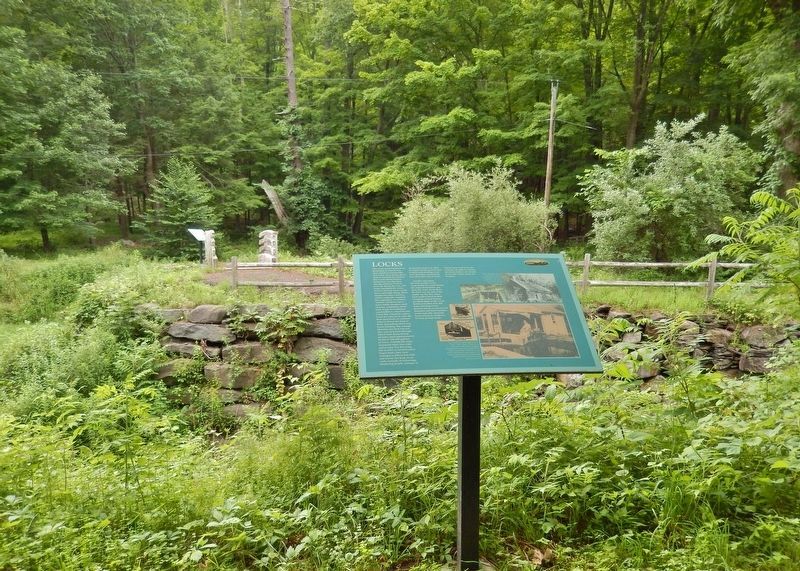
Photographed by Cosmos Mariner, June 29, 2019
6. Locks Marker • wide view
Lock No. 50 ruins in background)
Lock No. 50 ruins in background)
Credits. This page was last revised on November 22, 2019. It was originally submitted on November 21, 2019, by Cosmos Mariner of Cape Canaveral, Florida. This page has been viewed 340 times since then and 23 times this year. Photos: 1. submitted on November 21, 2019, by Cosmos Mariner of Cape Canaveral, Florida. 2, 3, 4, 5, 6. submitted on November 22, 2019, by Cosmos Mariner of Cape Canaveral, Florida.
