
Colonia Polanco in Ciudad de México, Mexico — The Valley of Mexico (The Central Highlands)
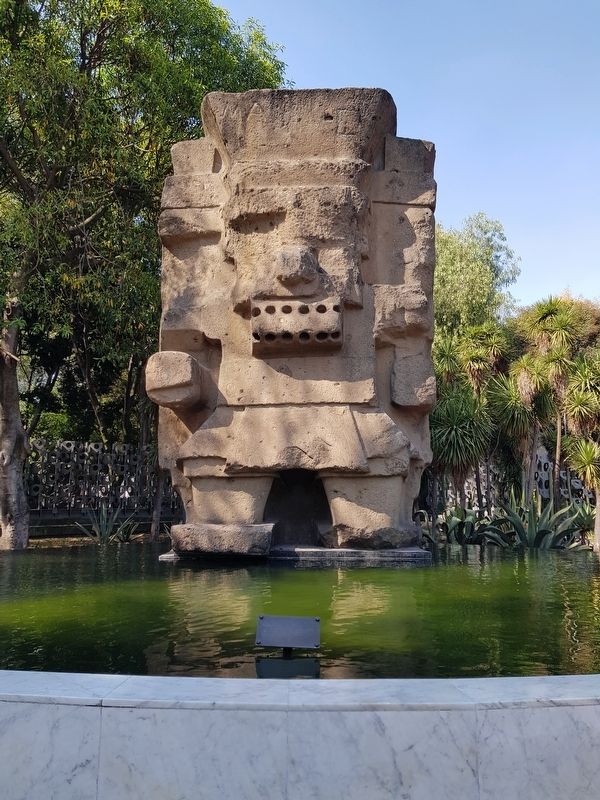
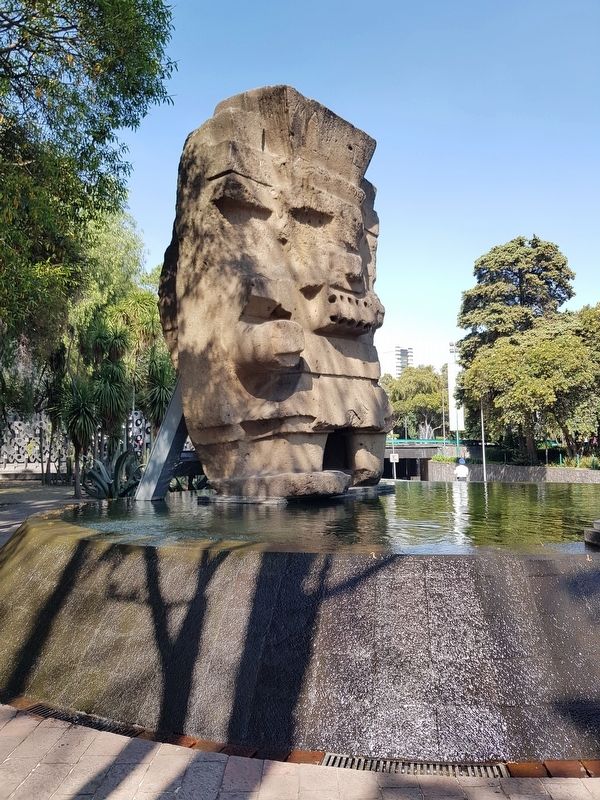
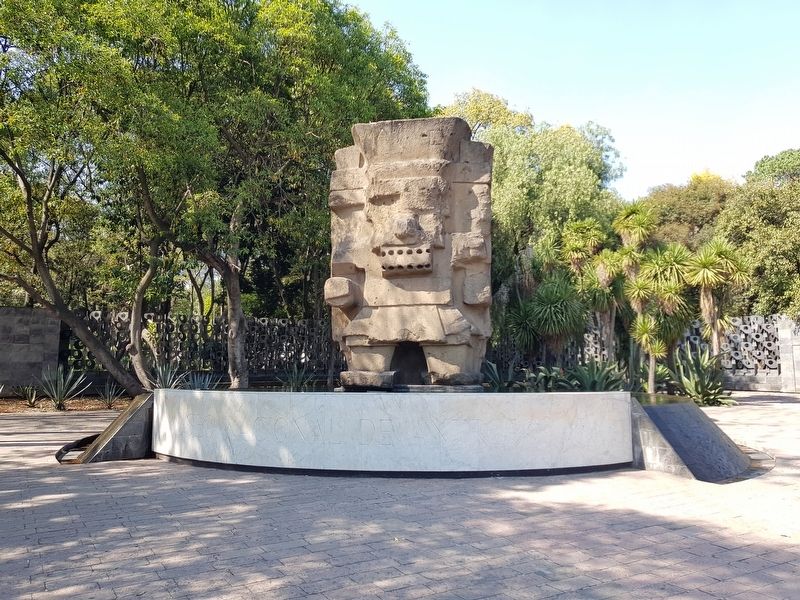
Monolith of Coatlinchán
Photographed by J. Makali Bruton, November 30, 2019
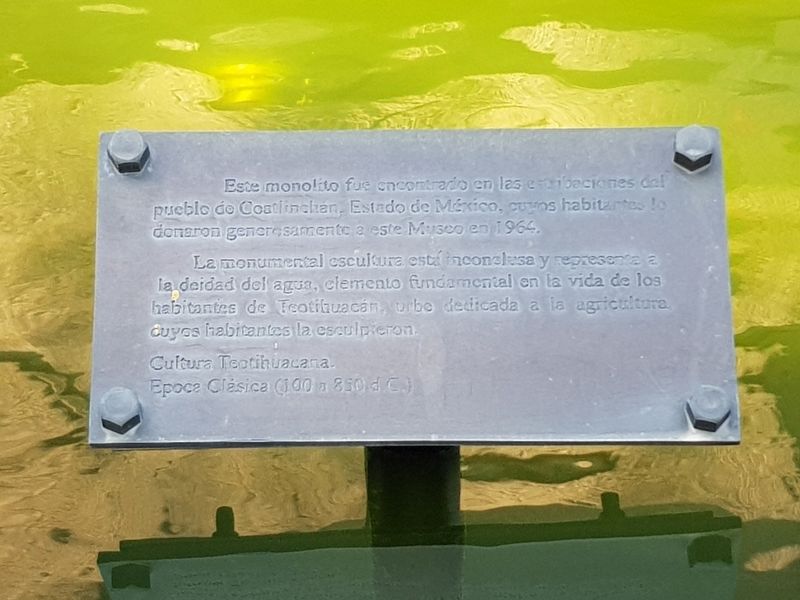
1. Monolith of Coatlinchán Marker

La monumental escultura está inconclusa y representa a la deidad de agua, elemento fundamental en la vida de los habitantes de Teotihuacán, urbe dedicada a la agricultura, cuyos habitantes la esculpieron.
Cultura Teotihuacana.
Epoca Clásica (100 a 850 d.C.)
This monolith was found in the foothills of the town of Coatlinchán, State of Mexico, whose inhabitants generously donated it to this Museum in 1964.
The monumental sculpture is unfinished and represents the water deity, a fundamental element in the life of the inhabitants of Teotihuacán, a city dedicated to agriculture, whose inhabitants sculpted it.
Teotihuacana culture
Classic epoch (100 to 850 AD)
Topics. This historical marker is listed in these topic lists: Anthropology & Archaeology • Arts, Letters, Music • Indigenous Peoples and Communities. A significant historical year for this entry is 1964.
Location. 19°
this page online

Regionally, this marker is in Central Mexico and specifically in Mexico City Metropolitan Area. Globally, it is in North America, specifically in Mesoamerica, on the Ring of Fire, and in the Western Hemisphere. Historically, it finds itself in what was once New Spain, a Spanish colony, and the Aztec Empire.
Other nearby markers. At least 8 other markers are within walking distance of this marker: The National Anthropology Museum of Mexico (about 120 meters away, measured in a direct line); Stela E of Quiriguá (about 180 meters away); Ek Balam Building 1 (about 210 meters away); Hochob Building 2 (about 210 meters away); Stela 6 of Piedras Negras (about 210 meters away); Stela 12 of Piedras Negras (about 210 meters away); Bonampak (approx. 0.3 kilometers away); The Large and Small Lakes at Chapultepec (approx. 0.6 kilometers away). Touch for a list and map of all markers in Ciudad de México.
Regarding Monolith of Coatlinchán. The monolith is commonly referred to as 'Tlalóc', the Aztec rain deity. This is also referred to in the marker text. However, as the Teotihuacán culture predates that of the Aztecs, it is not known for sure if this is the same deity or not. The circular indentations on the front of the monolith ("tecomates") are usually associated with rain or water in early-Mesoamerican iconography.
Photographed by J. Makali Bruton, November 30, 2019
2. Monolith of Coatlinchán and Marker
The marker is in a fountain which surrounds the monolithic statue, helping to prevent its vandalism.
Photographed by J. Makali Bruton, November 30, 2019
3. Monolith of Coatlinchán
Photographed by J. Makali Bruton, November 30, 2019
4. Monolith of Coatlinchán
The monolith is a landmark near the Mexican National Anthropology Museum, one of the world's best museums.
Credits. This page was last revised on January 4, 2023. It was originally submitted on December 10, 2019, by J. Makali Bruton of Washington, District of Columbia. This page has been viewed 365 times since then and 24 times this year. Photos: 1, 2, 3, 4. submitted on December 10, 2019, by J. Makali Bruton of Washington, District of Columbia.
